Villarrica – but where’s the volcano?

The little town of Villarrica is next to a beautiful lake and a splendid volcano. It seems a little embarrassing to lose something as large as a volcano, but I managed it for a while today, although thoroughly enjoying a wander around town.

I wandered down to the lake, but not very early (about 9:30 am). I was surprised that nothing was happening in town. It looked almost deserted in the middle of town, where I am staying. (I am staying here deliberately, rather than nearby Pucón, which is a much more touristy town, catering to various kinds of adrenaline junkies, scaling mountains or volcanoes, snowboarding, zip lining, canyoning, etc … no thanks! But this seemed a bit too far in the other direction:

CIMG3903

I found out later, to my great surprise, that it’s a public holiday – for Reformation Day! I am astonished that this extremely Catholic country has a national public holiday to celebrate the Protestant Reformation, lead by Martin Luther! How weird is that? Or at least, how ecumenical is that? Australia doesn’t have many religious holidays at all (just Christmas and Easter), which was why I was surprised. I get the impression that church and state here are a bit more intertwined than in Australia.

The lake is beautiful, and I thoroughly enjoyed just sitting down on the newly made coastal walk and watching it peacefully for a while, before walking further around town (click on the pictures to get a better idea of the lake scenes, which were very blue!).

I was disappointed that I couldn’t see the volcano, because of the clouds, although I could see some lower parts of it. I could also see some distant buildings, including one in progress. What  lovely place to stay or live! I hoped that the clouds would clear later in the day, although the forecast was not optimistic.

As well as scenery, I spotted other things lakeside, such as a few birds of various kinds, and lots of sleeping dogs (which of course I let lie …):

Besides me, there weren’t many people around, except for some kids playing football on the (new) black sand beach, and a few chaps practicing for the weekend Villarrica marathon (I assume), including the chap below running along the beach with the (mostly hidden) volcano in the background.

Wandering around town, I found some Mapuche statues and occasional murals, which I have not seen earlier in this trip. The Mapuche are the Indigenous people, who were violently overthrown by the Spanish conquistadores, and are more evident here in the south of Chile than further north. There are various Mapuche crafts available for sale (to tourists, I assume) such as wood carvings, textiles, etc. Here are a few examples.

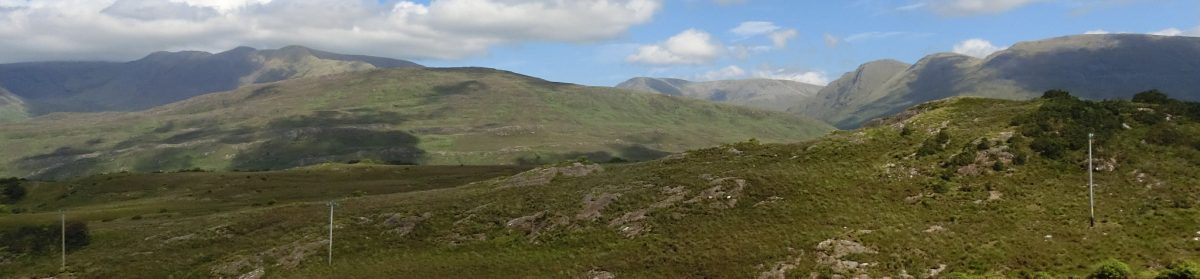
I also wandered up hill to a lookout just out of town, following the advice of  local tourist office. This gave me some nice views over the town, including over the river that flows into the lake, with a snow-capped mountain range beyond it in the distance. I was amused to see all the political signs at the top of the hill (coming into town), next to the cross … it reminded me of the Joan Baez song, With God on our Side, as I assumed all the candidates regarded themselves. I could also see the town church (cathedral?) and noticed again the snow-capped mountains behind it, which looked lovely.

But I continued to be surprised – now even a bit perplexed – at why I couldn’t see the volcano, which last night looked so prominent. How could it have just disappeared, now that the clouds were clearing, too?

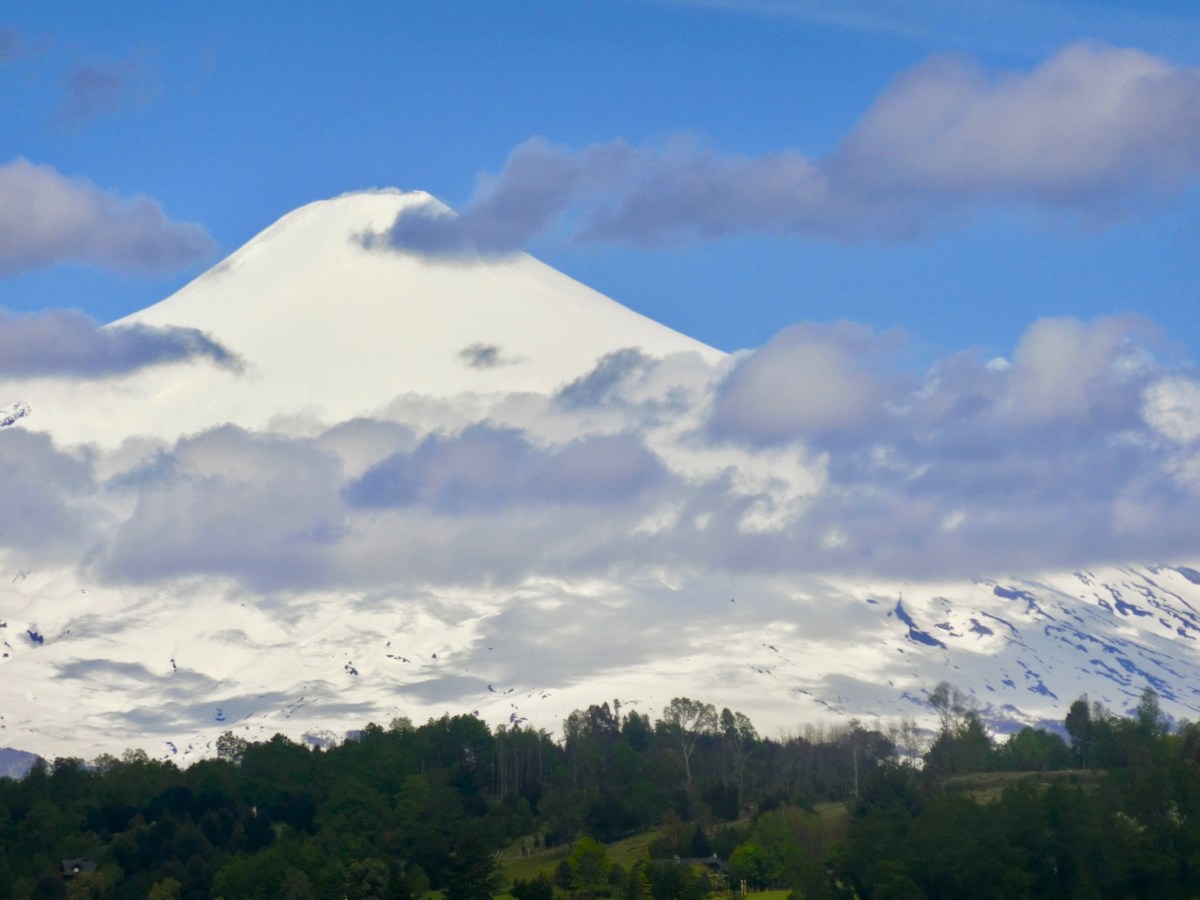
The mystery of the disappearing volcano was solved when I happened to see a tourist brochure that showed the volcano behind the building I had seen earlier. It was not missing after all – I was simply looking in the wrong place! And those snow-capped mountains were the bottom bits of the volcano, as became clearer to me as the clouds mercifully lifted a bit. The beautiful volcano became quite visible, as the afternoon wore on and I looked in the correct direction. The image at the top of this blog gives an impression of it.

I took a short boat cruise on the lake – which was lovely, despite all the commentary being in Spanish; this gave me an even closer look at the volcano, as well as other parts of the landscape around the lake. Some of the buildings now looked very close to the volcano, it seemed to me, especially as it is not an extinct volcano. The sights were really quite beautiful. I was swept away by the blueness of the lake and the mountains and the whiteness of the snow on the volcano.

Back on shore, happy that I had not lost the volcano after all, I went for a stroll along the lake again, which by now was more populated than this morning. The black sand beach (not Australia’s idea of a beach, I realise, but it looked quite appropriate here) was popular with families, and I enjoyed watching them enjoying each other’s company in various ways. I hope nobody is offended by the snaps below, taken from a distance, but I thought the kids were pretty cute, playing with their dad and each other. Chile seems a very family-oriented sort of place, and seems to have gone to some lengths to provide things for kids (such as playgrounds, for example).

I also noticed again the bike paths, which gave bicycles (including lots of kids on bicycles) complete protection form motorists, and so there were lots of people taking advantage of that, as you can see:

There was also a bit of street commerce going on along the lake shore walk, unsurprisingly, with food and beverage stands of various kinds, and different crafts as well. Here are a couple of examples; the textiles were fabulous.

But I couldn’t keep my eyes far from the beautiful lake and its beautiful volcano, now that it had re-appeared. For someone from Flatland, like me, it’s always a treat to see mountains, and an especial treat to see a volcano, and – try as I might – I found it hard to imagine what it is like to live where you see beautiful scenes like this every day of your life, as the locals do. I wonder if they ever tire of it?

Frankly, I doubt that they do.


Day trip to Concepción

I had not intended to visit Concepción, Chile’s second largest city about 90 minutes away by bus, but it looked more interesting than Chillán, so on a whim I popped onto a bus for a day trip. I was pleased that I did so.

Before I left, I visited one of the few ‘tourist attractions’ (a term I am often troubled by, sometimes consisting of things built specially to attract tourists – and so rarely attract me) of Chillán, a large pair of murals in a nearby school. The school is called Escuala México as it was donated by the government of Mexico to Chillán after the 1939 earthquake devastated the town; two artists constructed wonderful murals inside. It’s still a functioning school, but they are happy for visitors to see the murals.

As you can see in the first two photos, the murals depict graphically and symbolically the conquest of Latin America by the Europeans (the Spanish) and the struggle for independence that followed. I was very impressed; each takes up an entire wall of a large library. The mural in the stairwell is rather more sedate, reflecting mutual friendship between two Latin American countries.

My trip to Concepción was partly motivated by a mural too, as I knew of a very large mural by a Mexican artist Camarena, and is called La Presencia de América Latina. It represents the struggles for freedom by indigenous peoples in Latin America against European invaders and colonialists. It is huge and an extraordinary piece of work, housed in a university art museum. It was wonderful and worth every cent of the return trip from Chillán (which, incidentally, was only about $10!).

The mural is of course deeply symbolic, and fiercely ;political, representing several hundred years of oppression, development and life towards independence in this interesting continent. It is a masterful piece of work technically, as well as conceptually, as you can see from the close-up of the women sleeping above.

The university art collection also had some interesting Chilean paintings, which I enjoyed browsing as well. There are clear European roots in some (no more obviously than the painting of the paintings of the Palazzo Pitti in Florence!), but interesting renditions of local people and of course political changes as well. Politics is much more in your face here than in Australia, maybe because they have had to fight to gain their independence from colonial masters; we’ve not really done that yet. Here is a small sample of some paintings that caught my eye:

I was intrigued when I had come about 100 km to see the large mural, that when I asked a young woman (presumably a student) outside the building where it was, or even where the building was (La Casa del Arte) she had no idea, and directed me  to the university administration! It was no more than 20 m from where she was standing!

I wandered around the lovely campus a bit; it was nice to back on a university campus – they say that youth is wasted on the young, and that the undergraduate years are the best years of your life. I saw young people enjoying themselves here in the spring sunshine; what I first thought was a noisy political demonstration, on closer inspection was a table tennis match! The aerobics class was in full flight too!

Apart from a nice environment, there were some lovely campus murals around, some with political messages. There are a couple of examples below. It reminded me of a (mis)quotation, I think from Bertrand Russell (but even that could be mistaken!) that it is important to be radical when young, so there is still a chance that you will be tolerable when you get old.

Near the university was a large hill and the beautiful Parque Ecuador, both of which I enjoyed. I missed the ascensores from Valparaiso, having to climb the hill on foot, but it was a lovely day and the environment was pleasant – albeit steep. The walk up the hill gave me some good views of the city and the Bio Bio river that runs through it (not included here, however).

The park had a couple of lovely kids’ playgrounds, which I have seen elsewhere in Chile as well. It is clear that families and children are of prime importance here, as money is invested in infrastructure like this. many looked quite new, so are possibly in this case parti of the post-earthquake reconstruction process? It must be awful to lose everything every few years to earthquakes, and maybe that makes people more sensitive to the needs of children? There were also people doing some laps of the park for midday exercise. i liked the separate walking and bicycle paths too.

Wandering elsewhere around town, I noticed some lovely statues, standing out in the beautiful blue skies I have come to take for granted here (as we do also in Perth). Here are four notable examples:

Two of these are from the Parque Ecuador, while the other two are from Independence Square. I think my favourites were the wonderful statue of the Mapuche warrior in the square and of the fireman in the park. Firemen are widely respected here, as heroes, unlike both the military and the police, who are regarded with more suspicion, susceptible to political influences. The warrior statue is magnificent, and a wonderfully defiant bearing; I gather that the unease between the original Mapuche people and those of more recent (colonial) descent is still ongoing, and expect to learn more of that as I go further south. The other two statues are of prominent early colonial governors, including the city founder,  Pedro de Valdivia.

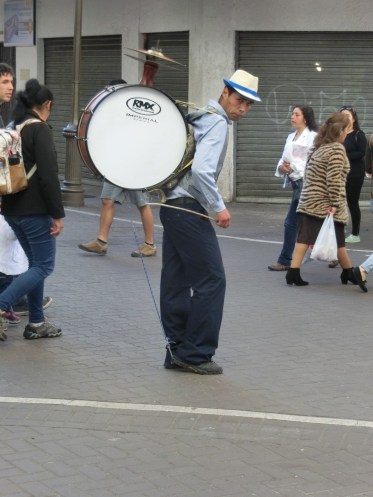
In the commercial heart of the city, I spotted a one-man band, who at least was making a lot of noise, even if it wasn’t especially sonorous. He got my vote (and some coins) for trying. I often find it hard to walk past buskers, who at least are using their talents to survive and improving the environment around them, but less hard to walk past people asking for money. That is always uncomfortable, however, reminding me of how rich I am and of how poor others are, and not really knowing how that came to be. Everyone’s story is different …

CIMG3763

Walking back to my bus, after a few other adventures too numerous to detail (but including some nice churches and even another Salvador Dali exhibition!), I was very surprised to find a dinosaur park! I have known some kids who would have found this the greatest place in the whole wide world, and I enjoyed wandering through it as well:

It turns out that the park was next to a Natural History museum – it was essentially the museum’s back yard. It was not quite closed, so I popped in briefly. It was an older-style museum, without any English signage (which is fair enough … there are not many English speakers here, after all!). I was interested to read a bit about the indigenous Mapuche people, and some of their traditional lifestyles, but the natural history things were less exciting.

I’ll see more of this later, further south I am sure, but enjoyed the very large wooden statue and the craft work shown above. (My spoken and hearing Spanish here has been a trial, partly because people speak very fast and also use a lazy form of Spanish, with words often cut short. But my reading is not too bad, and I can get my way around museum exhibits etc, with a little help from my translator.)

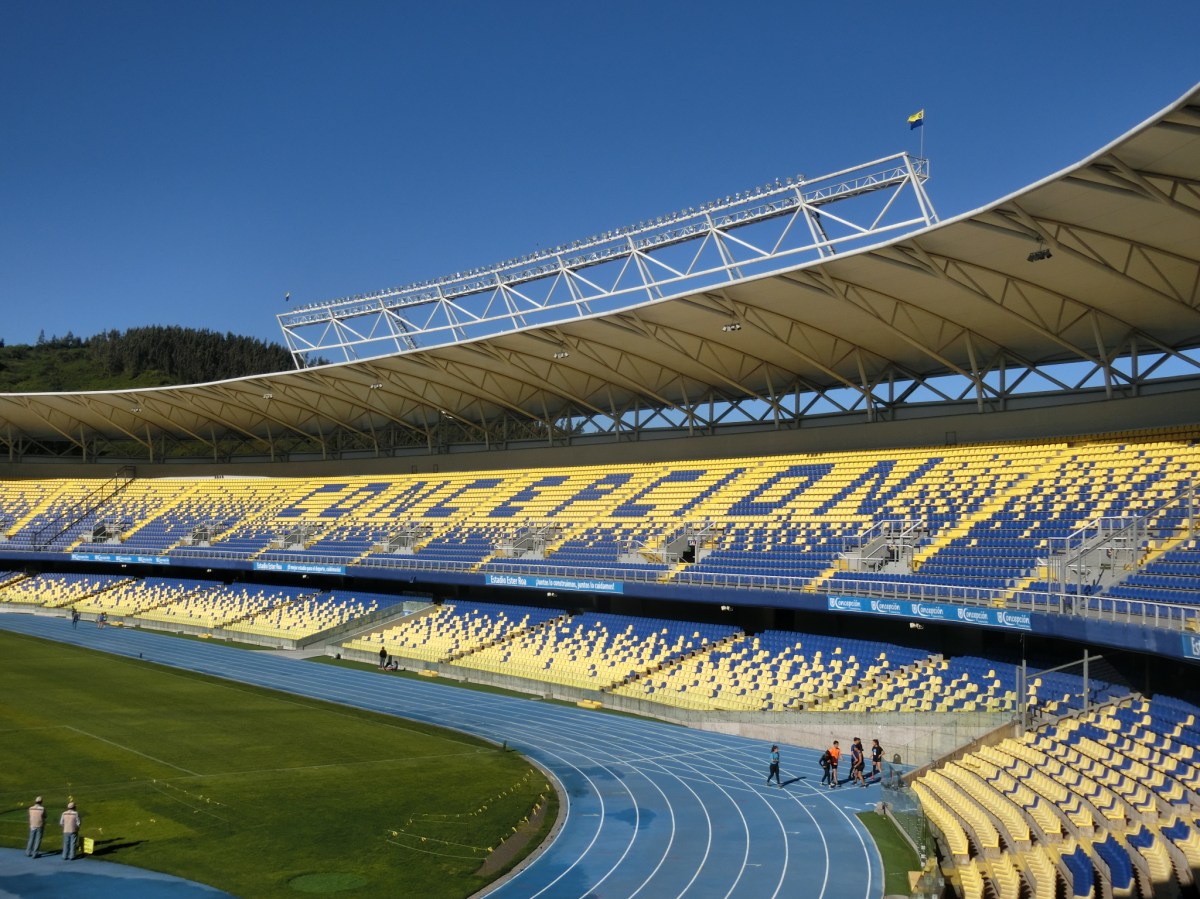
Right next to the bus stop to go home was the city’s recently renovated stadium, mostly used for football of course (as everyone here in Latin America is passionate about football), but also included a running track. I think it has been reconstructed post the last earthquake in 2010, and looked splendid in what I assume are the local football teams colours. The picture at the top of this blog shows it well. I was interested in the Singapore-like list of exclusions to bring into the stadium below:

CIMG3793

I’m sure you can translate these for yourself, using the pictures as well as the words. It would be great to attend a football match here in Chile, and the sign makes it look relatively safe, but it’s the wrong season. However, I often see kids playing football in parks, getting ready for the next season.

Arriving back in Chillán (about 7:45, still daylight with daylight saving on), I went in search of my daily beer, and failed yet again, this time encountering another free concert at at he Teatro Municipal. It was a terrific event, with traditional songs, dances and drama, with a sad love story, but a great band and choir and some great principal performers.

I thoroughly enjoyed it – more than I would have enjoyed the beer!

This is my last day in Chillán, as I am off to Villarrica tomorrow on a longish bus trip. My day trip to Concepción was certainly worth the time and effort, so I am pleased that I decided to do it, on the spur of the moment. Sometimes that’s a good thing to do, even if it means that you miss out on some local things.

Travel surprises

Today was a travel day, from Talca to Chillán, about 150 km further south into central Chile, so I did not have high expectations, except maybe to see some good views of the Andes on the two-hour bus trip. One of the joys of travelling, however, is dealing with the unexpected, and today turned out to be one of those days.

My day started with wandering around the gardens of Casa Chueca, looking at the lovely plants and flowers, and marvelling that the owners started here with nothing at all. It’s a lovely place now.

My first surprise for the day was that there were some school excursions arriving, and Franz (the owner) invited me to follow them along if I wished, and of course I agreed. The Year 2 group was very cute, and I was very impressed with the teacher Franz employed to conduct the excursion through the museum and elsewhere on the property. I spoke to the class teacher and the two mums that were also part of the group, as well as with some of the kids (mostly in my broken Spanish with the kids, as their English didn’t get much past ‘hello’). [Click on the pictures to see more of them.]

The teacher let the kids touch things (such as the snake skin, and some volcanic lava) and  interacted with them beautifully. They reminded me of Cherrie’s class, of course. When he was explaining about eggs and birds, I was surprised to see an emu egg, which I had not noticed on my earlier visit. A little bit of Australiana in a Chilean museum … of course I was unable to resist telling the kids a little bit about (in my broken Spanish) … they had already been introduced to me.

As well as the museum, the kids saw a bit of a small lake and a bit of muddy river and enjoyed feeding the chickens, geese and the rabbit. I was as surprised to see the rabbit as the kids were, having earlier thought it was just a chook pen. The kids seemed to be taking it all in, and had almost as much fun as I did tagging along. They also enjoyed playing in the playground, lining up perfectly (mostly!), but I decided to head over to the older group of school students.

I had seen a track on my first day, when Franz took me on a  quick tour, but I had not seen it being used. I was surprised to find that the older kids were driving around the track on pedal cars, under the watchful gaze of two of the local policemen! They were mostly having fun, but I guess also learning some road rules and learning to get along with policemen. One of the young fellows below is not doing a very good job of keeping to the right, while the other one is mastering it. The track has road signs and even a set of traffic lights. Brilliant!

Yet another surprise was in store for me. So engrossed was I with the fun of the excursions, which made me realise what a great job Franz has done with his property, that I walked into a muddy water hole right up to my ankles, and had to retreat to my room to change my socks and hope that they shoes dried out before I had to leave for the bus! (They did, fortunately). I felt pretty foolish, having watched the teachers tell the Year 2 kids all morning to watch where they were walking … fortunately, the kids didn’t see my foot disappear into the puddle!

However, what I thought would be a fairly uninteresting morning waiting for my afternoon bus departure turned out to be very interesting and full of surprises. Year 2’s in Chile are pretty much like Year 2’s everywhere, I expect, and I enjoyed interacting with the teachers and the kids.

I expected my trip to Chilán to be much more interesting than it actually was, especially as I had finally worked out where to sit on the bus to be able to see, take pictures and not have the sun in my eyes (my previous two bus strips failed in these respects). We passed lots of agricultural sites, which were not especially interesting, but the mountains were less interesting than the other day, except for this enormous snow-covered volcano with the top missing. It’s a long way away – maybe 100 km? – and must have gone off with a big bang when it exploded.

CIMG3532

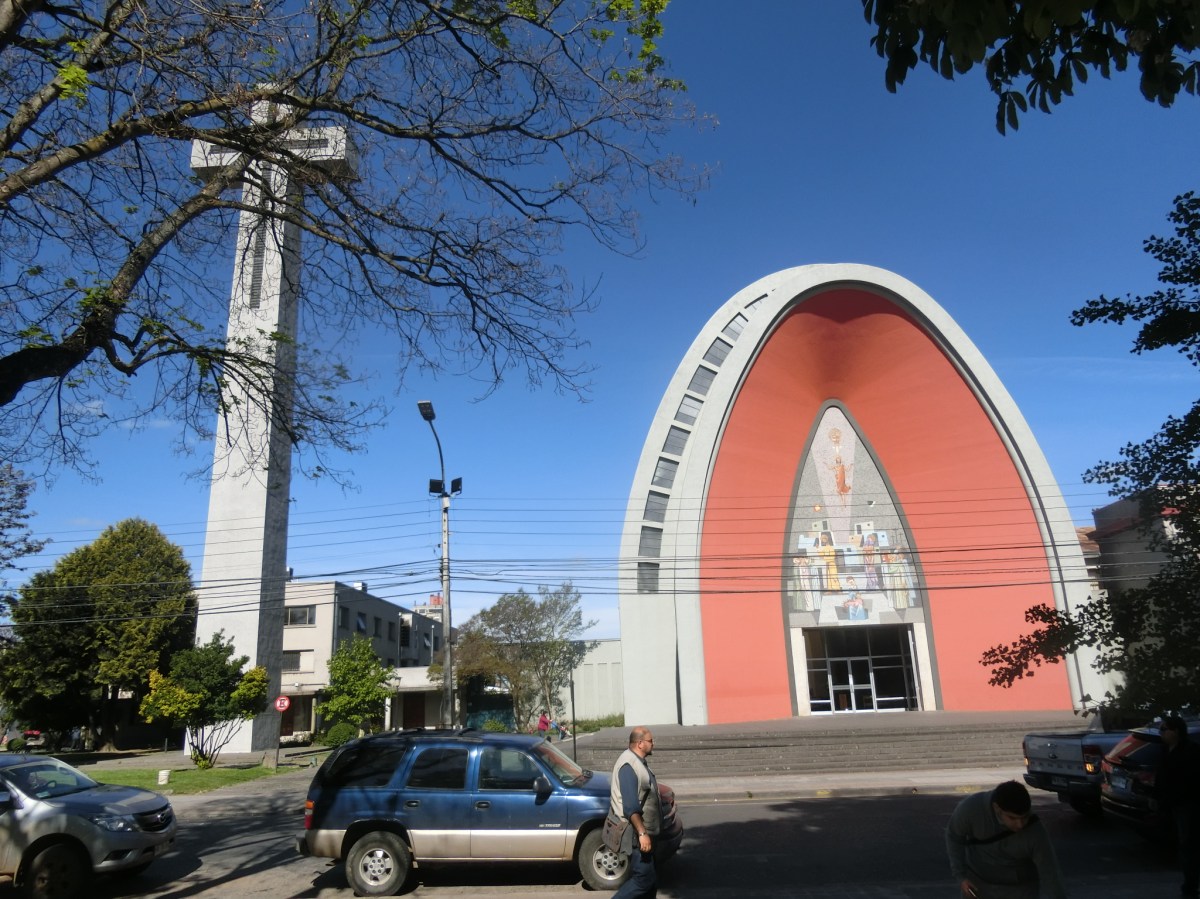
I did not have high expectations of Chillán, and I think my original reason for visiting was that I could get there by train (which is still true, but the timetable was horrible, so I didn’t use the train.) Having arrived, I walked around a bit to see what a typical largish Chilean town is like, reminding myself that sometimes it’s good to just see the everyday through different eyes. I was aware that this is earthquake territory (actually all of Chile is), and that the town had suffered badly in the recent 2010 earthquake, with lots of buildings destroyed and some people killed. The picture at the top of this blog surprised me, however, as it was a cathedral built in memory of the previous earthquake of 1939. I was not really aware of that earthquake, but found out later (back at my hotel) that it was enormous (measuring 8.3) and catastrophic. It was Chile’s deadliest ever earthquake, with about 30 thousand people in Chilán being killed and almost nothing left standing. I hope nothing like that happens when I am here.

Walking back to my hotel, I was again surprised to see from a sign  that a nearby street was named after the wonderful pianist Claudio Arrau. I knew of him as one of the great 20th century pianists, who has record just about everything of significance to piano, but I had no idea he was Chilean. It turns out (as I discovered back at my hotel and the Internet) that he actually came from Chillán! Finding somewhere enticing to eat seemed a challenge (it’s not really a tourist town), so I decided to eat in a restaurant named after the pianist, in the street named after him, a couple of blocks from my hotel. I was looking forward to the piano music and to my nightly beer, which I had earned with my walking around town.

It was more like a cafe than a restaurant, but looked homely and even a little quirky, with lots of olde world stuff on the walls.

I was surprised – and disappointed – that they didn’t serve beer, or even warm food, so my salad was accompanied by a glass of soft drink. Not the same, really – I had been looking forward to a beer! And instead of nice recordings by Claudio Arrau in the background, they had some (pleasant enough) 1950’s jazz music, which was not what I had been expecting. I was also surprised to see yet another set of Kombi pictures on a Chilean wall. They clearly made a big impact here, perhaps because of the high German population?

After my meal, I went in search of a place to have a beer and got my final set of surprises of the day, happening to walk past the Teatro Municipal (for the second time today) to see a sign that said that there was an opera concert on (right now!), with free entry! I’m not sure why I didn’t notice that earlier (although I did see a sign next to it advertising Peppa Pig, so didn’t pay much attention) but I immediately suspended my beer search in favour of some opera.

Having complained only last week about missing out on Italian opera while travelling, I was delighted that the concert pieces performed included a wonderful rendition of the Chorus of the Hebrew Slaves from Verdi’s Nabucco, one of my all-time favourites, a pretty good attempt at the rollicking Libiamo! from Verdi’s La Traviata (also a favourite) and a very good attempt at the Humming Chorus from Puccini’s Madame Butterfly. I took a few snaps (as it seemed others were doing so, so maybe it was OK?) They didn’t have an orchestra, but just an accompanying pianist, but the result was first class. Unlike my opera experience in Santiago (where they did have an orchestra), the performers had wonderful costumes and effective stage lighting, with relevant images projected behind them.

Is there anything better than a Verdi opera chorus? It was so wonderful that I completely forgot about my missing beer. They performed some other things (some before I arrived, as I missed the start, but I saw the tail end of a bit of Phantom of the Opera), which were not as soul-stirring, including a bit of Offenbach’s Tales of Hoffman, and quite a bit of Bizet’s Carmen (with which they struggled, I’m afraid). What an unexpected treat!

My final surprise for the night came at the end, when they turned on the lights after the final curtain calls, enabling me to read my ticket, whereupon I discovered that the Director of the whole show, who had been conducting both the pianist and the singers with a very large baton, was none other than Ana Kemp!

As I said at the top of this blog, sometimes one has to expect the unexpected and go with the flow.

I encountered lots of surprises today, and have enjoyed myself with most of them. Tomorrow, I shall have to undertake a search for a beer a little earlier in the day.


A walk in the park

I’ve enjoyed my stay in Talca, staying a little out of the city and enjoying some rural life. Today enjoyed a walk in a lovely nearby national park in the Andean foothills. Beautiful forests and lovely views.

My trip from Valparaiso to Talca was by bus and via Santiago. I am pleased to be travelling fairly light, with just a small backpack and my new smaller suitcase. We fitted easily into the ascensor to leave my hilltop B&B and had down to the bus station. The long-distance buses in Chile are very comfortable, and the trip offered some spectacular views of the Andes as we motored down the Panamerica Highway (which runs down the length of Chile). My attempts to photograph the views from a moving bus with dirty windows and the sun in the wrong place were pretty dismal, but I’ve included one photo as a reminder of the trip.

My accommodation in Talca is fabulous … it’s called Casa Chueca, and is a little out of town with a small ranch-like collection of buildings, built by a German chap who lives here with his wife and two young boys. They are tour experts, and have developed a deep knowledge of Chile. The property now has a small environmental museum (which hosts school visits), shown below; in addition, Franz has now written five books about the Chilean environment and also developed an app for trekking in Chile! Here are a few shots around the lovely property:

There are few guests here at present, so I feel like I’m part of the family. Everyone eats together and I have enjoyed two lovely evening meals and a delicious continental breakfast. It’s a very pleasant environment, quite different from my urban experiences so far in Chile (part of the reason I chose to stay here, of course). Franz just today finished a long-term project of building a botanical garden with native Chilean plants, which he tells me will be added to the museum experiences, assuming that things grow!

I had originally planned to take a tour from here to see a national park, but it’s very early in the season and a tour would be very expensive if I was the only member, so I got advice from my hosts on how to do it myself, and take a trek into a nearby park called Tricahue. (Well, not that nearby … it was a 90-minute local bus trip, itself an experience, of course!). The park was in the Andean foothills, and I was excited to be so close to snow-capped peaks and dormant volcanoes. Click on the photos for a better view.

I had a lovely time, and took heaps of photos, but I’m afraid that they just don’t do it justice. There was a wealth of trees and bushes in the park, and lots and lots of climbing! I didn’t see anyone else at all during my walk, so felt as if the park was mine. Here are some snaps of the foliage:

I was pleased to have pretty good signposts to help my directions (sometimes through quite thick forest), as well as blue spots painted here and there on trees to show the way, so only got a little lost and even that only occasionally. I also found Franz’s free app (called Trekking Chile) very helpful, as it gave me a precise GPS fix on where I was (the blue dot), and even the elevation (without using any data):

You can see that this spot was at 635 m above sea level, which is regarded as pretty low here, as the nearby mountains go over 4000 m, but it felt like a long way up to me, and I was certainly feeling my age! The spot above is just near a very large tree that started growing  just before Columbus arrived in 1492, so is more than 500 years old. Just near this tree was a rapidly running stream, allowing me to refill my water bottle (which was drained by then). I was surprised, but pleased, to encounter running water up so high. Again, there were many lovely views, and I enjoyed the solitude of having them all to myself, but the photos don’t really capture it.

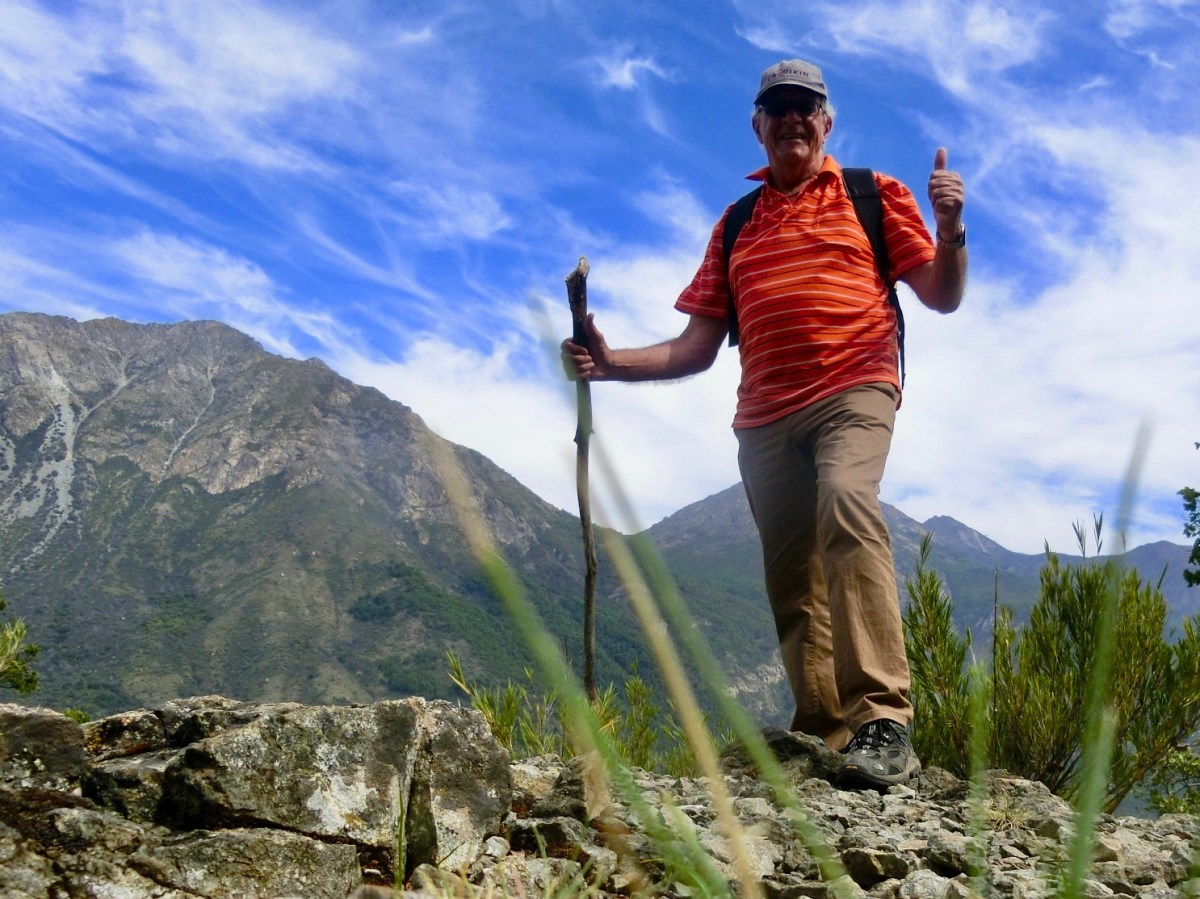
Being up high allowed some pretty good views of nearby mountains and valleys when I emerged periodically from the forest. One of them is the selfie showing at the top of the blog (my first selfie this trip, I think). Here are a few other shots from the climb:

I was surprised to not see many flowers, as it is spring time, but I saw a few, again finding them hard to photograph (well):

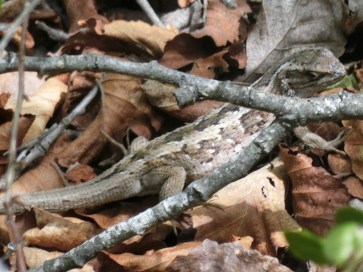
I didn’t see much wildlife, and had trouble photographing it, but did manage to get a picture of a small lizard (about 7 0r 8 cm long) that scurried out of my path and tried to hide in the bushes, very effectively camouflaged:

CIMG3276

I also spotted some local farm animals, at the end of my walk, passing through a farm to leave the property, but these don’t really count as local fauna, I think. The turkey is probably pleased that Thanksgiving is not celebrated here in Chile, too.

I’m not really an experienced trekker or even bushwalker, but thoroughly enjoyed my day, helped by my hosts at Casa Chueca, and also helped by the equipment given to me by family. Without these, the day simply would not have been possible. So my grateful thanks to Anna for the hat, Zoë for the backpack and Marian for the shoes:

But the (indispensable) walking stick (resting above on the backpack) I found myself! All of this trekking equipment is visible in the selfie.

The first beer I had when I returned to Casa Chueca just in time for my evening meal did not touch the sides … a lovely day out, but pretty tiring too!

Farewell to Valparaiso

On my last day in Valparaiso, which I have thoroughly enjoyed, I saw even more murals and back streets, as well as making a little sense of some of the everyday life here. I took a second Tours 4 Tips tour, which was very enjoyable again.

My day started with a giant street market, which I had noticed being set up the previous evening.

It was a bit like a farmer’s market together with a swap meet all rolled into one and went for about 200 m along the big median strip on Avenida Argentina. Here are a few snaps to give a flavour of it:

I am intrigued overseas to find eggs sold in groups of 10 instead of dozens; I’m not sure why we in Australia continue to cling to duodecimal measures for some things. The large strawberries were very large, as you can see. I had learned that the Spanish word for strawberries was frescias, but that’s just the little ones; the larger ones are called frutillas! It was interesting too to see the spuds cut open to check the quality. Everything was pretty cheap, as you would expect.

I took advantage of being nearby an ascension to check the views of Valparaiso again – in better light than before. There are great views from this end of town:

Walking along the streets is interesting, with lots of low-scale footpath commerce happening. The people selling on the streets are mostly pretty poor themselves, but can undercut the larger supermarkets a bit by bulk buying. That explains the toilet paper thing: they will sell individual rolls to people, where the supermarket sells them in big clumps, and for some people, the cost is too high. The last here was taking her young child along for the ride, as you can see.

Even eggs get sold on the footpaths. The yellow bottles are for gas deliveries; gas is widely used for cooking and there are lots of gas deliveries going on all the time.

I popped up to the Cultural Centre (which used to be a prison, and was used for all sorts of awful things during the Dictatorship). there was some community dancing going on, which was nice. The snapshot below also shows some of the antique trolley buses still used (on the Plano – the flat part of town – only, of course); I have enjoyed a few leisurely rides in these.

I also visited the cemeteries, recommended by our Tours 4 Tips guide yesterday. It kept reminding me of the wonderful scenes in Dead Poet’s Society, in which Robin Williams observed that all the famous people in the school were now dead: “pushing up daisies”. He exhorted the pupils to carpe diem – seize the day – which I have taken as great advice ever since, and I know that Carla (my older daughter) has been moved by the advice as well. You really do only live once …

Looking at the graves, some ore elaborate than others, I was struck that many of them only recorded the days on which people died. What a shame; far better to remember people’s whole lives, not just the end of their lives, I think. One of the biggest memorials is for the local fire fighters, who are still all volunteers, who are easily the most respected of official forces I was told (more so than Police, army, navy, etc). In a town with many fires, as well as earthquakes, that’s not surprising. These people can be relied upon to help.

A few more random snaps: my lunch of cerviches (a lovely fish dish), among other things was delicious. I continue to see great street art (and pavement art!) and continue to enjoy the ups and downs of the ascensores.

Our Tour guide today was from Canada (which proves you can do a great job, even if you’re not a local), but has been living in Valparaiso for more than a year now. She was a very good Wally! We saw lots more street art and I learned that a major reason for the murals is to avoid having your property tagged (as there are codes amongst street artists). here are a few more snaps of the many things that caught my eye.

I was surprised (well, not too surprised by now!) to see that even the garbage trucks are decorated here! One of the murals looked like a Banksy, but I think it was just a copy or she would have said otherwise:

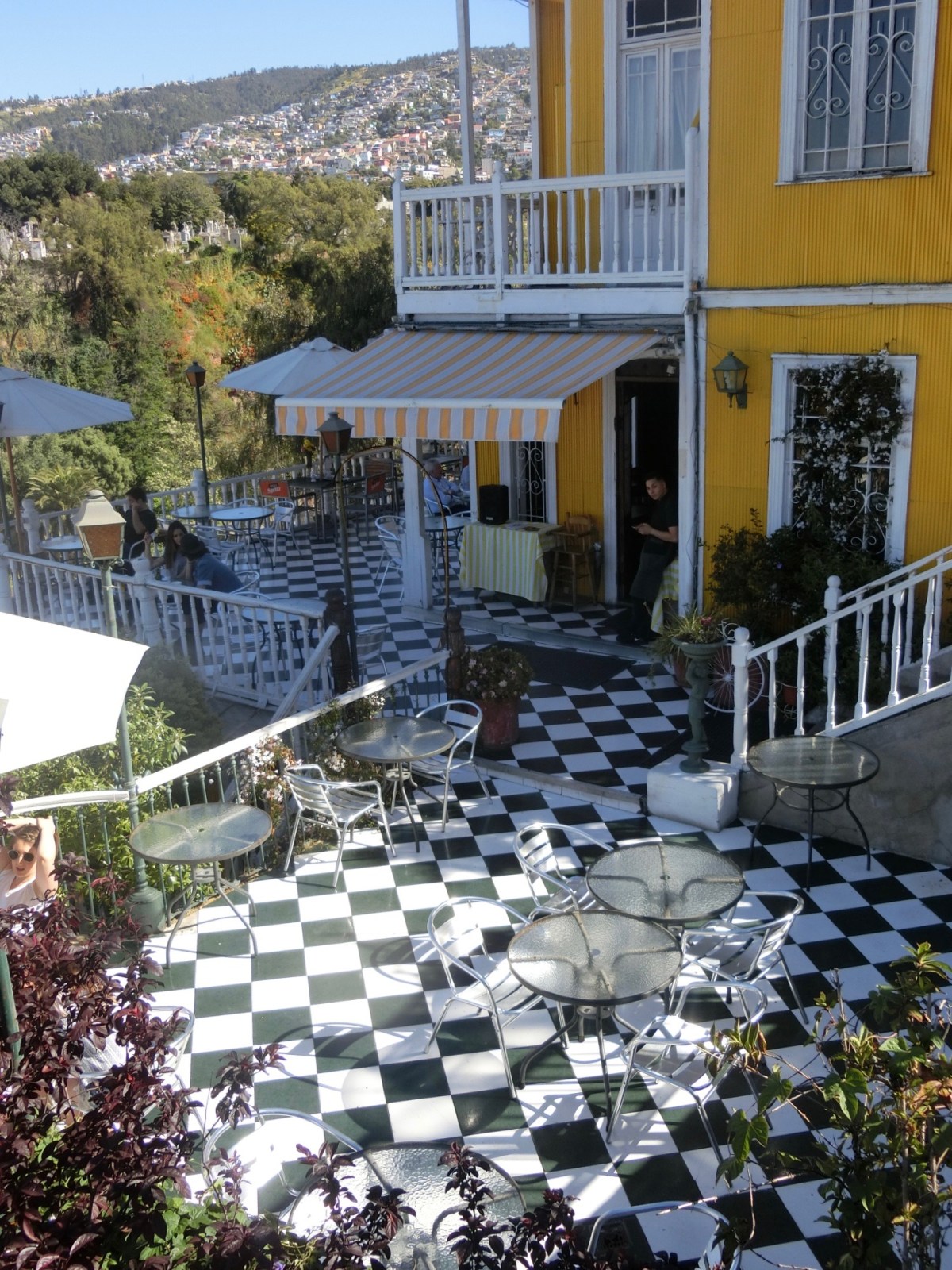
I also saw many lovely things that were not street art, such as the beautiful property with a view at the top of this blog and the lovely crochet work in the art centre. Here is also another picture of the lovely yellow house:

My last meal in Valparaiso was roughing it in a local pub, where everyone was watching the football. I enjoyed a beer and a ham sandwich, but the four people in the booth next to me had two of these enormous chorrilanos, a popular dish. I had tried to eat one of these myself in Santiago, and failed miserably; I think four people did a better job!

A lovely city. Get here if you can.

Now my journey continues, this time to Talca, a little south of Santiago.

Hasta luego!


Viña del Mar

Today I used the Metro to visit Vina del Mar, the city adjacent to Valparaiso. It wasn’t terribly interesting, so I had some lunch and pottered around a bit but didn’t stay as long as I expected. I returned to Valparaiso in search of ascensores and watched the sun set on the port.

On the way to the Metro, I popped into the Naval Museum nearby. Most of it was full of the daring exploits of Chilean naval personnel, especially when Chile was successful in the 19th century. But a few other things caught my eye.

The 1746 map showing Australia – but only the western bits – was a surprise; the map was on a lovely stained glass window, and it was not really clear to me why Neil Armstrong was on the window as well, which added to the surprise. The Wanted poster for Francis Drake, described by the Chileans as a pirate, was also a surprise to me; they were clearly miffed that the Queen of England had chosen to beknight him, when they regarded him as worthy of locking up and arresting – or worse. The local branch of the Dockers football club is also evident in the third photo, which I had not previously realised.

The museum also had an interesting display about Cape Horn, and I learned that there is a society of captains of sailing ships that have rounded the Cape without engine help. The painting was the prizewinner in a competition on rounding Cape Horn under sail. Before the advent of the Panama Canal, the route to and from Europe went via the treacherous Cape Horn and then up to Valparaiso, which made the city rich. Cape Horn was even described by some as the biggest cemetery in the world, as it was very treacherous.

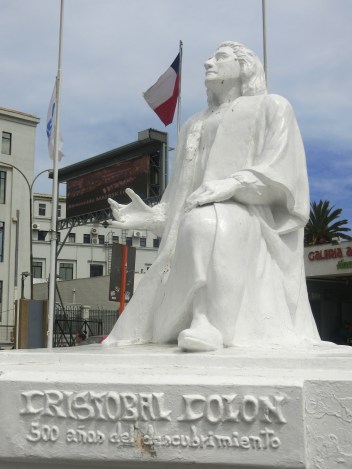
Continuing the nautical theme, just before I got on the metro, I spotted a rather weathered statue of Christopher Columbus (known in Spanish as Cristobal Colon) on the nearby wharf, obviously erected in 1992, the 500th anniversary of his ‘discovery’ of the New World.

CIMG2543

The Metro ride to Viña del Mar was very smooth and easy, but the town itself didn’t really appeal to me, certainly nowhere near as interesting as its neighbour. The picture at the top of this blog shows that it is on the coast; apparently it is a popular destination for local holiday makers, especially Argentine folks. The rows and rows of beachside apartments did not stir my soul much – and nor did the beach itself. It reminded me of a slightly shabbier version of Australia’s Gold Coast, and no more attractive.

It’s a sure sign you’re in tourist territory when you see a horse and cart, but I was surprised to see a Kombi again. (I think I have found where they all came to die …). At first I thought it strange that all the children’s toys were available for hire, but then I figured that probably kids don’t normally have things like that (as they don’t normally have an outside space to call their own), so it seemed less strange.

There were some sea birds on the nearby shore that I watched for a while. Some of them were quite photogenic:

CIMG2612

There was a slightly interesting archeological, museum I visited, especially as it had some interesting material on Easter Island (which is part of Chile)

The museum even had a genuine Easter Island statue out the front (the other statues are from a video I watched), as well as carved wooden statues (with ribs) inside. Apart from other problems, it’s a sad story of environmental mismanagement that they used up all the wood on the island for fuel, and so were not able to build boats to go elsewhere, it seems.

The three pictures below show three different things that caught my eye. The large park in the middle of the city was damaged by the 2010 Chilean earthquake, with a major building still under reparation. The big crack in this rock wall gives an indication of the size of the quake. (I think it measured 8.8, one of the strongest in recorded history.) Too scary to think about much …

The funny shaped rocks were in the archeological museum, and were related to the Inca people. I’ve seen them a few times now (including in Santiago); it’s funny how things from a different continent become familiar after a short while. Somehow, I had not seen these in my previous life, presumably because museums I go to (in Australia, Asia and Europe mostly) did not mention the Incas. The third photo shows a bit of street campaigning, as there is a Presidential election coming up (next month, I think). It seems a pretty open contest, but I hope it turns out better for Chile than did the last American election I was close to did for the USA. I’ve seen lots of leaflets being handed out in the streets, as well as the occasional person like this waving flags.

I popped briefly into the casino in Viña del Mar, as I happened to be walking past it. I wandered over to the Roulette tables and watched a chap put 80.000 Chilean Pesos (around $160 Australian) on the table (not in a very strategic way) in each of three successive spins and lose the lot. It took no more than 15 minutes. He probably thought he was unlucky as two of the spins came up 00, the banker’s number in the Americas, but I thought he was just foolish. I’m not a gambler – as I know way too much probability – but my hunch is that if one of this big bets came off, he would have reinvested it and lost it anyway. My AirBnB host in Santiago told me that the minimum monthly wage in Chile is around 220.000 Chilean pesos, so he blew more than a month’s minimum salary in about 15 minutes. I am an advocate of teaching gambling in school, so that people will understand what not to do and why to not do it; I wonder if it would have helped him, poor chap. I hope he could afford to lose money like that and did not continue to lose even more after I left. He did not look prosperous, but looks can deceive.

Back in Valpairaiso, I went in search of more ascensores. I managed to find one working (and of course went up and down it). This was some distance away from the more interesting parts of town, but I noticed from the vantage point at the top that even some of the newer apartment buildings have large murals, as you can see. One of the ascensores I found had been replaced (I think) with an elevator, and I chose to walk down after going up; the picture shows that this was a little tricky, with steps going every which way. It would be a nightmare if it were raining; mercifully it wasn’t.

While searching for acsensores, I discovered what must be close to the ugliest piece of public sculpture I’ve seen anywhere. I realise that tastes differ, but I did wonder what on earth they were thinking to install this huge work in a main street. I also noticed that Halloween stuff has started to appear with the street sellers, maybe reflecting North American influences? I think that the associated Latin American festival is Day of the Dead. I’ll have to check it out, as I will still be in Chile at that stage.

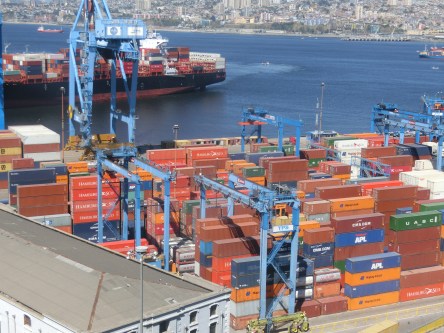
I had an evening meal overlooking the large container port, not far from my present abode (so that I could get home safely before dark!). I was fascinated to watch the containers being loaded onto the ship and onto trucks. It all looked very efficient, and I could see almost no people except the truck drivers (whom I assumed were in their trucks still). Part of me marvelled at the extraordinary amount of mathematics and computing that makes it all work, moving very large and heavy things with precision and somehow remembering where everything is and needs to go … But another part of me worried about all the people that used to work there, but now no longer do. And when the truck drivers are also replaced by automatic driverless vehicles, they will be gone too. Not a good outlook for the local people, although no doubt the Port Authority and the Shipping companies will prosper.
My little blue restaurant looked rather fragile from the outside, although it was fine from inside. I decided to ignore the possibility of an earthquake while I was enjoying my meal and a beer, watching all the activity way below me.

Fortunately, nothing happened and I made it home OK, neither shaken by an earthquake nor by a local unemployed street criminal …

My last full day in Valparaiso tomorrow …

Walking around Valparaiso

I enjoyed an excellent walking tour (called Tours for Tips, a free tour for which people pay a tip of their choice) around Valparaiso – or rather up and down Valparaiso, lead by an enthusiastic local, and then did some more walking myself around this lovely city.

The tour guides were dressed as Wally (as in Where’s Wally?) and our English-speaking Wally was a very enthusiastic local resident. We had a delightful time for a few hours. The snaps below show the first flat street in Valparaiso (once the richest street in Latin America), a park that used to be a prison used by the military dictatorship in the 1970’s and Valparaiso’s oldest church in the original town square. Valparaiso used to be the stopping-off point for ships from Europe, after passing the bottom of South America, en route to the California goldrushes. The line just behind Wally in the photo shows what used to be the edge of the ocean in the city, now a few hundred metres inland. She was an excellent and knowledgable guide to our multinational group and the idea of giving a tip instead of paying a fee is a good one.

The church shown here has been rebuilt no less than five times since the middle of the nineteenth century, such are the problems of earthquakes and fires in this part of the world. I heard some interesting stories too about the dictatorship (as it is called here by most people), which used the old jail as a detention and torture centre. I also heard of the activities of the CIA that had originally supported the coup, mostly because it was replacing Latin America’s first freely elected Marxist government. Of course this reminded me of the earlier US support of El Qaeda and Osama Bin Laden … as well as the invasion of Iraq, which created ISIS as a by-product; international politics is often messier, the closer one looks …

Among our adventures was a bus ride up the hills to a good lookout, followed by a walk downhill. She had warned us that the bus ride was like a roller coaster ride, which turned out to be a remarkably accurate description; everybody was advised to hold on tight at all times, as the bus drivers whizzed up and down hills at breakneck speed, and round corners in a display of driving that would be good training for Formula 1. Miraculously, we all survived.

The pictures show that buses make the fares clear in an assortment of attached stickers. The bus shown above is not the one we took, but is a similar (newer) one whizzing past the corner (cutting the corner – they drive on the right here, at least in theory) near my lodgings and about to tear off down the hill. I took a bus home, and found that the driver went to the same training school, whizzing around corners and lurching from stop to stop. Like everyone else on the bus, I learned to hang on tight. If ever there is a Valparaiso Grand Prix, which would make Monte Carlo look tame, I’d back these guys!

But most of our time we walked, or even strolled, and learned about this lovely city, its history and its present, seeing lots of murals and lots of mosaics as well. It is delightful to be amongst enthusiastic people, and our tour guide did a terrific job of helping us to see and understand the city that she obviously loves. One of (many) murals associated with local nightlife is shown at the top of this blog. Here are a few other murals and mosaics, which can be seen better if you click on them:

Some of the mosaics are large works of art (one I saw took up the wall of a five-story building) and are in fact signed; many are commissioned by owners of the respective walls, and there is a difference between graffiti, murals and tags, as well as considerable respect amongst the artists. The above samples are just that – samples. Here are a couple more samples:

Our guide told us of an extraordinary annual bike ride, which starts very high up on a hill, and goes down steps, alleys, streets, all at a death-defying breakneck speed, ending up down on the flat. It’s a huge day, apparently and unsurprisingly. The first picture below shows the start (at the top of the steps next to the green belt in the middle of the picture) while the second shows the end: the riders come through the right-hand window (which has been removed for the purpose!) and their time stops when they hit the street below! The best time is around two and half minutes!

That would be worth seeing, but it is not happening whilst I am here, unfortunately.

After my tour, I had lunch in a lovely café, dedicated to poets. There’s something wonderful about such an idea, and especially in Chile where two of its poets (Pablo Neruda and Gabriela Mistral) have won Nobel Prizes for literature.

Inside the café, one table was taken up by models of two of the poets (Neruda and Vicente Huidobro) apparently having a literary lunch together; I did not realise until I had been there a while that they were in fact models, and not people. I had already decided that I would visit Neruda’s Valparaiso house while I was here, and so set off after lunch to do so, hoping to use an ascensor to get started on the trip up the hill.

Alas! The ascensor was being repaired (like several others around town), so I decided to walk up instead. While this was certainly more strenuous than the ascension would have been, it allowed me to see a few more murals on the way, including the lovely corner mural of Gabriela Mistral, and a very clever set of painted steps – among many others.

Here are a few of the others, including one in which the mural had spilled over onto the pavement, as you can see.

The (long!) trip uphill was worth the effort, as I enjoyed exploring Neruda’s house very much. he was very fond of Valparaiso, it seemed, and loved the views from his five-story house (with just one room on each level) over the city below:

As you can see, the view from the lounge room and from the bedroom sweep over the city below, so I am not surprised that he enjoyed it so much. In fact, although La Sebastiana (the name of the house) has views from high over the city, the city of Valparaiso goes a long way further up the hills behind the house as well. There are apparently 47 hills in Valparaiso, so I have only just scratched the surface so far.

It was a lot easier coming down the hill, and I noticed that people generally walk down and don’t generally walk up – funny, that! I also saw some interesting sights coming down as well, including the house of someone who seems to collect hub caps with obvious enthusiasm. Try as I might, I could not reconcile the angles of the white house, as something seemed to be vertically challenged, maybe a result of the most recent earthquake? And everywhere, there are lots of vibrant colours, almost as if it is illegal to paint your house in some bland pastel. I was impressed also with the garage door mural I passed on my way down the hill.

We also rode on a trolley bus during our tour; this was a great deal less exciting than the bus trip – a lot slower, smoother and more horizontal! Apparently, the trolley buses here are amongst the oldest in the world, although this one was relatively new, probably no more than fifty years old. The church shown here is, unusually, not a Catholic church, but I think was Presbyterian. There were lots of colourful fruit and vegetable stalls around on the flat part of town.

It was a lovely day out, and I was pleased to get back alive to my abode in the hills. These couple of snaps give an idea of those hills, both taken within a block or two of where I am staying. Good training ground for bus drivers …

Although I enjoyed lots of murals during the day, I especially enjoyed seeing this one, with one of my favourite quotations on it:

CIMG2354

In case your Spanish is a bit rusty, it roughly translates as “The world is a book, and those who don’t travel read only one page.”

Amen.

Valparaiso: street art on hills

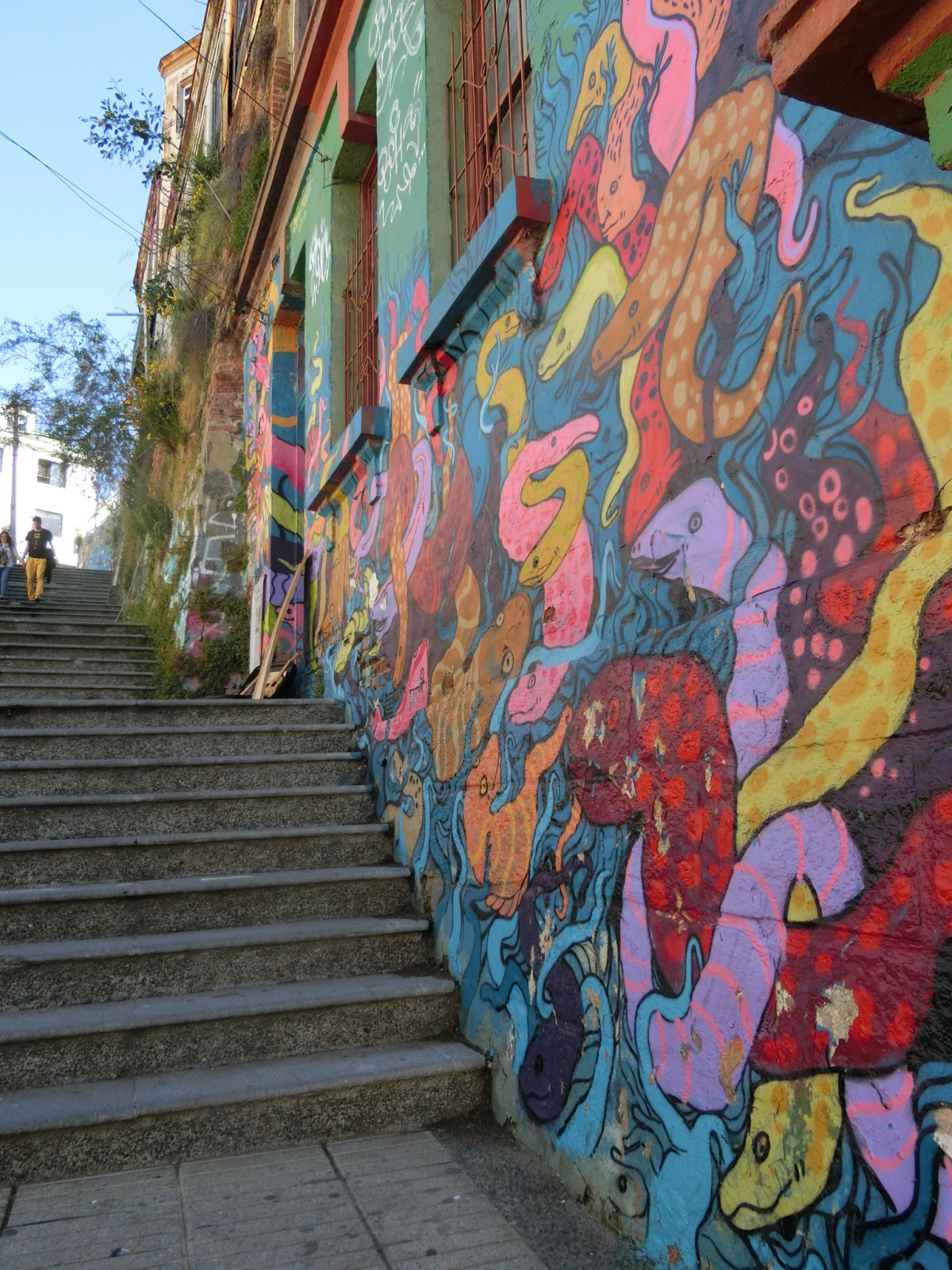
I’ve arrived in Valparaiso, which is itself a World Heritage Site because of its cultural links, including amazing murals and winding steep streets around the older part of town. That also means that there are lots of steps, as the picture shows.

My trip here involved taking my first long-distance Chilean bus, which was entirely unproblematic. The bus was newish, comfortable, well-driven, with secure luggage processes and on time; it’s hard to expect much more for the princely sum of about $4 that I paid for the 90 minute trip from Santiago to Valparaiso! (It was a special deal of some kind, completely mysterious to me). My bus was described as semi-cama, or half-sleeping; I had a good footrest and could have inclined the seat (a lot), had I chosen to.

I’ll be doing some more travel by buses, so I am feeling positive about the likely experiences. You can see from the picture that the bus company has improved its fleet since the early days!

I passed some lovely agricultural land on the way, as we drove through some wine-growing regions. Chilean wine is a major export I think, and have often seen it in Australia as a relatively inexpensive alternative to some Australian wines. It was difficult to take photos out of a slightly dirty window, however. I saw lots of wildflowers too, mostly yellow, and many of which looked like wattle to me (although I am rarely a good botanical guide).

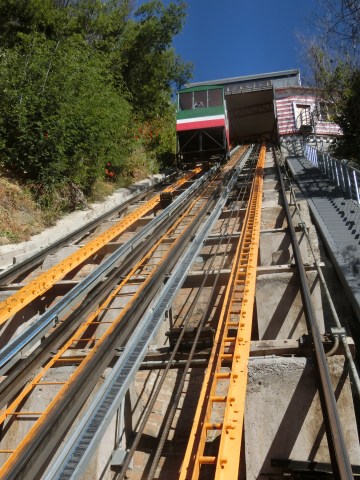
The city of Valparaiso is built on about forty hills, so is a nightmare for cartographers and pedestrians alike. Although I have various maps, I was mostly lost for most of the first few hours here, but in a pleasant way of course. A feature of the town are the famous ascensores, or funicular elevators, which help people navigate some of the hills cheaply and efficiently. This one is near my (wonderful) B & B, just a few blocks away (downhill from me).

It was fun to go down, not long after arriving, but a great relief to go up, as I wended my way home! Many of the ascensores are not working, unfortunately, awaiting funds for repair, it seems. But in my travels yesterday, I also went up another one (for the princely sum of 100 pesos, which is about 20 c in Australian money. Worth every cent, according to both of my legs …

CIMG2172

Valparaiso has been Chile’s main port for many years, especially when trading ships used to sail around the horn and up the coast. Lots of minerals were exported from here, when taking stuff out of the ground was Chile’s main industry. Even when the Panama canal opened, it continued to be an important port, and in recent years has become a popular destination for cruise ships full of tourists. So the population relies on tourism and the port for employment and economy. These days, however, lots of the port work is handled automatically by big container machines and computers, so employment is a problem. My local ascensor is right next to the huge port area:

CIMG2148

My landlady was telling me at breakfast that the port authorities are now trying to reduce the number of cruise ships coming (presumably as they make more money with container ships), which would exacerbate further the local employment, of course, as most of it relies on tourism these days.

I thoroughly enjoyed wandering around some of the hills, especially going down and not going up, as there were many steps (and my iPhone still does not record my daily steps! what a waste!). Many streets are very steep indeed, and must be a nightmare to drive on. (This would be a great place to sell spare clutch parts, I thought to myself.) The picture at the top of the blog gives an example of some steps, and also shows that the the mural has been refined here to an urban art form of a high order. I loved the step painting below, for example, and was imagining driving down the hill shown below, pleased that I was not trying to do so.

Here are some more examples of the wonderful street art around town. I liked the van Gogh, especially! Click on the pictures to get a better sense of them; some of the murals are huge.

I also saw the most decorated lamp post I’ve ever seen, too:

CIMG2195

I am sure that later blogs from Valparaiso will have lots of other murals, so I’ll resist adding more now. My B & B has some wonderful views from the terrace just outside my door, while the picture below with the pink flowers shows the view out my bedroom window.

Lots of people in this town get a good view, although it does make me wonder about earthquakes, which are not uncommon around here. Still lots of things seem to survive, such as the house with a view below and the lovely naval building in the town square.

Actually, the naval building used to be the town hall, but it was commandeered by the navy when the military coup took place in 1973 and they seem to have forgotten to return it, which has not endeared them to the locals.

My first afternoon in Valparaiso finishes with sunset over the bay, with a lovely view from my terrace. First time in a while that I’ve seen the sun setting over the Pacific

CIMG2238

I’m sure the terrace will come in handy in the next few days I am here.


Some life and some museums in Santiago

Everyday life in central Santiago seems manageable for most people; I am surprised how accustomed I have become to it, so it’s certainly manageable for those of us passing through. On my last (full) day in the city, I visited a few museums and enjoyed a stroll around town. A few small everyday things caught my eye.

Going for a walk is always interesting, especially when one is not at home. I took some laundry to a local service this morning and passed (again) a rather stern looking pair of police vehicles outside the local church. I’ve seen these before, and they look a little less scary every day: I guess vehicles like these need to be parked somewhere, and I no longer see them as evidence of an imminent problem! The big sign welcoming the pope sends a different message, too, although I assume security will be very tight when he arrives in January. I have spotted several of the rosary signs in local churches, too, over the past few days. There is no doubting that Chile is a Catholic country.

On my way to my chosen first museum, I encountered a bike counter, and stopped for a while to see if it was working (it was). Bike lanes here are quite prominent, and clearly do not tolerate cars wandering into them (as they do routinely in Perth) as there are big barriers on the road; the City is trying to get people out of their cars and onto their bikes a bit, and they are commonly seen in parks and footpaths as well as roads. As a second example, the Los Heroes park near my apartment (and other parks too) always have ramps as well as steps; I’ve not seen a wheelchair on one, and just the occasional pram, but lots of bikes.

I saw fruit juice sellers on lots of corners, easy to spot. They provide (very) freshly squeezed orange juice for passing trade. I also passed lots of murals and graffiti, which no longer worry me, and even give the area a bit of character. The locks on doors (which were not part of the original design) also suggest something to me, but I was taken aback to find an Institute for Military Geography! (Ye gods! What on earth is military geography?? Maybe I’m mistranslating it?) Isn’t geography just geography? What is ‘military’ about it that need a multi-story building?

I am surprised at the very large number of universities here, and worry that many of them must be pretty dodgy. There would be at least a dozen within a five-minute walk of my apartment; maybe I’m in the university part of town (which would surprise me, as there is a very large number of auto parts shops in this bit of town!). I passed several universities and lots of students this morning, mostly milling around in the street, presumably waiting for classes.

CIMG1938

The students above are examples: they seem to be all about the same age (suggesting that university study is not for older people? a big inference!), all having backpacks and all pleased to be in the company of friends, enjoying lots of seating. It was quite late in the morning (around 1030 am), so I’m not sure why they were outside.

The first museum I visited was originally the palatial home of a wealthy family (the Cousino family) who made their money mining silver in the nineteenth century, but it has now become a museum.

It is beautiful inside, and is in very good shape, despite some water damage from a fire some years ago and of course a bit of earthquake damage (pretty normal for Santiago!). It’s set next to a small and lovely park, and is in nice manicured grounds. Most of the original furnishings, drapery, wallpapers, parquet floors, etc are all in good condition, and I thoroughly enjoyed my guided tour (I had a 1-person tour, and in English! I even got a substantial senior discount to enter. Win-win-win!) Unfortunately, I was unable to take photos, so can’t share the detail here, but it was a very stately home indeed. The owners were very inclined towards French and Italian things, which certainly showed in the house internal decorations. There was very little in it that could be described as Chilean, in fact!

Similarly, when I visited Museo Nacional de Bellas Artes, I could see from both the name and the style that it was clearly modelled on French designs, and had an obvious reverence for Italian arts, with the massive copy of the head of Michelangelo’s David in the main room, as well as homages to European painters elsewhere, and Greek and Roman sculptures. I have got the feeling that when the Europeans conquered Latin America, and Chile in particular, they created a high society that preferred European things over Chilean things. Even Pablo Neruda, the famous Chilean poet, was pretty obsessed with French things and was French Ambassador for a while.

There were some Chilean works in the MAC (museum of contemporary art) adjacent to the museum, however. I really enjoyed the feel of the neoclassical building, with high ceilings and lots of beautifully tiled floors, but also enjoyed the works of art – or at least some of them.

Contemporary art is often huge in scale, and the blue image above comes from a room that had moving lights in it, captured still in the photo. Dynamic works like that are certainly different from a static picture on a wall. The other example shown above has many pictures on the wall, however, and also took my eye.

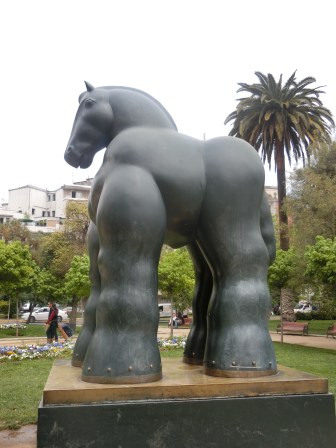
Something else that took my eye – unavoidably – was the large sculpture outside the museum. It was of course by the Colombian Fernando Botero, and reminded me immediately of the sculpture I saw in Singapore just a week or so ago. It’s a very distinctive chunky style!

CIMG1991

Adding to the French connections – perhaps – is an abandoned railway station that has now been converted into an exhibition space. It was previously the Estacion Mapocho, a huge and extravagantly styled railway station that fell into disuse after trains became problematic (I think partly through earthquake damage? Not sure), but which has been recently revived in 1994 as a cultural venue for concerts, trade exhibits and art shows, etc. I could not go into the main space, which was being prepared for a show, but these snaps give an impression of the former glory that is being returned:

It was hard to not imagine that they got the idea of restoring this from the wonderful job done on Musee D’Orsay in Paris, but maybe I’m wrong with this guess. (Nothing I read mentioned the possibility, so it’s pure speculation.)

In my museum day, I also popped into the National History Museum, right in the middle of town. This was an older style museum and a bit challenging as everything was in Spanish. I can stumble by in such situations, as my Spanish reading is (much) better than my hearing, but it’s still  bit taxing. And I was running out of time, which didn’t help.

The snapshots above refer mostly to the European influences on Chile. I was surprised at the portrait of Christopher Columbus (Colon in Spanish) as a relatively young man, who changed the world by bumping into the Americas. I remember learning why American Indians were called ‘Indians’ by Columbus – because he at first thought that he was in India! (Navigation was not what it is today back then!). The Spanish conquistadores certainly changed the world of Chile, and there was a still a clear hankering to be ‘European’ in Chilean high society of a hundred years ago. Indeed, I wonder if it hasn’t yet disappeared.

The painting above (next to Columbus) was the subject to an entire gallery in the Museo de Bellas Artes, where the ‘unknown’ people were described. The painting shows the first  Spanish scaling of what is now Cerro Santa Lucia (subject of an earlier blog) overlooking Santiago, with particular Spanish dignitaries identified, but nobody remembers who many of the (local) people were. It reminded me a bit of learning history, where we learned about famous people (such as politicians, generals, etc.) but didn’t;’t really learn anything about everyday people (the farmers, shopkeepers, seamstresses, teachers, …). So it was nice to see the painting for real in the museum.

It was past time for some lunch, so I stopped at a small cafe/restaurant for a daily menu (a good deal, with a three-course meal, with drink, usually for about $8). I had some delicious soup, a tortilla with salad, some bread and bits, as well as a bowl of jelly and a glass of strawberry juice. A pretty good deal, I thought, and very inexpensive. Opposite me there were people selling clothes in the street (for very little money), which made me feel as if I was being positively reckless with my money. But the real story here is told with the photo at the top of this blog.

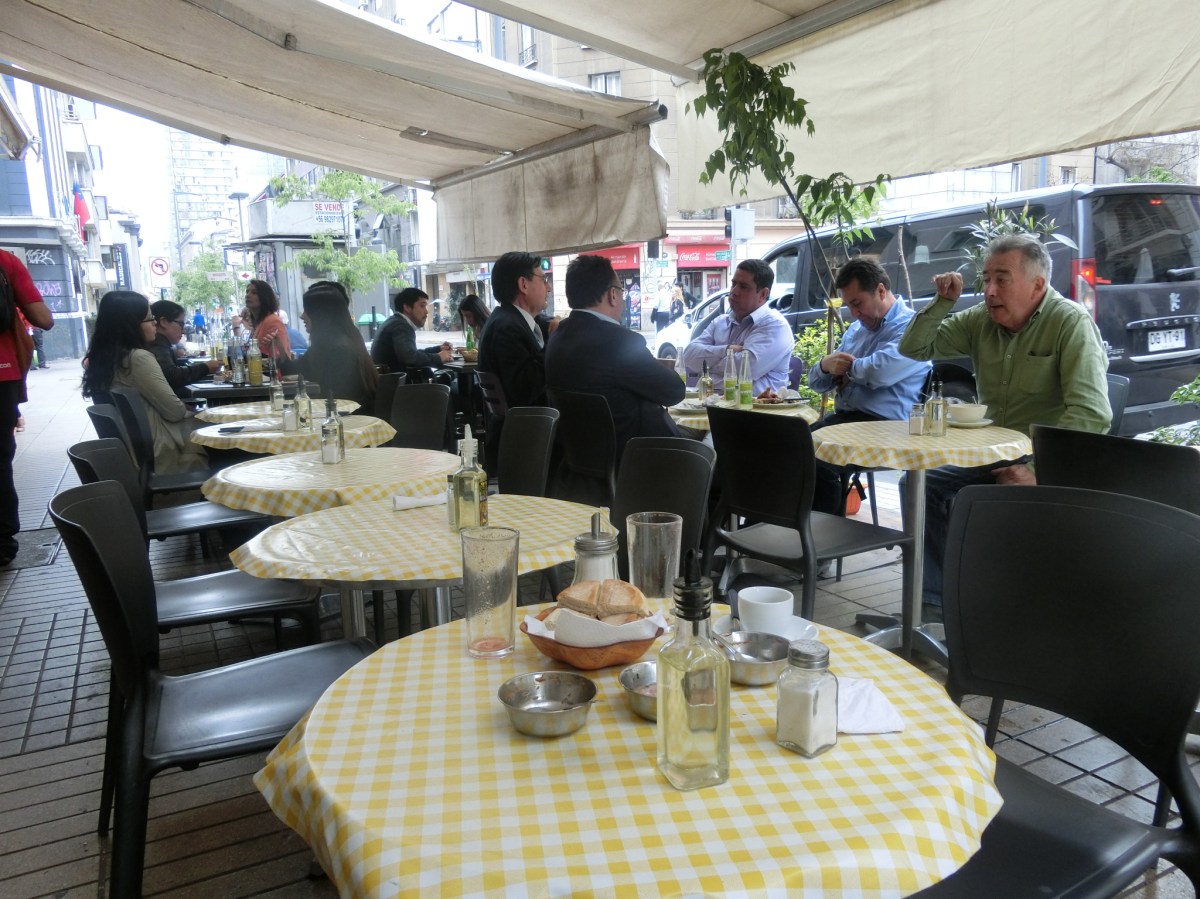
Two young women sitting next to me had finished their meal and left, and the table had not yet been cleared. (The photo at the top of the blog shows the table.) To my surprise, a middle-aged chap came by, and ate most of the leftovers, while standing at the table. He drained the dregs of the juice, scooped most of the savoury mixture out of the bowl onto some bread and ate the rest of the bread. And why not? Of course he was hungry, and the food would presumably be thrown out anyway. Nobody said anything, including the chap in the green shirt who was either the head waiter or the owner, and who must have seen it happening. I noticed that the table was cleared soon after the chap left. I don’t know whether it is a standard practice to tolerate this, or whether this was just a one-off event. But it certainly served to remind me (again) how lucky I am.

My last museum visit for the day was to Londres 38, a house that became infamous in the Pinochet regime for torturing political prisoners and the development of a system of people ‘disappearing’, via extrajudicial executions, especially in the early days of the military dictatorship from 1973-1975. The English guide pamphlet describes it as a ‘Former centre for repression and extermination’, but which is now used to ensure that memories of these awful events are not forever buried and forgotten. The government even changed the house number (from 38 to 40) at one stage to distract attention from it.

CIMG2054

Not a pleasant stop, of course, but it’s important to not let bad things disappear, as the sign outside says: All the truth, all the justice. The relative recency of state-sponsored terrorism of this kind might account in part for the respect with which the police and the armed forces are clearly given here; the military dictatorship happened with military and police cooperation, I think. I’m not sure. I still need to know more …

On a (slightly) lighter note, here are my last few photos of the day’s wanderings. I was not sure why there were mounted police in the main square; I don’t think they were there the other times I came. I saw lots of fruit stalls and lots of fast food stalls during the past several days. Book stalls were less common, however; that shown here is outside a university, so unsurprising (and slightly reminiscent again of Paris?).

The statue in the style of the Easter Island statues is probably as close as I will get to Easter Island in the rest of my travels this trip, although I expect to see lots of food stalls, lots of fruit, lots of policemen but maybe not lots of books. We shall see.

I have enjoyed my week in this city, which has made it clear to me that I have lots more to learn about Chile.

Off to Valparaiso tomorrow to continue that project.

Hasta luego!

Sculpture in the park

I went to a sculpture park today in Providencia, a neighbourhood just out of central Santiago. I expected to see some sculptures, but was surprised to find sculpturers as well, and was able to watch the works in progress (for the first time, I think).

I had not noticed it previously, but my metro station this morning had the official (legal) rights of the child hanging on a wall, near some childlike pictures. Apparently, children have legislated rights here since 1990 – although I don’t have any idea whether the law is strictly followed. It’s interesting to me, as Australia does not have a bill of rights for people, be they adults or children.

I have noticed many metro stations are in the process of being decorated at present, although I have not noticed stations with such serious decorations previously.

The sculpture park I visited is a short distance out of the centre of Santiago, opposite a beautifully green bank of the river that contained both a pedestrian path and a bicycle path (which went for 42 km, so it permitted a bicycle marathon). It was not hard to find, as the cyclist in the air gave it away pretty successfully (only one flying cyclist today, not several like yesterday).

I always enjoy outdoor sculptures, even if they don’t make sense to me. I like the idea of big things being planted somewhere because they look interesting for some reason; indeed, it is not always clear from the titles of sculptures what they actually represent, many of them quite abstract. There were some good examples in this case, about twenty or so together on the opposite bank of the ‘river’. I liked these, among others:

I tried hard to find a spot to take a photo of the needle and thread, until I realised it was impossible to avoid there being a glare from the sun (when it is out), because the needle is cylindrical. I had never quite appreciated that before, funnily enough.

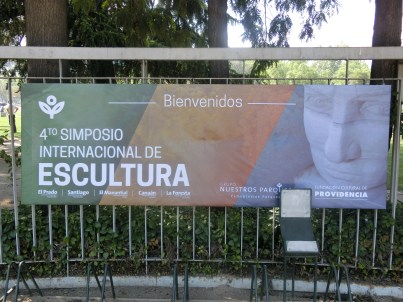
Most sculpture parks are pretty quiet, but this one was very noisy, and I realised that something was going on. Then I saw the sign, which gave it away:

CIMG1841

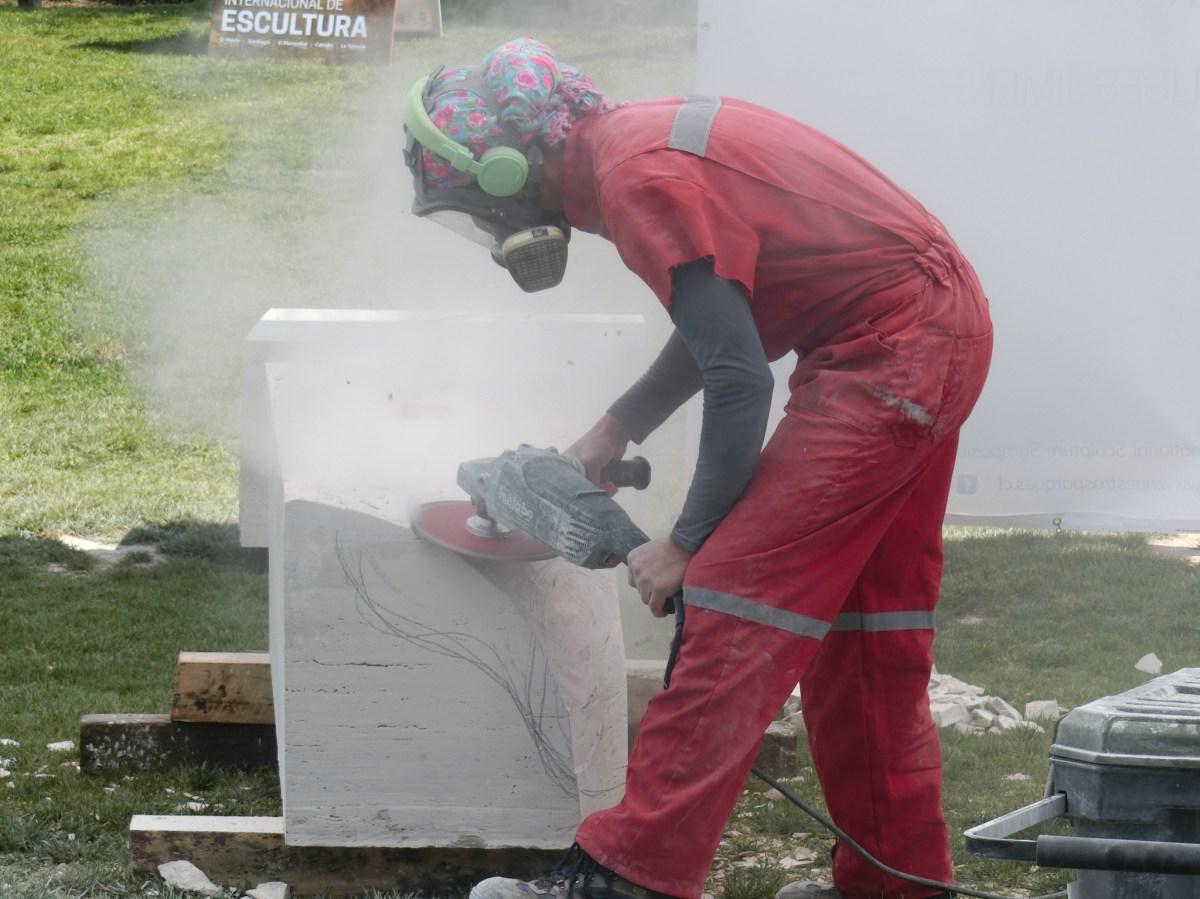
When sculptors have a symposium, they don’t sit around talking; they sculpture things! I had inadvertently stumbled upon a bunch (I don’t know the collective noun for sculptors) of international sculptors in the park, making lot of noise, a lot of mess and a lot of dust, but clearly having fun doing it! The picture at the top of this blog shows one of them in action. Here are some other action photos:

I think that the lady in red is Susanne Paucker, one of the sculptors: you can read a little about her in the picture (after you click on it to see an enlarged version). She seemed to be enjoying herself, as this symposium gets underway. That’s also her working on her block at the top of this blog.

Most of the sculptors were using power tools, but some were using traditional tools like hammers and chisels (which made a lot less dust and a lot less noise). They were mostly dressed like space people (to keep down the dust or at least to minimise inhalation of dust). I wasn’t so dressed, and so had a tickle in my throat for the rest of the day: my penance for standing so long to watch.

I noticed that they mostly had made some marks on their blocks of marble, which they maybe did the last couple of days, as the symposium began. It must be a bit daunting to stare at a block of marble and wonder what to do with it. And mistakes are probably hard to correct, giving a whole new meaning to “measure thrice and cut once.” I am now a little disappointed that I will be leaving soon, and won’t see what the end results will be.

As the sculptors each had a block of carrera marble to start with the whole thing reminded me of the wonderful reply of Michelangelo, after someone had heaped praise on his sculptures and marvelled at his skill. He said that he did not deserve any praise, as God himself had made the sculptures; his job was merely to remove the unnecessary bits!

The rest of my day was less interesting than the sculpture park, although I did enjoy a nice stroll and some lunch in leafy parts of Barrio Italia (still thinking about Michelangelo):

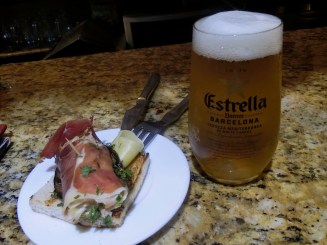
I also enjoyed a beer and some tapas late in the afternoon, surprised yet again that the beer was foreign and not Chilean.

CIMG1929

But I kept thinking about the sculptors: it must be a great feeling being a sculptor, as many of the works created will live on long after you have gone. Most of us can’t say that about our work.