I loved my visit to Rome last year (2023), but didn’t record anything of it in this blog. So I thought I would just reflect a bit now (a long time later) on the extraordinary number, variety and quality of statues in the city, both inside museums and in the open air. I have just chosen a small sample of the very many statues I saw and the large number of them I chose to photograph to remember later.
When I arrived in Rome, my first stop was the wonderful Piazza Navona, which I had remembered from my first visit some thirty years ago. It’s still a wonderful place, and all the more so because of the wonderful set of three large statues in the piazza:


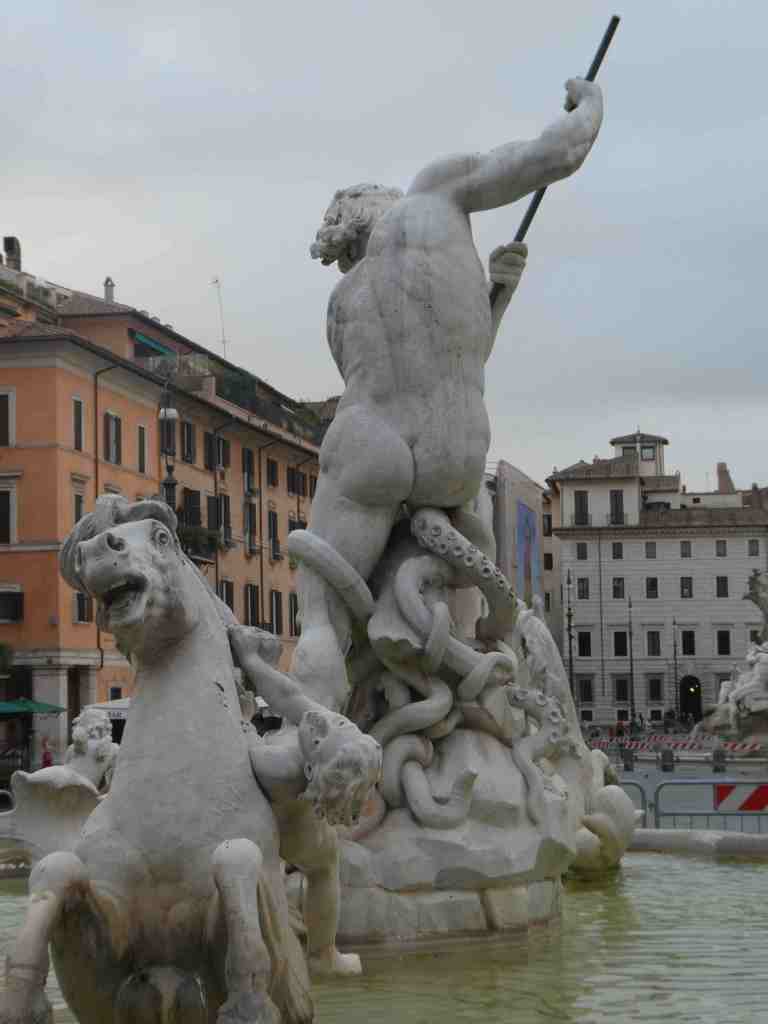
These are so full of life, so it’s no wonder that they are usually being photographed by lots of tourists. Bernini’s masterpiece of the Four Rivers (on the left) has the papal symbol (of keys) just before the obelisk above it.
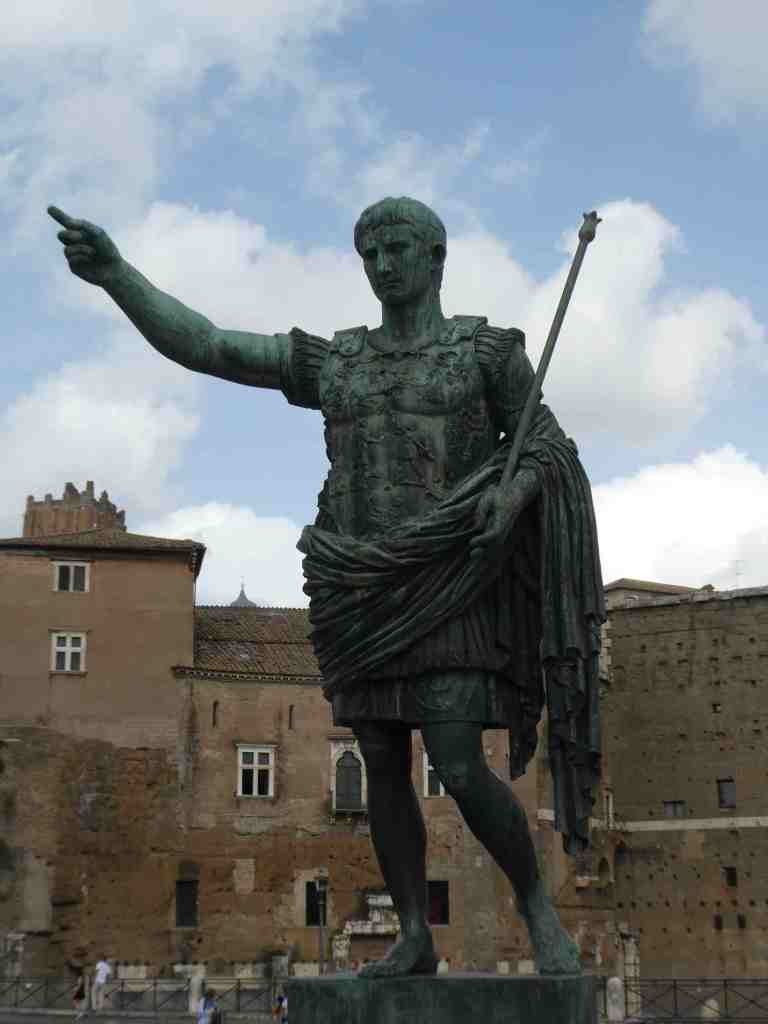
As a reminder that Rome has been a major centre for two millennia are the statues around the Roman Forum, an ancient set of ruins right in the middle of the city. These two statues of Roman emperors overlooking the Forum have stood the test of time, out in the open and subject to the weather ever since, yet still manage to project the power of Imperial Rome:

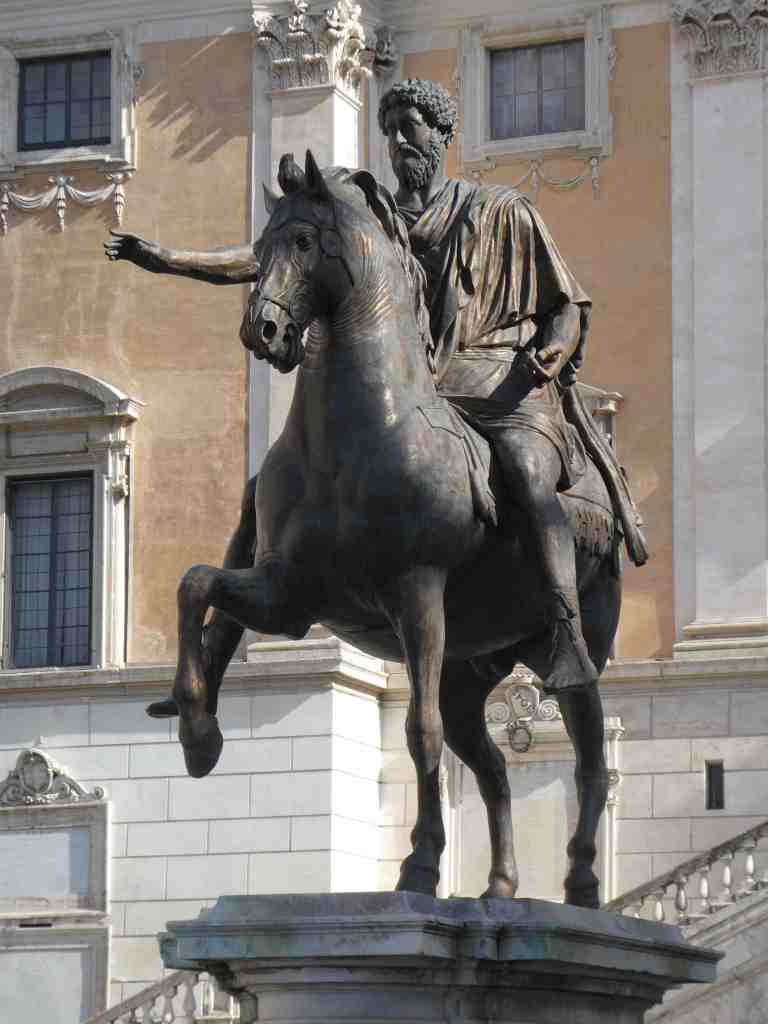
Weathering is of course a problem with old statues, and a good example is the statue of Marcus Aurelius, from about 180 AD shown at the left below. The statue has now been moved inside the Capitoline Museum (into its own climate-controlled room) and a replacement has been put outside in the weather (the middle statue below). Inside the museum is also an ancient statue of the mythical she-wolf suckling the twins Romulus and Remus, mythical founders of Rome. The statue is from about 500 BC, but the twins were added later in the fifteenth century. (You’ll need to click on int to see it all).


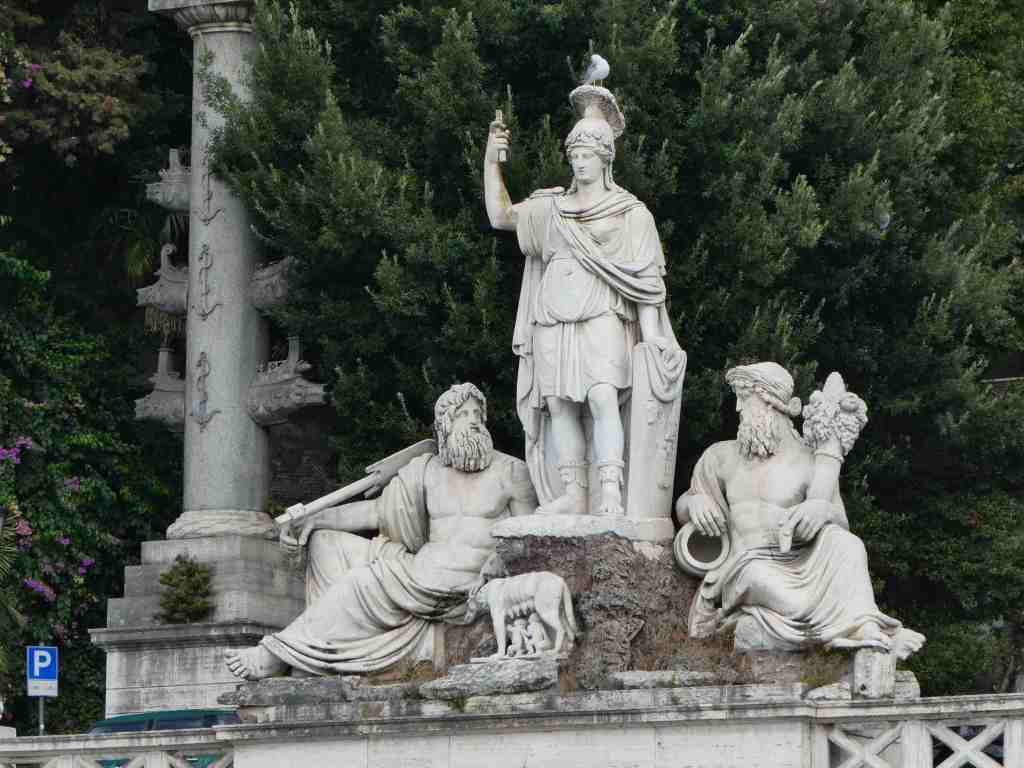
Also outside is the statue set from Piazza del Popolo, overlooking the large square below, in which there is often a market of some kind, and there is a large number of statues of saints on top of St Peter’s Basilica in the Vatican overlooking the huge square below. I’m not sure which of the saints is shown on the middle below, although I guess someone has a list of them all somewhere. The other statue with a boat-load of pilgrims or refugees is also from St Peter’s Square, but is of much more recent origin. (It was easy to see the statues in the square because the queue to get into the Basilica was very long, as you can see by clicking on the boat).


Another example of weathering is the set of statues shown below, in Hadrian’s Villa in the hills outside Rome. (Hadrian was Emperor in the second century AD, when the wall in his name was erected in northern England to keep the Scots at bay). The villa is huge, sprawling over a large area, and included what must have been a wonderful pool many centuries ago, with lots of statues around it, some of which are shown here.

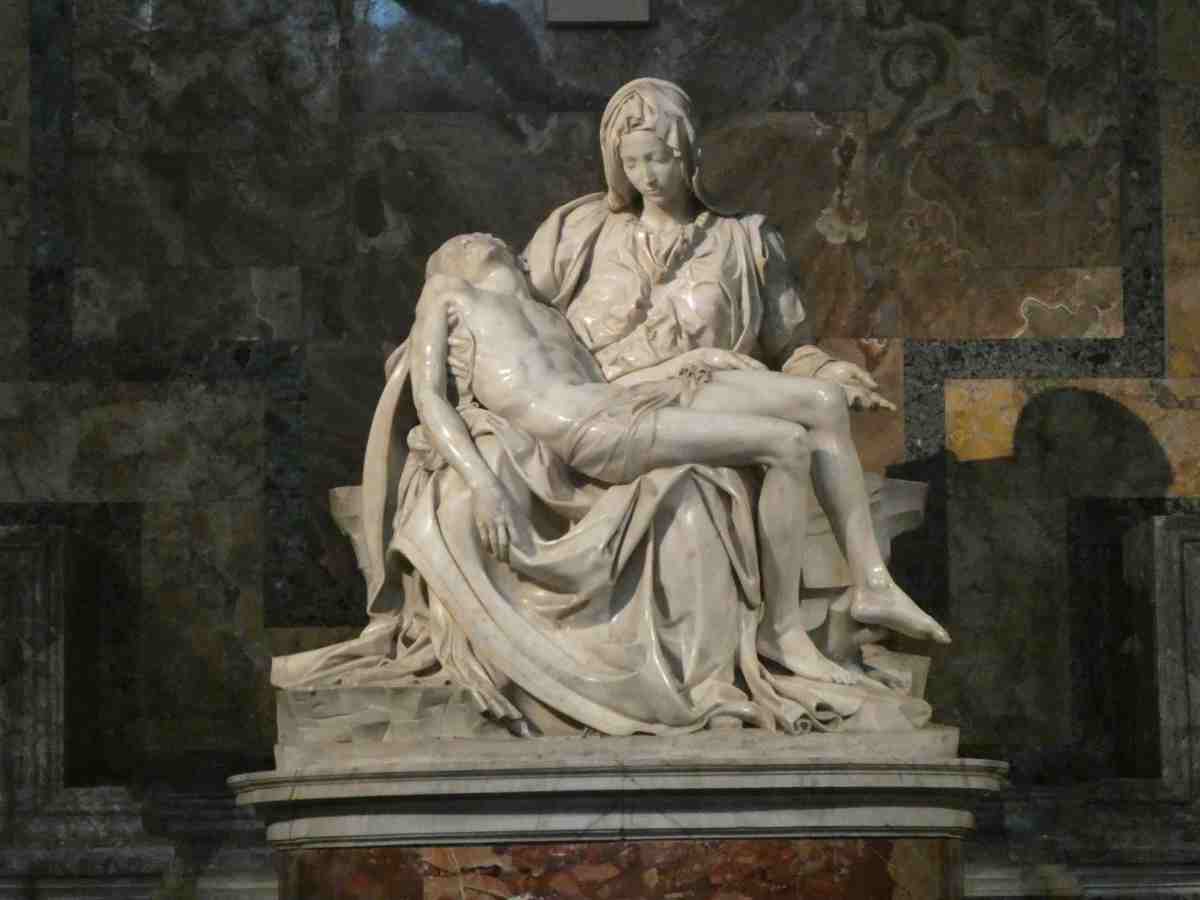
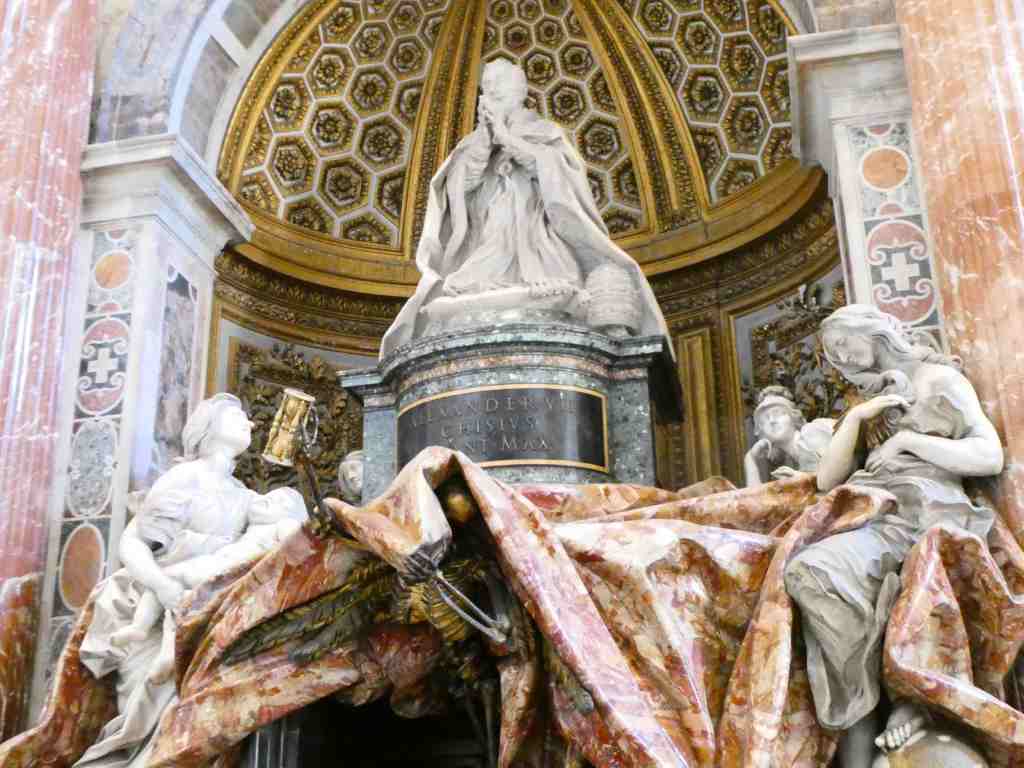
Of course, there are many wonderful sculptures inside buildings, such as the 13th century bronze statue of St Peter himself below and the wonderful Pietà of Michelangelo shown at the top of this post. The Pietà was damaged some years ago (by a crazed Australian with a hammer) and so is sadly behind a plastic shield, but still looks magnificent. It is one of the main drawcard of the basilica in fact and always has a very large crowd of amateur photographers in front of it – unsurprisingly; it is a magnificent work. The other sculpture below by Bernini caught my eye because of the extraordinary folded ‘carpet’ at its base (but the carpet is made from marble not from cloth!) How clever!

And, speaking of Michelangelo, another wonderful statue of his, in much dingier surroundings, is his statue of Moses as part of a large papal tomb, located in a relatively drab church in Rome … St Peter in Chains. I gazed on this for a long time, wondering how any body can be so clever. It almost seemed like Moses was alive, in part because the church had arranged a beautiful illumination to come on periodically.

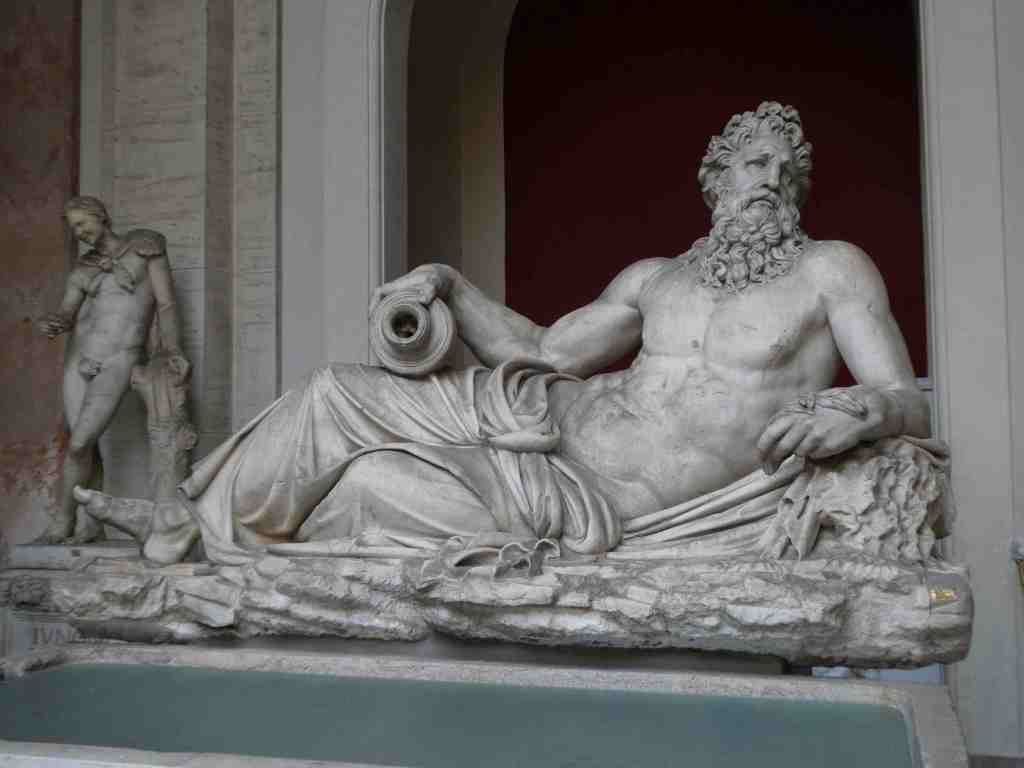
There are lots of statues of Moses in Rome, several like the reclining version shown below, which is in the (extraordinary) Vatican Museums. This was a very large statue, much larger than life-size.
My trip to Galleria Borghese was a highlight of my trip to Rome, with some stunning sculptures on display, none more moving than the two shown below. There are several statues by the baroque master, Gian Lorenzo Bernini, in the gallery (as Cardinal Borghese was a big fan and a patron, think) and the sumptuous setting adds to their effect. The two statues below stopped me in my tracks. Bernini’s statue of David is different from Michelangelo’s David (in Florence), but just as compelling.
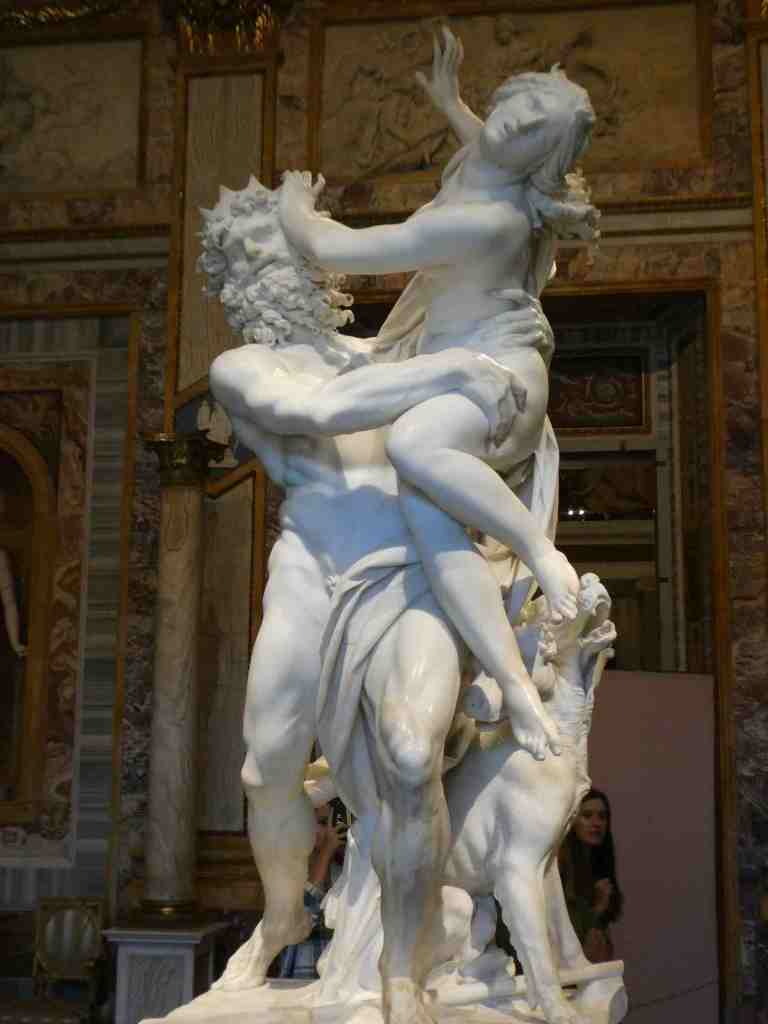
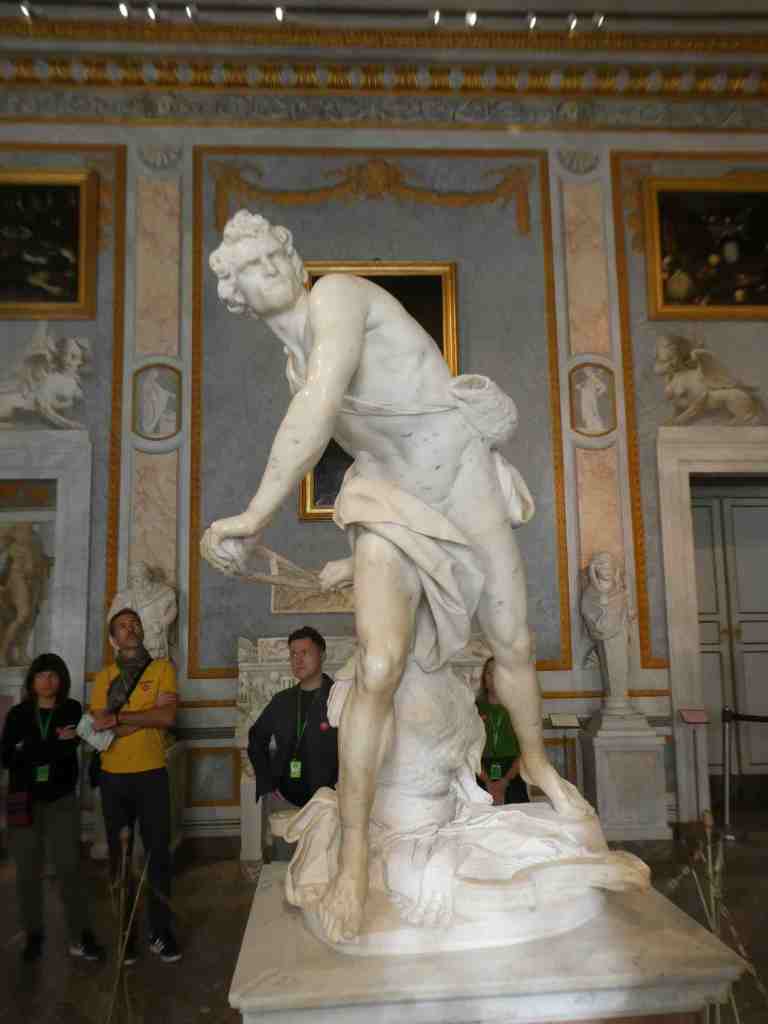
Also in Galleria Borghese its the beautiful statue by Canova of Paolina Borghese, who was Napoleon’s sister. It almost seems real and I expected it to move.

Finally, one of Rome’s most popular tourist attractions is the wonderful Fontana di Trevi, hidden away in a back street in the centre of the city (but easily found because of the throng of tourists and tour groups and people selling things). It’s not easy to take a photograph of it without a very large number of tourists in the picture, in fact. It is a lovely work, justifiably famous.

Of course, I threw a coin into the fountain, hoping to return some day …

 Barry's travel blog