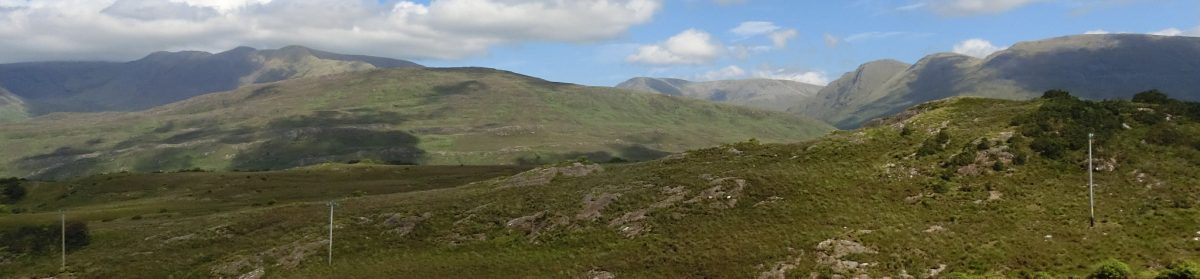

I ventured out of Lucca for the first time today, heading to nearby Borgo a Mazzano, a small village of about 7-8 thousand people about an hour away. I didn’t know much about it before leaving, except that it was the site of a famous bridge, Ponte del Diavolo (the Bridge of the Devil), shown above, and it seemed like a good way of developing some local transport skills. My transport skills failed me in getting there (I couldn’t find the bus stop, which I think had moved because of some street work!), and I ended up taking a train instead of a bus, without incident.
On arriving at the town, I followed signs to a Franciscan convent which looked after aged people unable to look after themselves. The unmistakable figure of St Francis drew me up the hill, but I didn’t need much persuading – it was nice to be out in the country and I was pleased that it wasn’t raining.

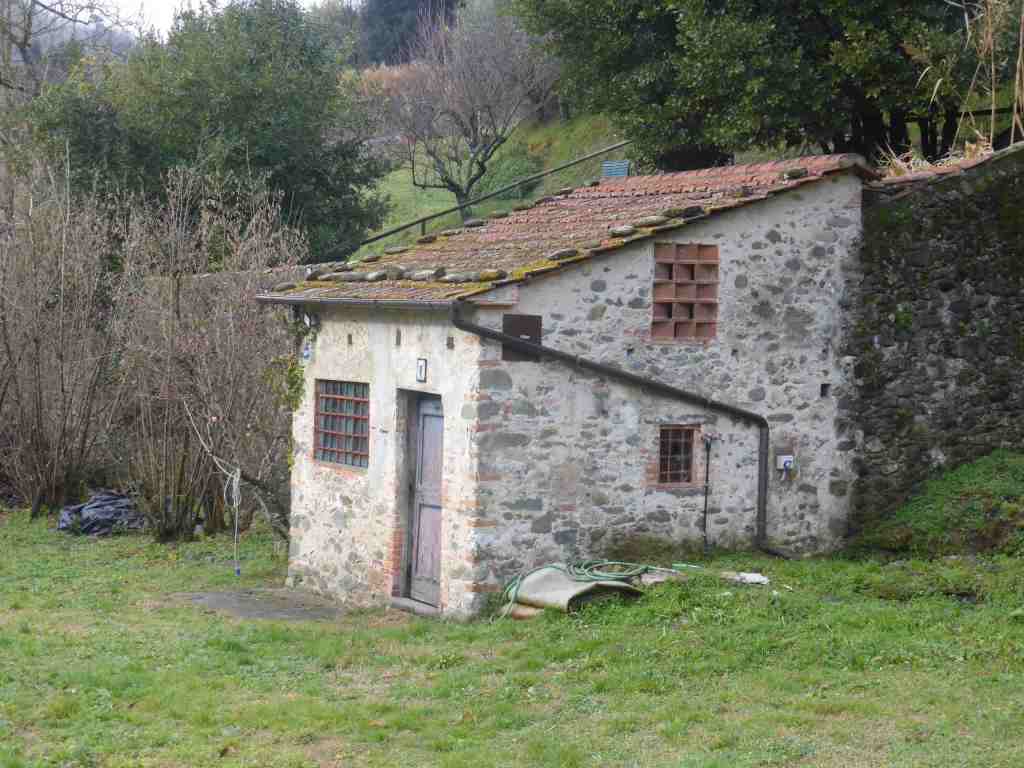

The convent has been going for 500 years, celebrating its anniversary last year – which adds a bit of perspective to someone like me coming from a country shortly to be celebrating its 200th anniversary of foundation as a British colony (ignoring the 50 or 60 thousand years of Aboriginal culture before it).
The convent was happy for visitors to wander around, and I enjoyed a cloister with some ancient murals, a lovely garden area and the church/chapel. The inhabitants were having lunch, so I managed to be inconspicuous (or so I thought).
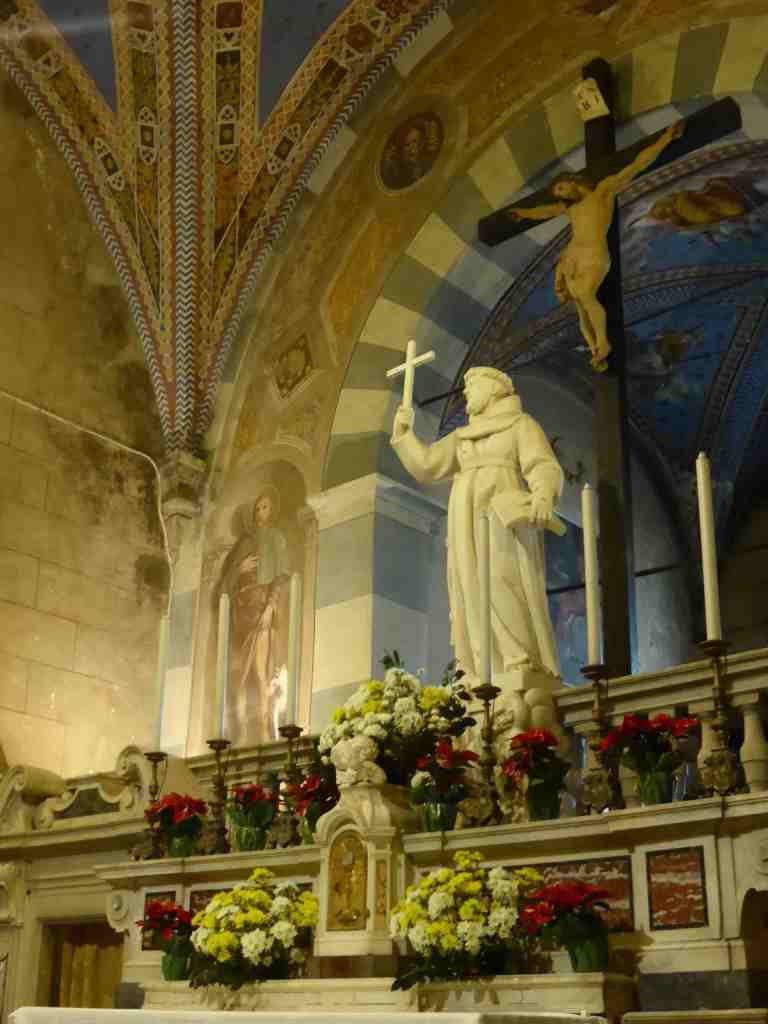
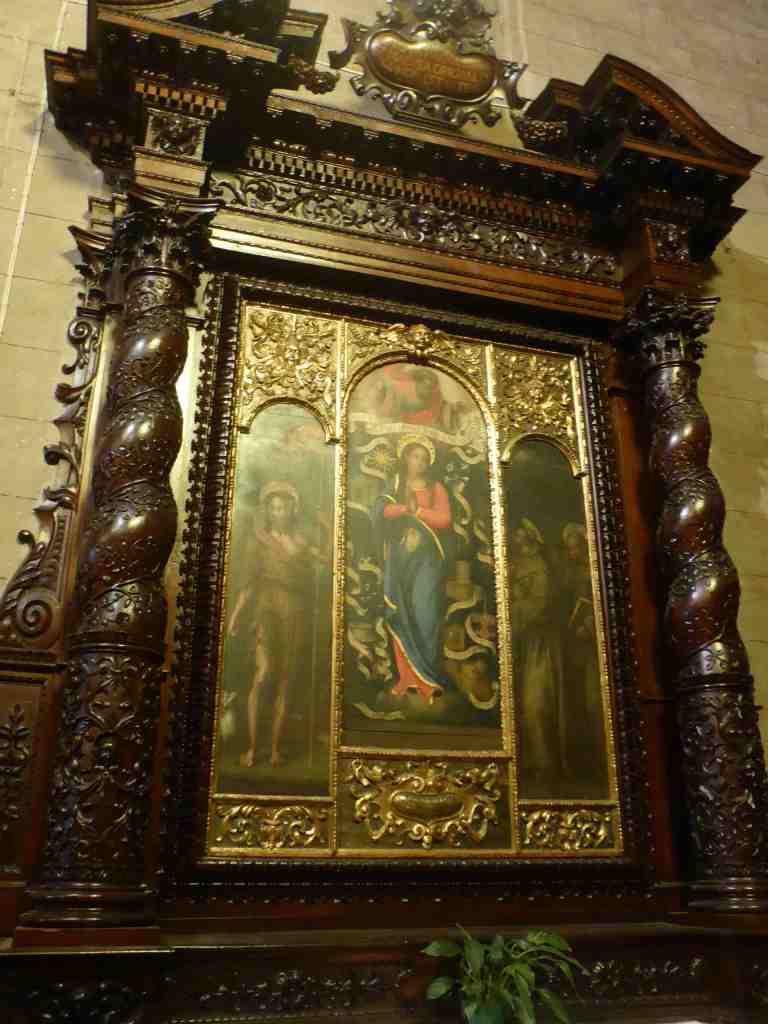

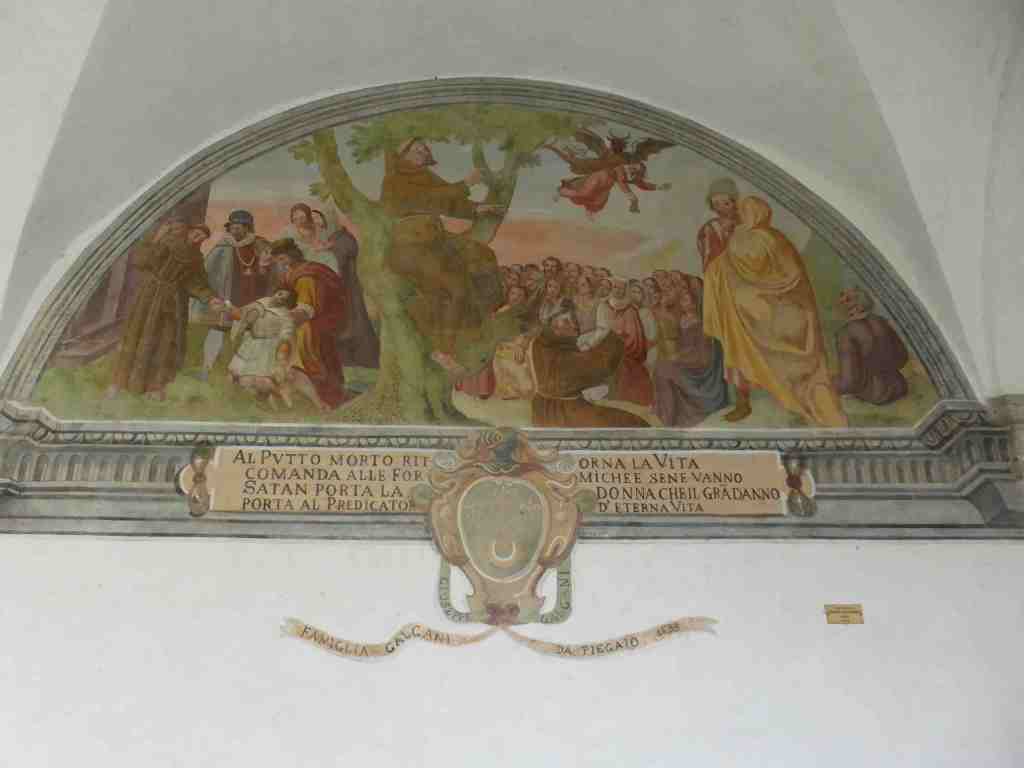
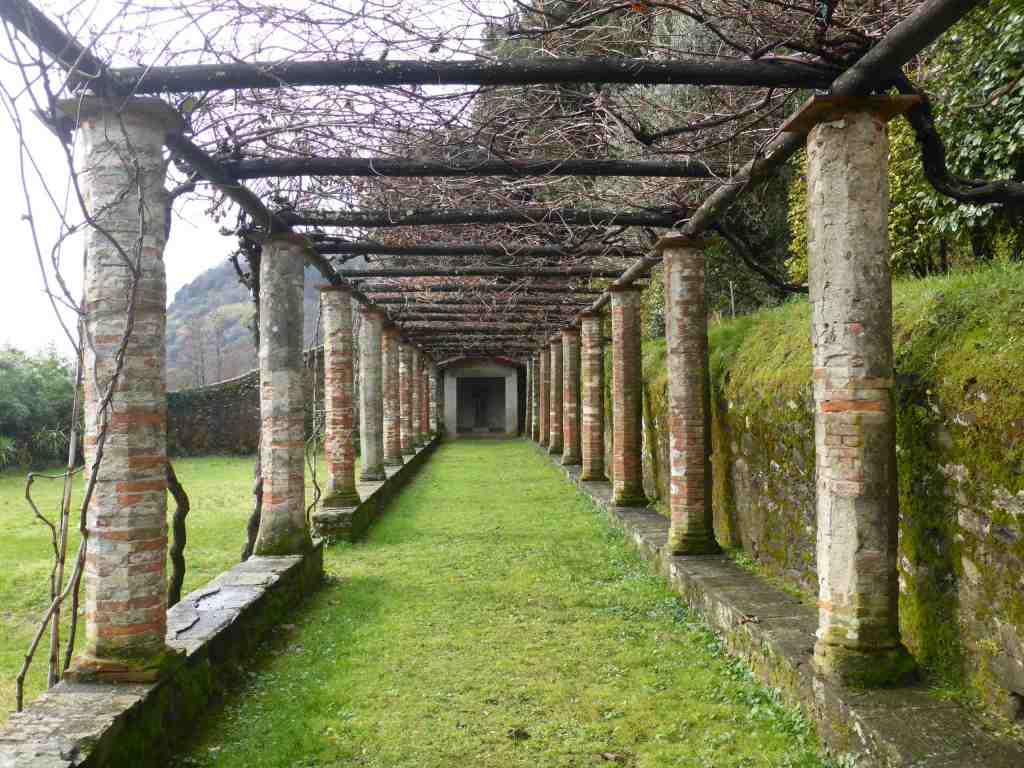
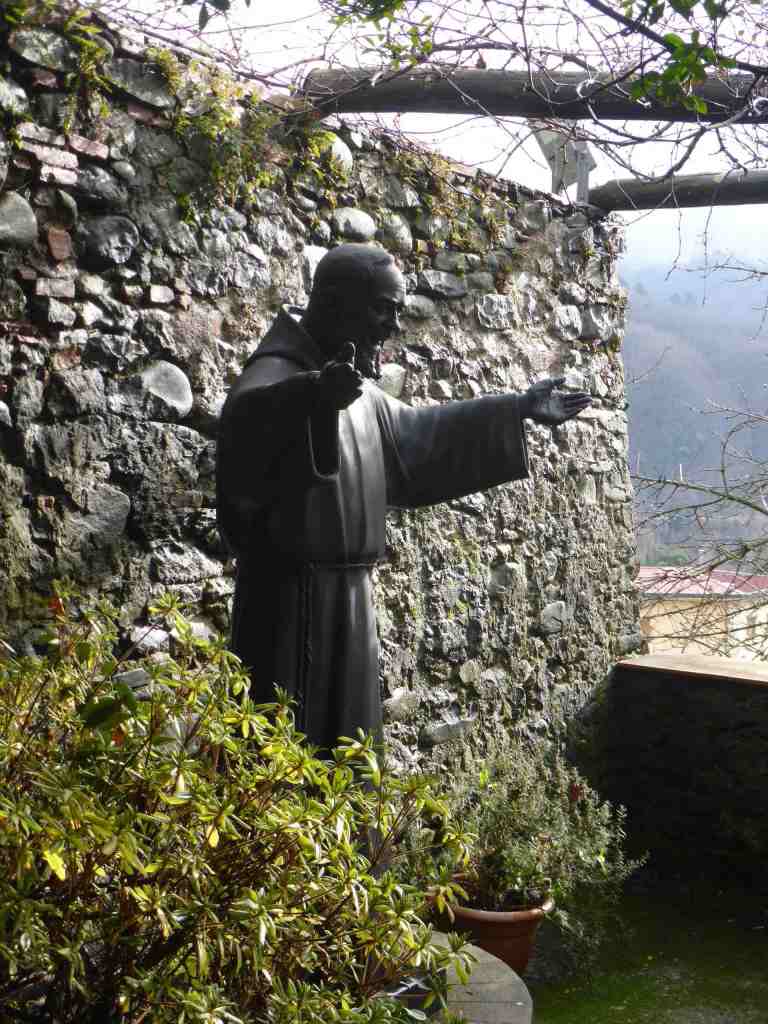
There was a massive painting inside the church (with a truly enormous wooden frame). I was also surprised by the OK signs on the seats, but guessed they were probably a legacy of the Covid madness (which has now mercifully subsided, it seems) and the (arbitrary) designation of a ‘safe’ distance between people.
Wandering up the town towards the bridge, walking along the main street, I was struck by the enthusiastic Christmas decorations along the way. Scarcely a door was left unadorned by Christmas decorations of various kinds, many of which were quite elaborate. Presumably, the villagers are confident that nobody will interfere with their handiwork. which is all out in the open.
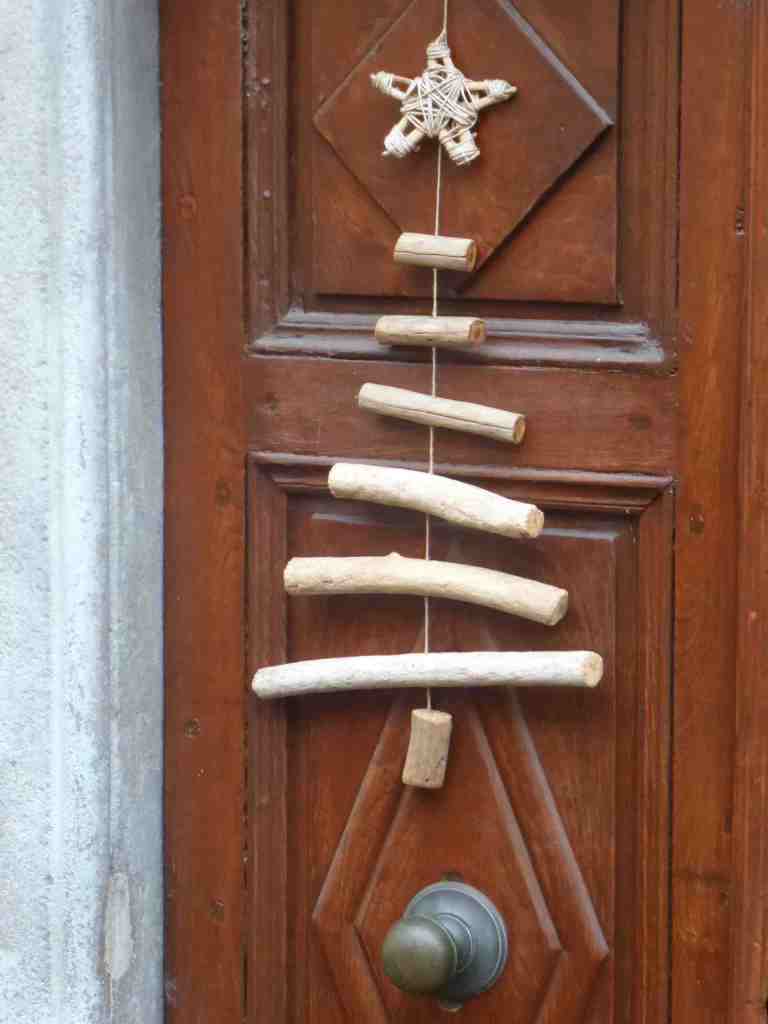
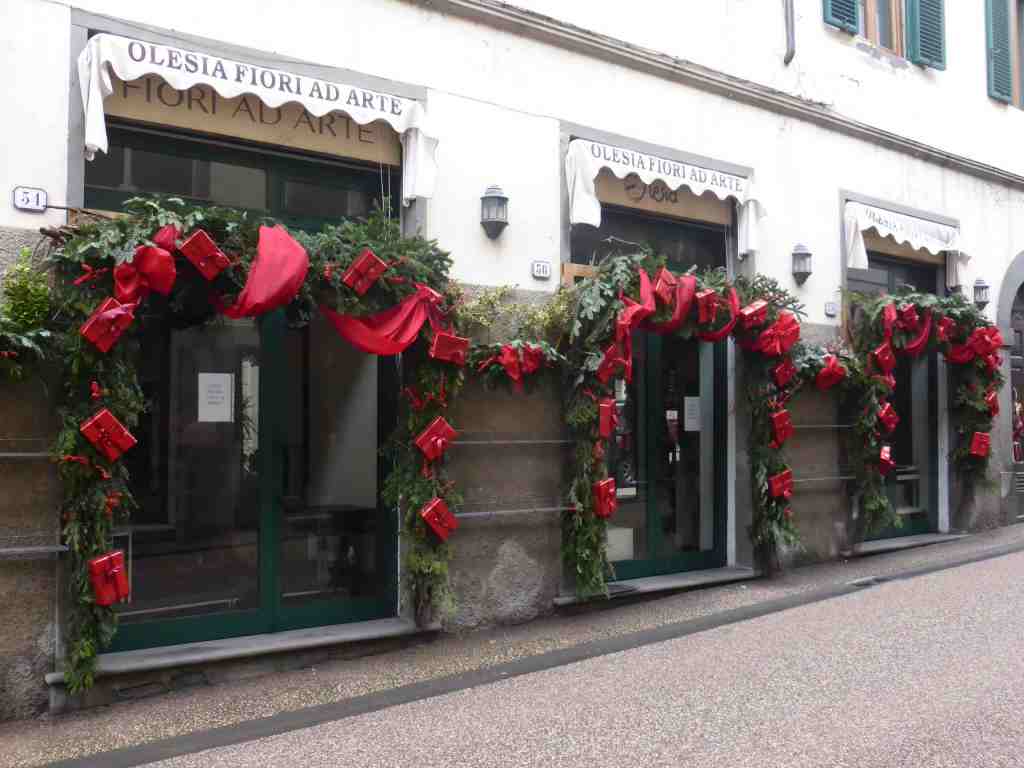

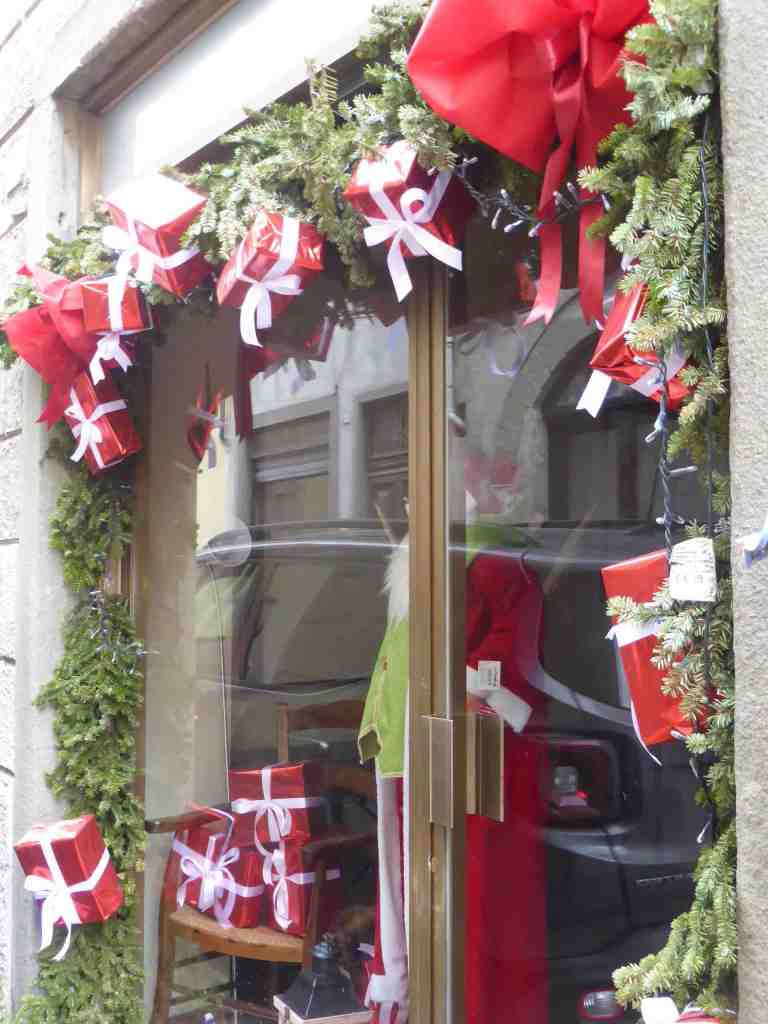
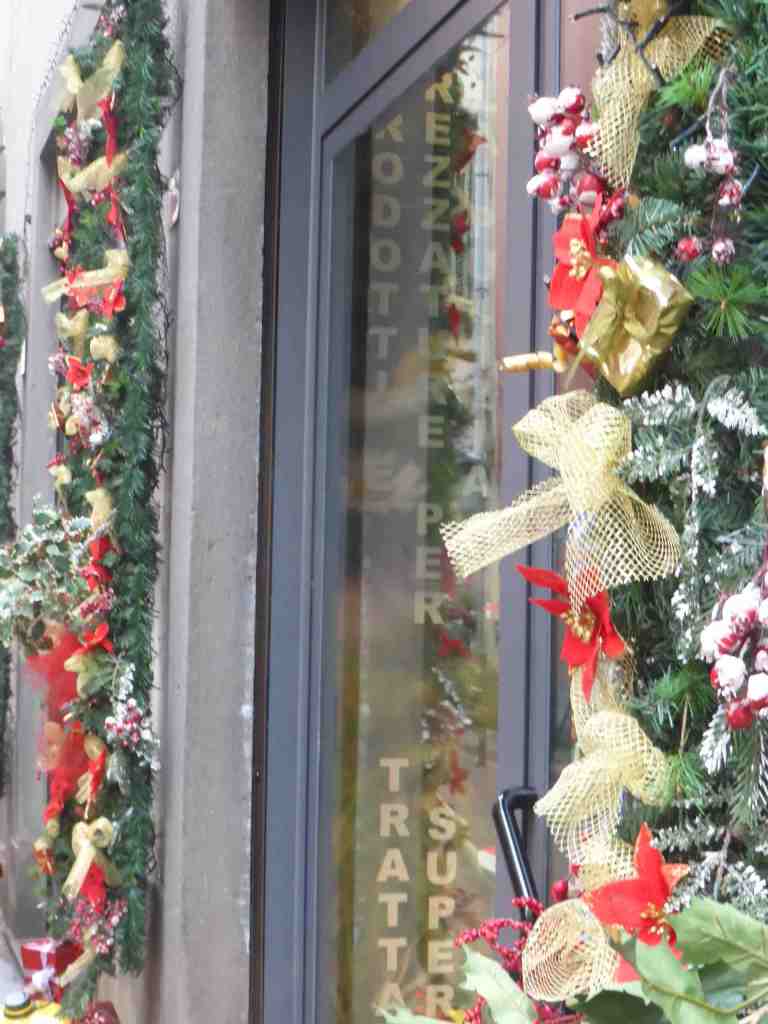
It also reminded me that Italy is comprised mostly of people who profess the same religion (Catholicism, sometimes called Roman Catholicism by other Christian denominations) so that Christmas is a pretty big event. I don’t really get the impression that many people are devout in practice (as churches seem rarely to be full, for example), but at least there is a unity of belief – not unlike lots of Moslem countries in those respects, in fact. [I checked and found that more than 70% of Italians are Christian, while more than 80% of Indonesians are muslim.]
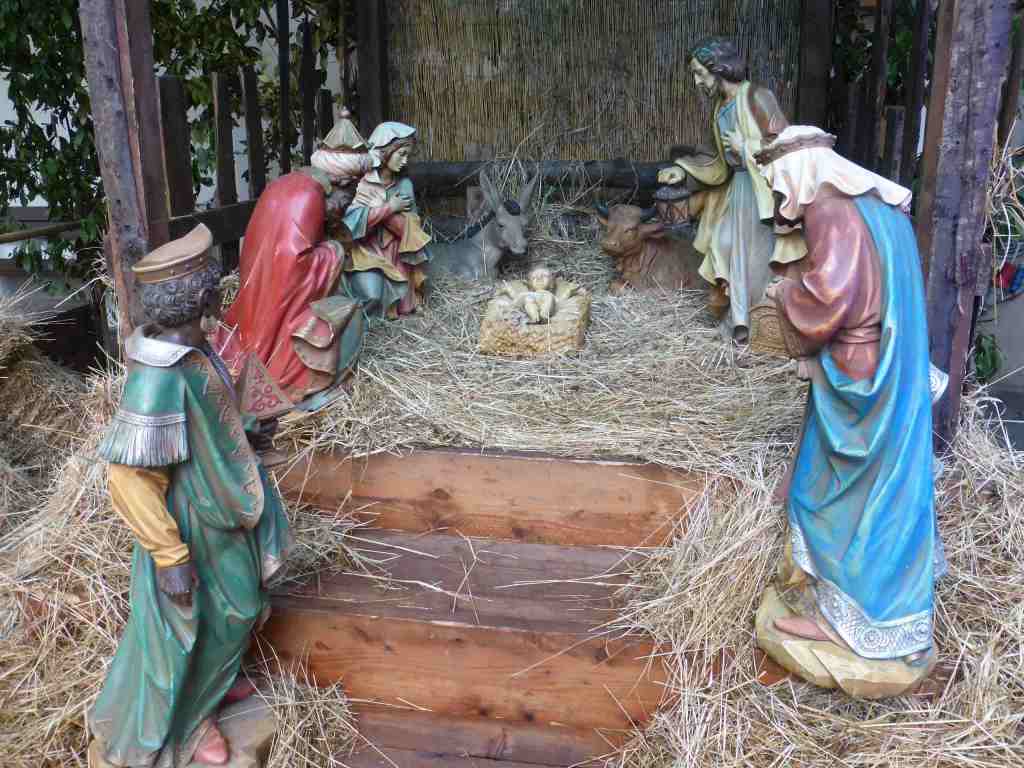
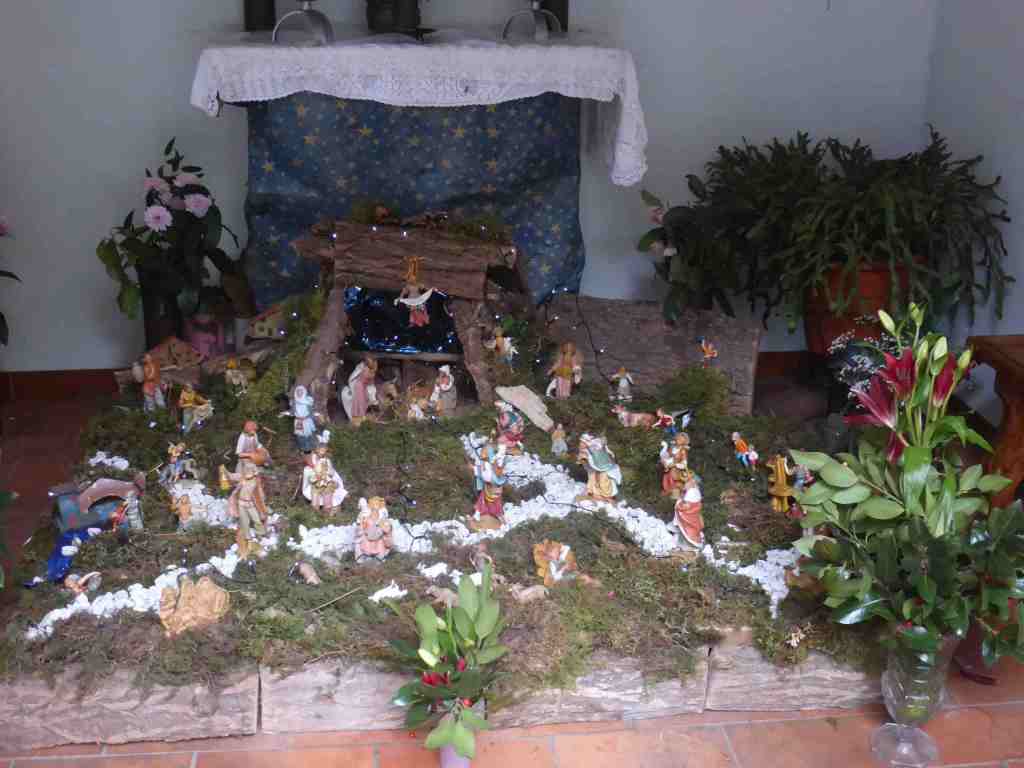
In my wanderings, I saw lots of nativity cribs, a further reminder that Christmas is regarded here as a religious event, not just a secular family feast and gift-giving event by many people. Here are a couple of examples of cribs; the first was just on the side of the street, with small figures, while the second appeared to be the village’s ‘official’ crib, with quite large figures in it. Many shops had a crib in them, too.

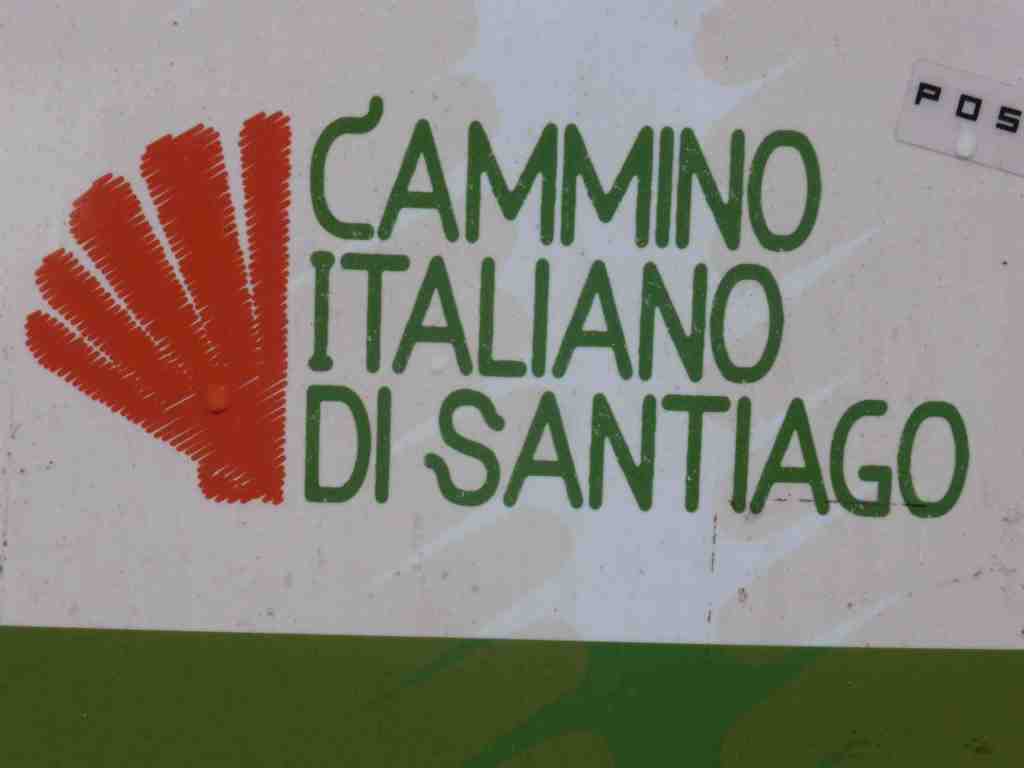
I found several references to the historic pilgrimages to Lucca’s Volto Santo, which passed through Borgo a Mazzano, a bit like the Camino di Santiago in Spain, but less well-known, perhaps. (I didn’t know about this myself until very recently, when I visited the endpoint of the pilgrimage in Lucca’s Cathedral San Martino). I was amused to see the conflicting arrows in the street, of course, pointing at each other. (‘Senso unico’ means ‘one way’!)

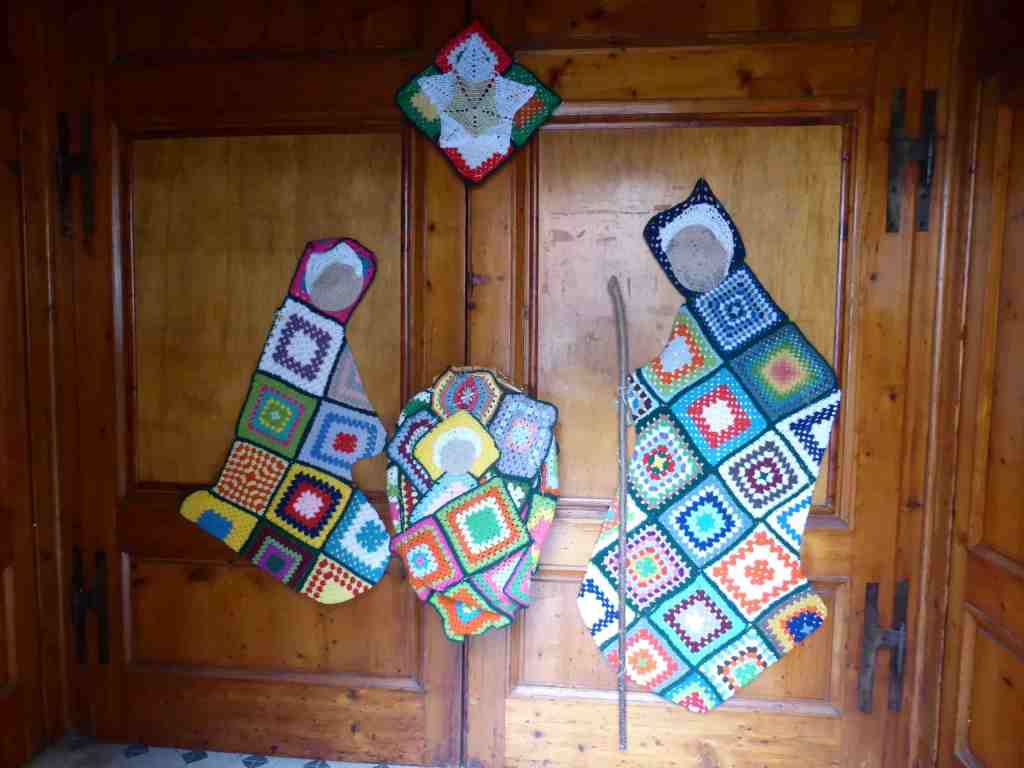
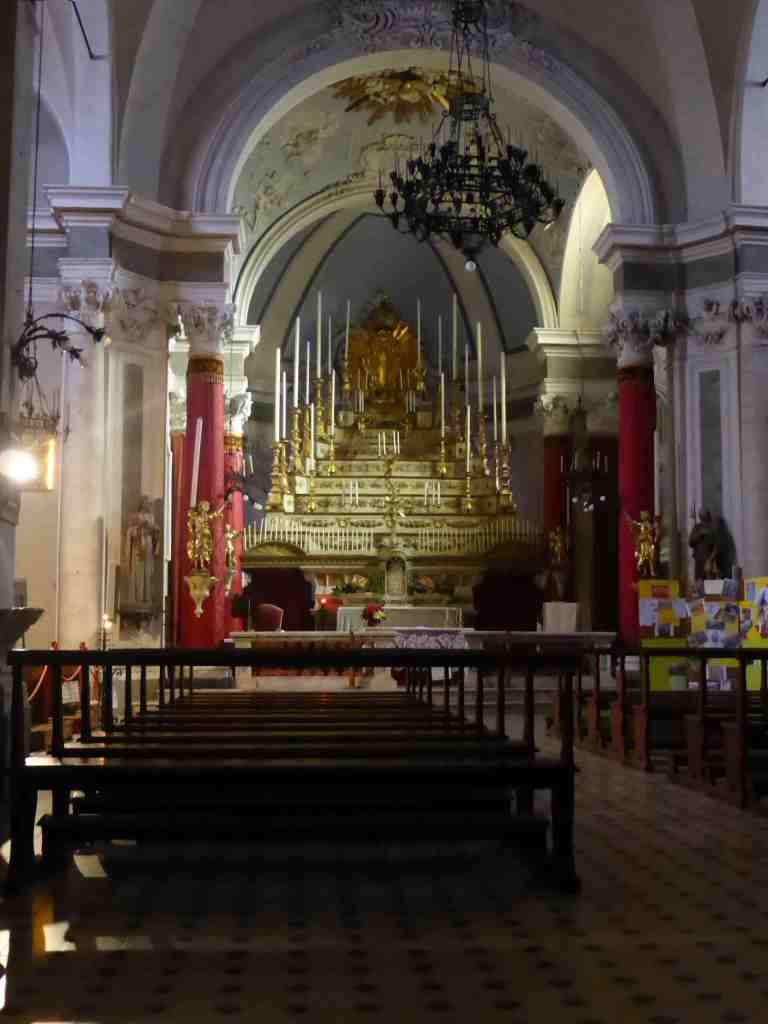
I am always amazed in Italy (and elsewhere) to see buildings that are quite plain and undistinguished externally but which have lovely interiors. A good example is the San Rocco church below, which looks pretty drab from the outside, but seemed much less so inside (once my eyes adjusted to the light, as it was quite dark). The extraordinary array of candles climbing up the altar was especially distinctive as were the (presumably recent) lovely stained-glass windows and the huge murals. I also liked the use of crocheted squares to give a Christmas theme on the church door. The church is one of the key visiting points of pilgrims to Volto Santo.



A little further up the road towards the bridge, I found a small chapel at the side of the street, which had been earlier demolished to make way for a major highway, but was later restored (by the government authorities). It was lavishly adorned with Christmas decorations, and, peering inside I found … another nativity crib: what a surprise!


Finally, I made it to my destination, the bridge shown at the top of this post – a spectacular construction thought to be at least 900 years old. It was a remarkable piece of engineering for its day, of course, and was critical for crossing the river Serchio, in fact providing pilgrims a chance to join the Via Francigena pilgrimage from England’s Canterbury to Rome, passing through France and Switzerland, among more earthly and secular uses. It has various names, sometimes referred to as Magdalene’s Bridge (Ponte della Maddalena) and sometimes as the Devil’s Bridge (Ponte del Diabolo).

The bridge survived World War II (one theory is that the Nazis did not think it was worth destroying as it could not carry significant military hardware – phew!) It had to be modified (see the left of the picture) to add an extra arch for a train in the nineteenth century, further removing any sense of symmetry.
Of course, I walked over it, although not without some misgivings, a little worried about slipping, especially going down; it is quite steep in parts and I was rather pleased it wasn’t raining. I rewarded myself with a delicious local soup with spelt and potato (‘slow food’) at the restaurant nearby after my exploits. If you click on the image, you may even see the fisherman near the bridge, too.
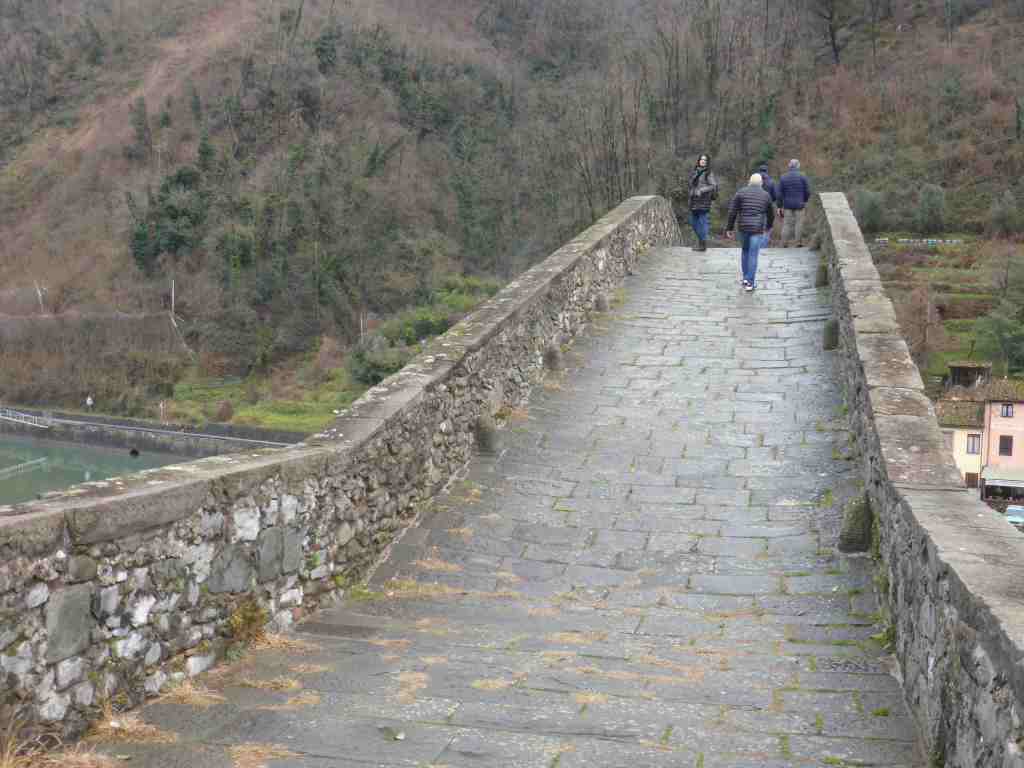
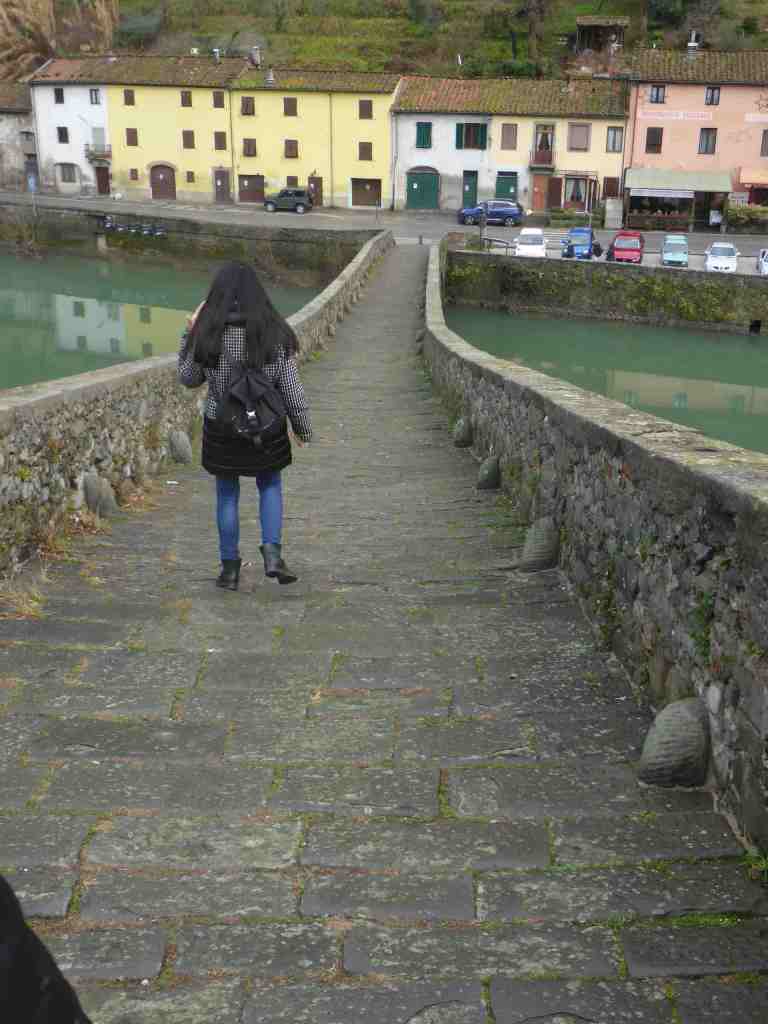


The origin of the name of Devil’s Bridge is that the Devil made a deal with the original builder, who was struggling to get it finished successfully. In return for helping with the construction, the Devil demanded the soul of the first to cross the bridge. The canny builder sent across a dog (one version said a pig!), which wasn’t what the Devil had in mind, so he promptly left the area. [Hmm … never let the truth get in the way of a good story.]
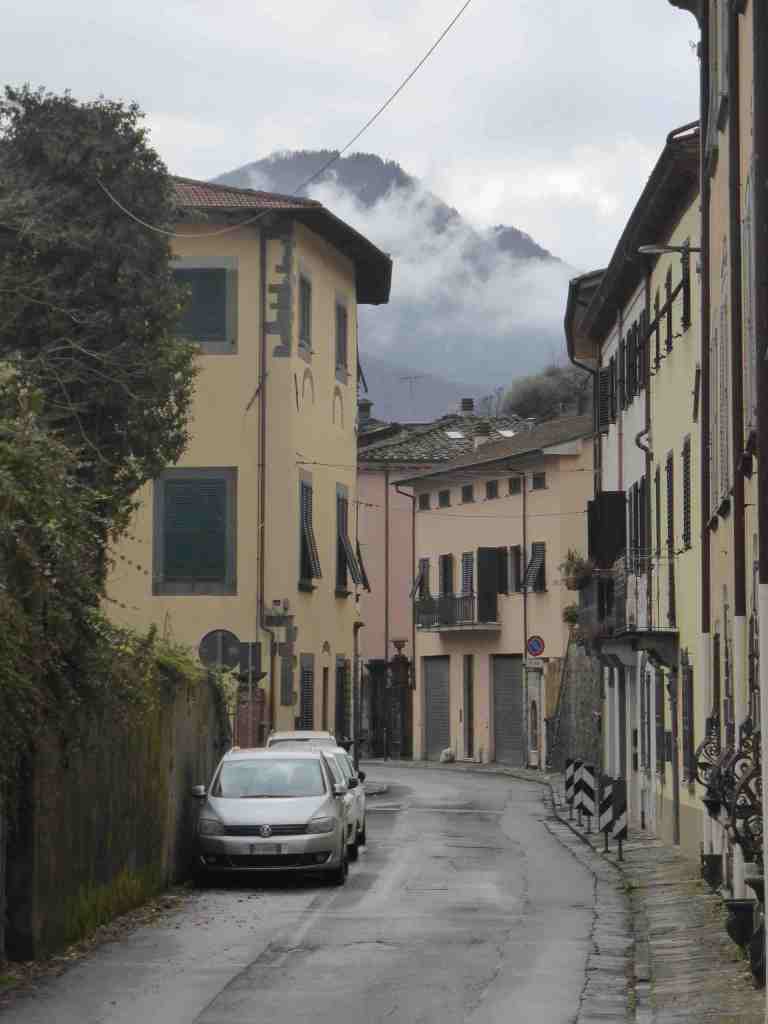
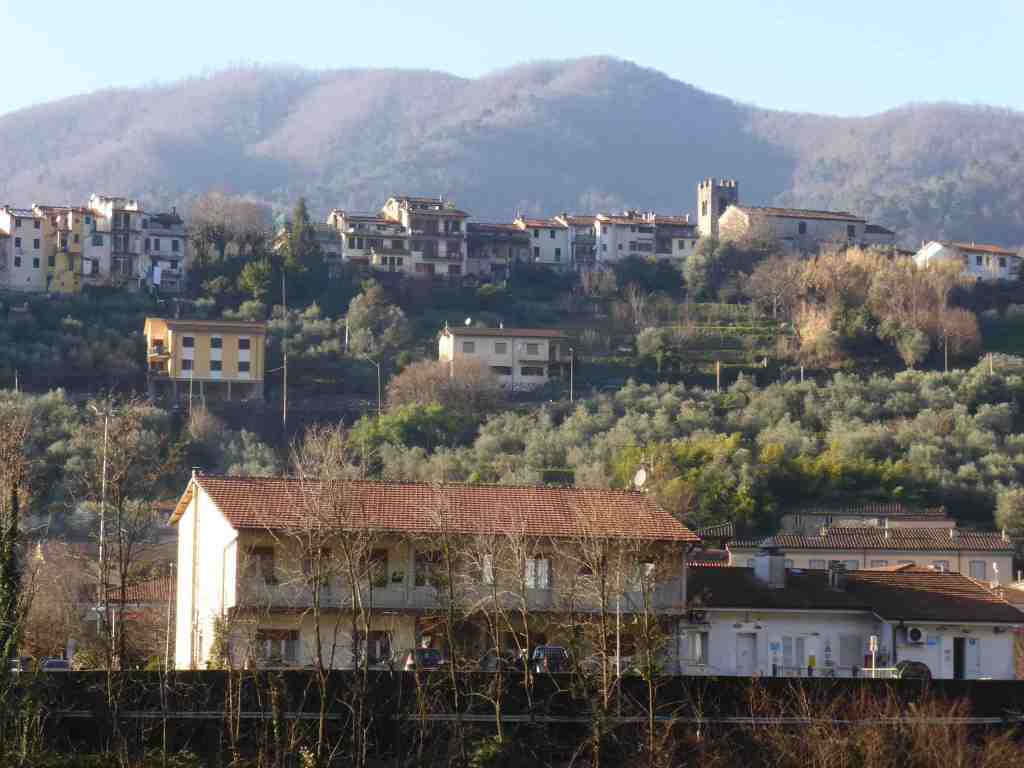
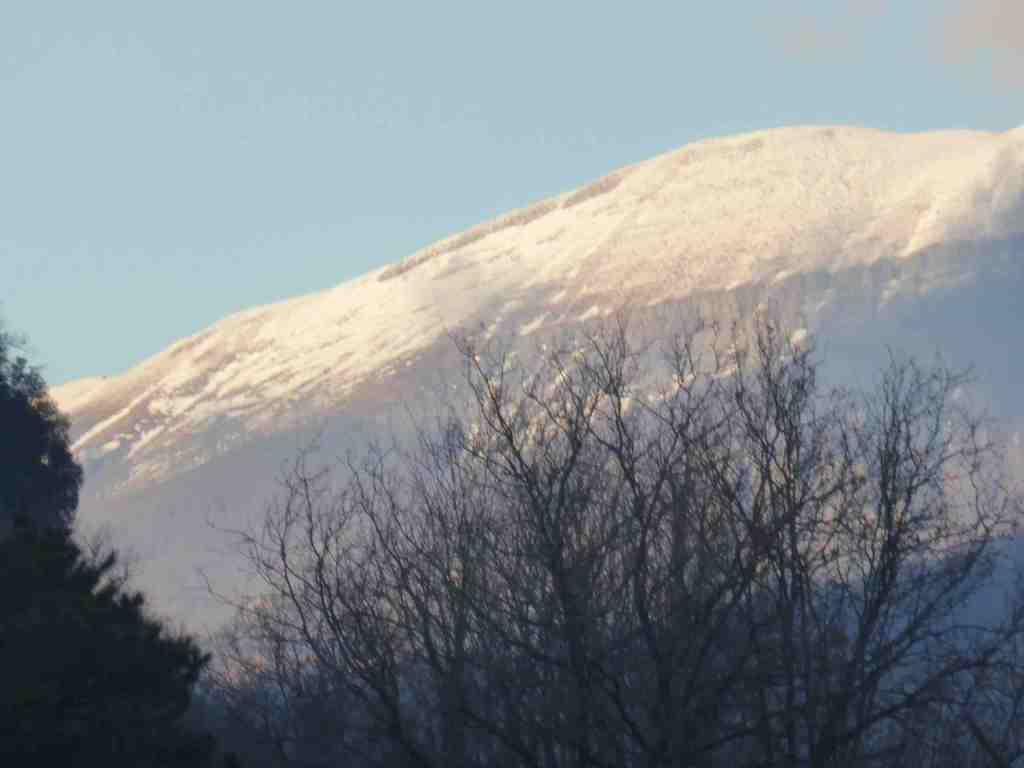
It was nice to be out in the countryside, and I enjoyed wandering around a small village clinging to the side of a valley in the mountainous terrain that is the lovely Garfagnana hills. I could even see a dusting of snow on a distant mountainside, although the temperature was pretty mild down in Borgo a Mazzano all day – perhaps about 8 or 9 degrees C.

I also enjoyed my first attempt recently to navigate around Italian public transport. It’s always slightly tricky at fist to get used to new systems, find routes, work out how to get tickets, find routes and timetables, etc. I shall be doing a good deal more of that in days and weeks to come, so was pleased to get back to Lucca unproblematically and declared my outing a success.
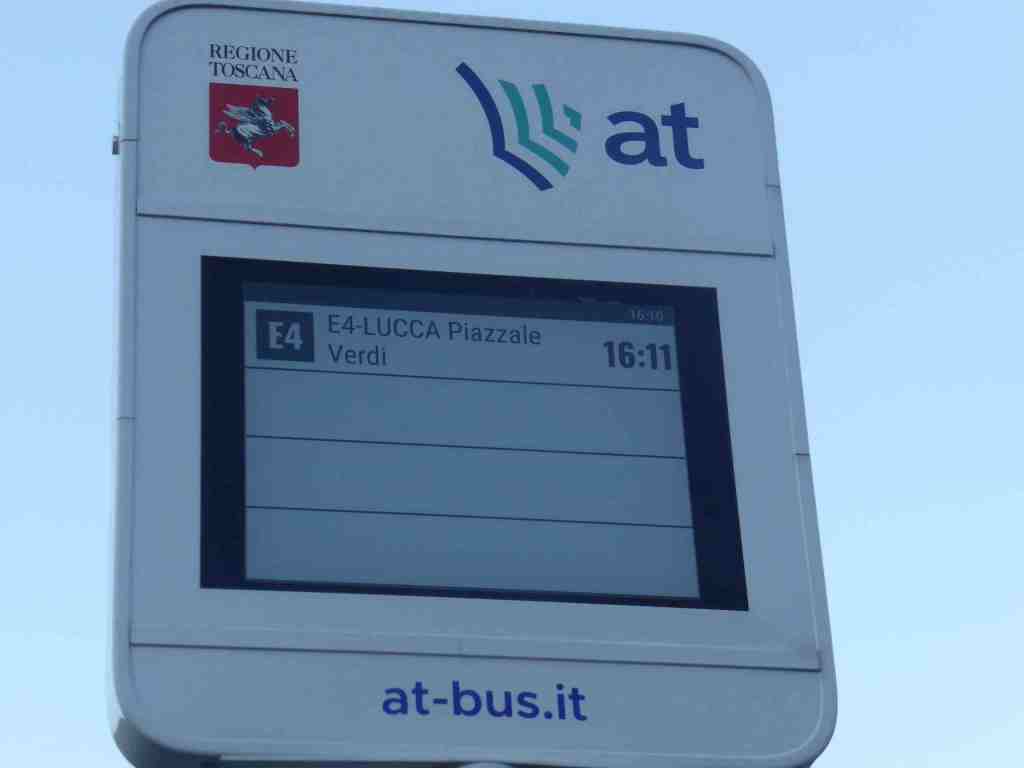
This time, the bus did in fact arrive where it was supposed to, and there was even an associated high-tech sign with up-to-date time of arrival of the bus, which I thought was pretty impressive out in the Tuscan countryside, boding well for my future travels in the region.

 Barry's travel blog