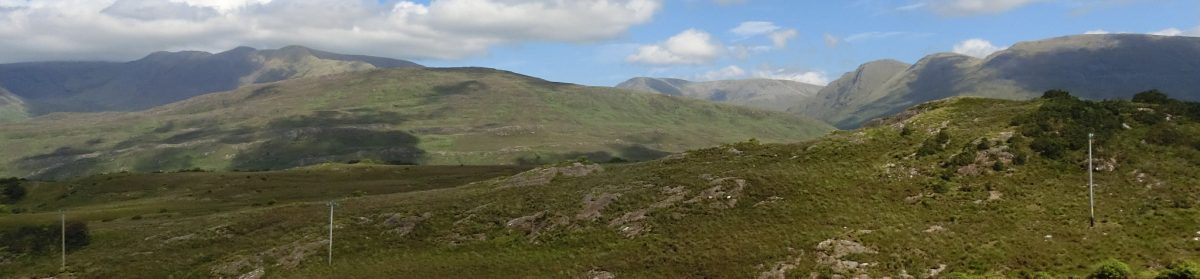

I lived in the walled city of Lucca for a month recently. It’s hard to capture the experience in a short blog, but in hindsight, I think of it as a kind of Goldilocks city: not too big, not too small – but just right. It’s human-scaled, and not overwhelming as the great world cities can be (Roma, London, New York, Paris, …). It doesn’t have the artistic and cultural treasures of Roma, Florence, Siena, … but it doesn’t lack its own treasures. It is an affluent city, but not with conspicuous extremes of wealth, or depths of poverty. It is beautifully located, not far from many more famous places (Florence, Siena, Pisa, Le Cinque Terre, …) which are thus easy to get to, and so Lucca is close enough for day-trippers to visit, but mercifully not generally overrun with tourists.
Lucca is probably most known for its walls, shown from outside the city in the photo above. I’ve described these in more detail at https://barrykissane.com/2025/01/02/the-wonderful-walls-of-lucca/ , so won’t repeat myself here. The snaps below give a sense of the medieval walls and also a gate on one of the internal, originally Roman, walls. (Tap on the images for a better look).


Lucca is a city for walking in, with sufficient restrictions on cars and other vehicles that it is usually safe and easy to do so. Narrow, paved streets abound, mostly in the characteristic pattern of streets at right angles to each other, courtesy of the early Roman inhabitants. Mostly, it has been quiet (not tourist season) but at times full with excited crowds, such as at the Feast of the Befana, the twelfth night after Christmas, when it seemed like everyone was out window shopping or even shopping. Lots of small shops, with clothing sales, as well as arts and crafts of various kinds. And a real buzz … excited kids, excited parents.
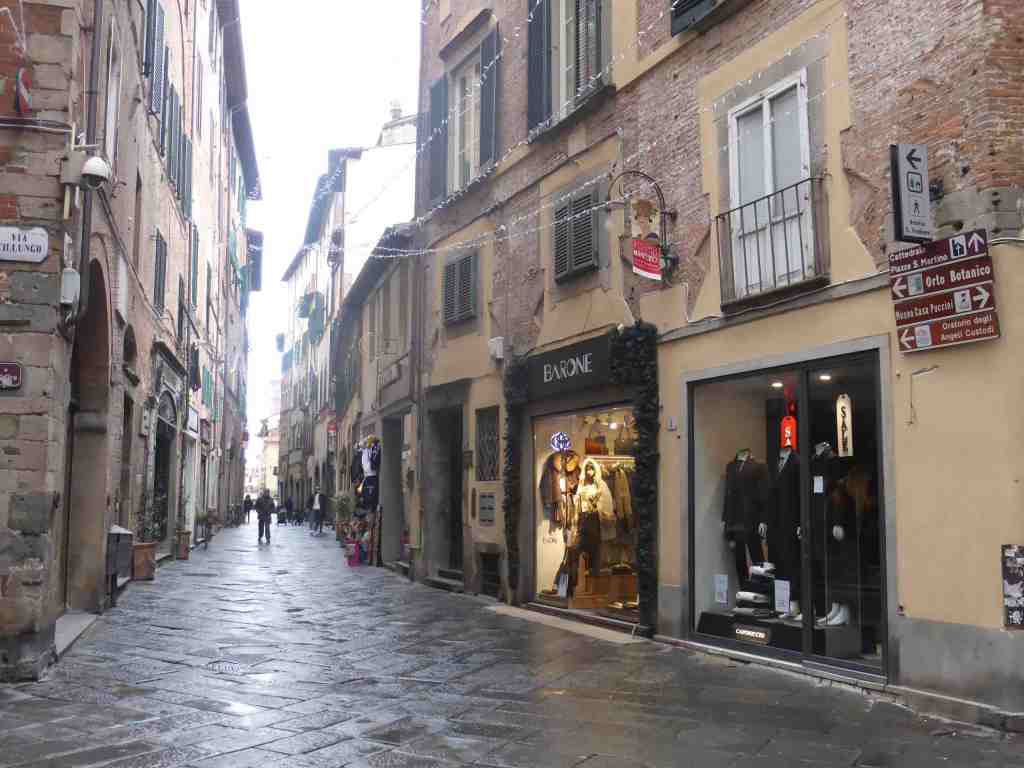


It seemed to me that most of the retail shops were for locals, not mostly for tourists … I saw only a few obviously tourist shops selling souvenirs, etc (unlike places like Florence and even Siena).
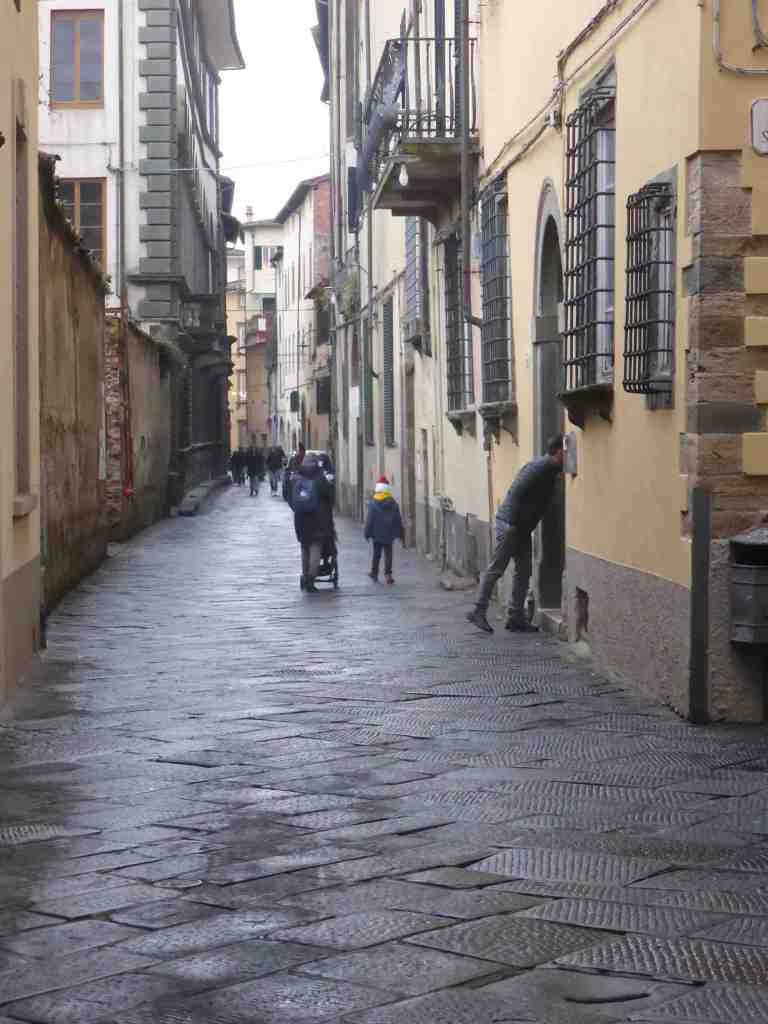
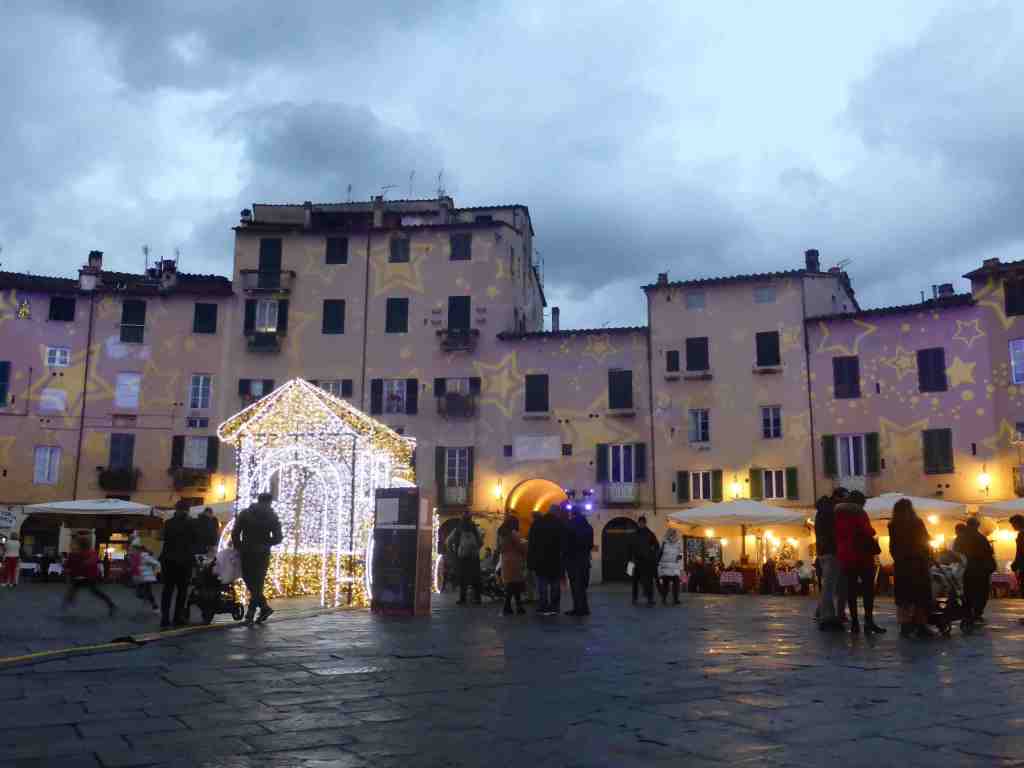
Walking around Lucca was always interesting. There are many narrow paved streets and then larger piazzas such as the anfiteatro below with space to breathe and of course options for eating, drinking and relaxing. Old palaces with wonderful doors appear regularly.

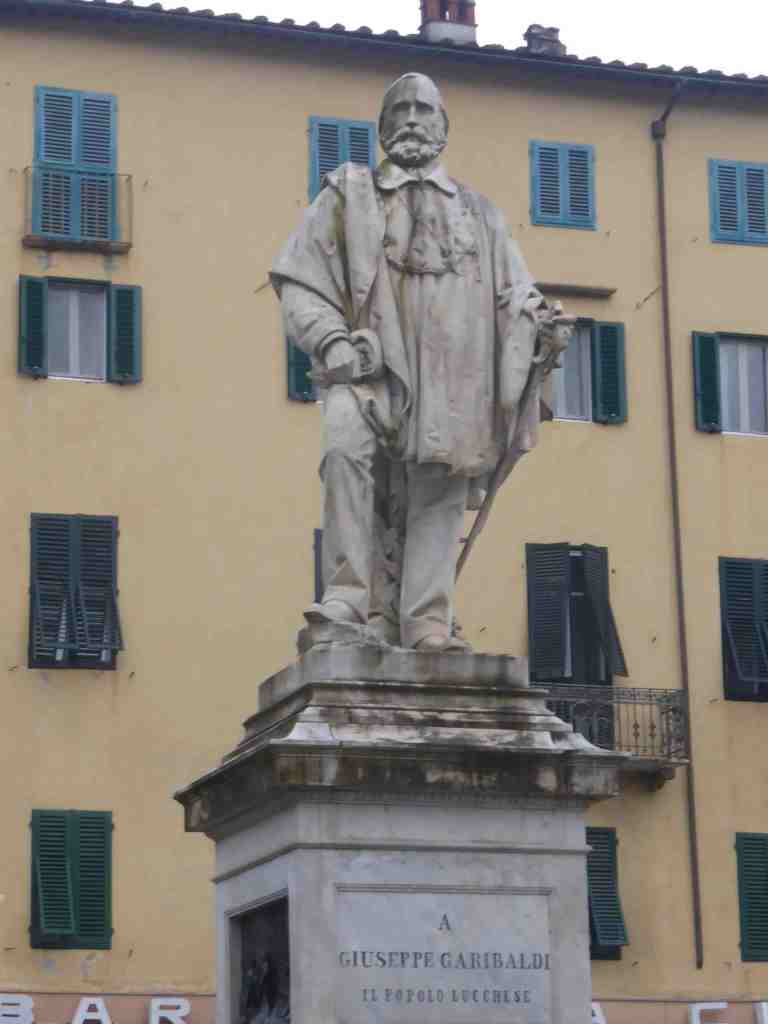
There are regular reminders of history everywhere, such as the inevitable statue of Giuseppe Garibaldi, a key figure in the foundation of modern Italy (I’ve seen him in almost every Italian town I’ve visited). The large square created when Napoleon’s sister was in residence (and in charge) for a while in the 19th century, is now back to being a space for people after the Christmas Markets have packed up for the season.

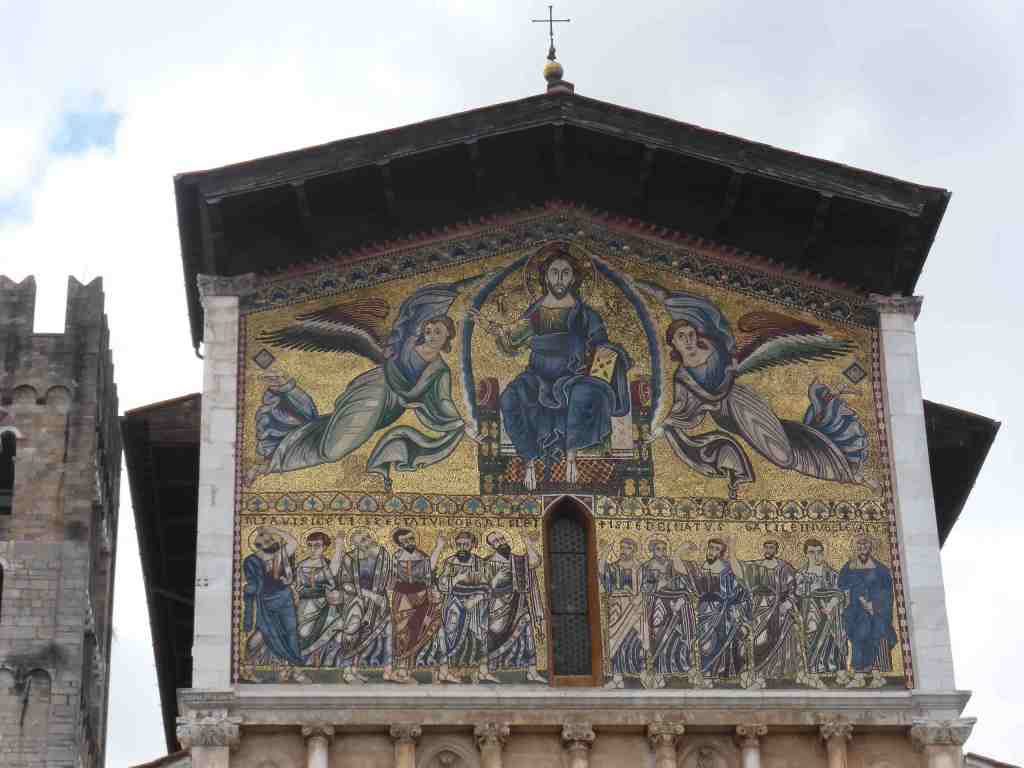
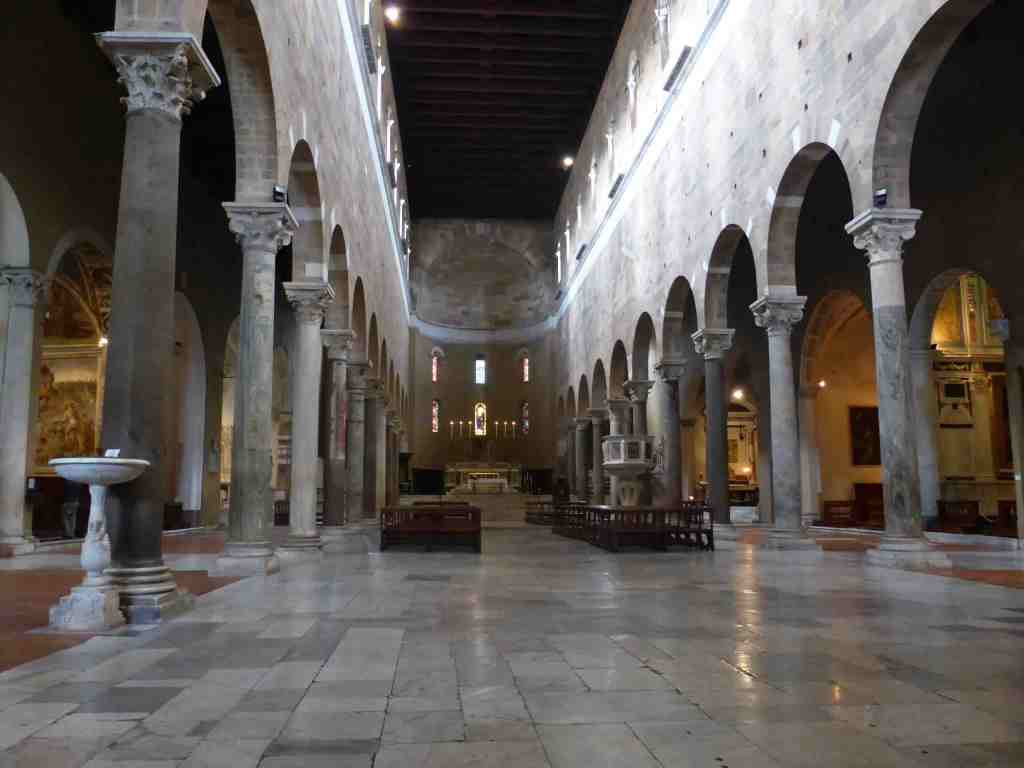
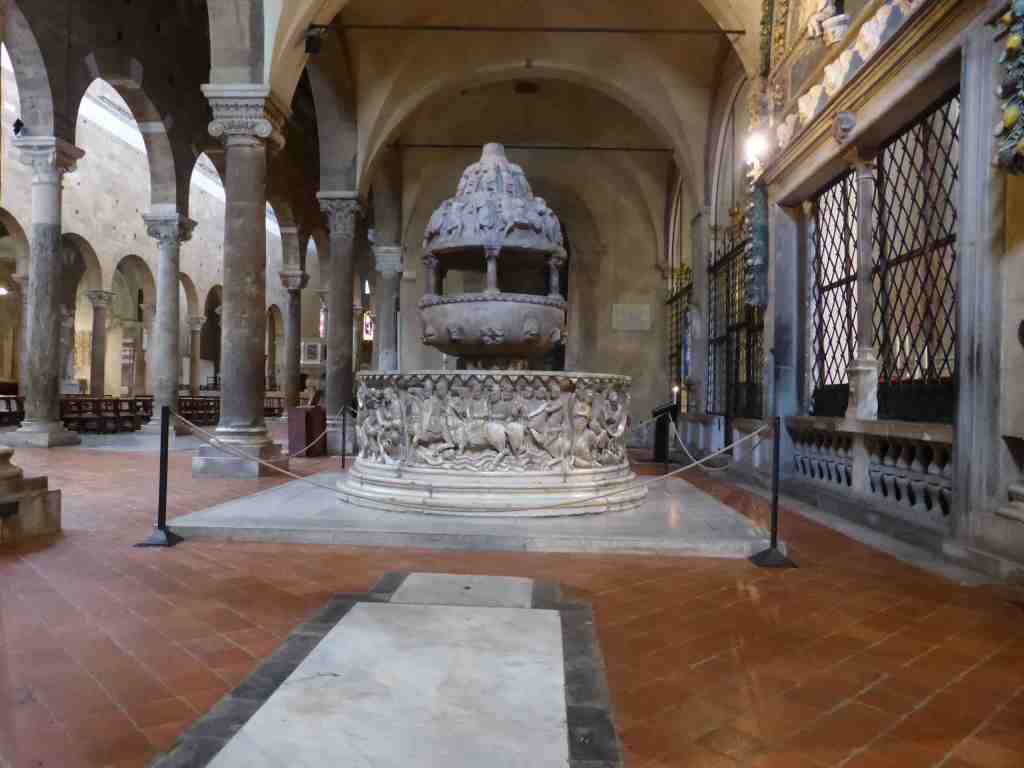
Of course, Lucca has lots of churches, as Catholicism is deeply ingrained in Italian society, although I suspect it’s less important now than it was in previous centuries. I enjoyed visiting many different churches, including the Duomo, which I described here: https://barrykissane.com/2025/01/10/st-martins-cathedral-in-lucca/ Each is different, with its own interesting history and – inevitably – artistic elements. For example, the snaps below show the nearby (to me) Basilica di San Frediano, which had a wonderful huge mosaic outside and lots of interesting things within, including the spectacular baptismal font, about a thousand years old.
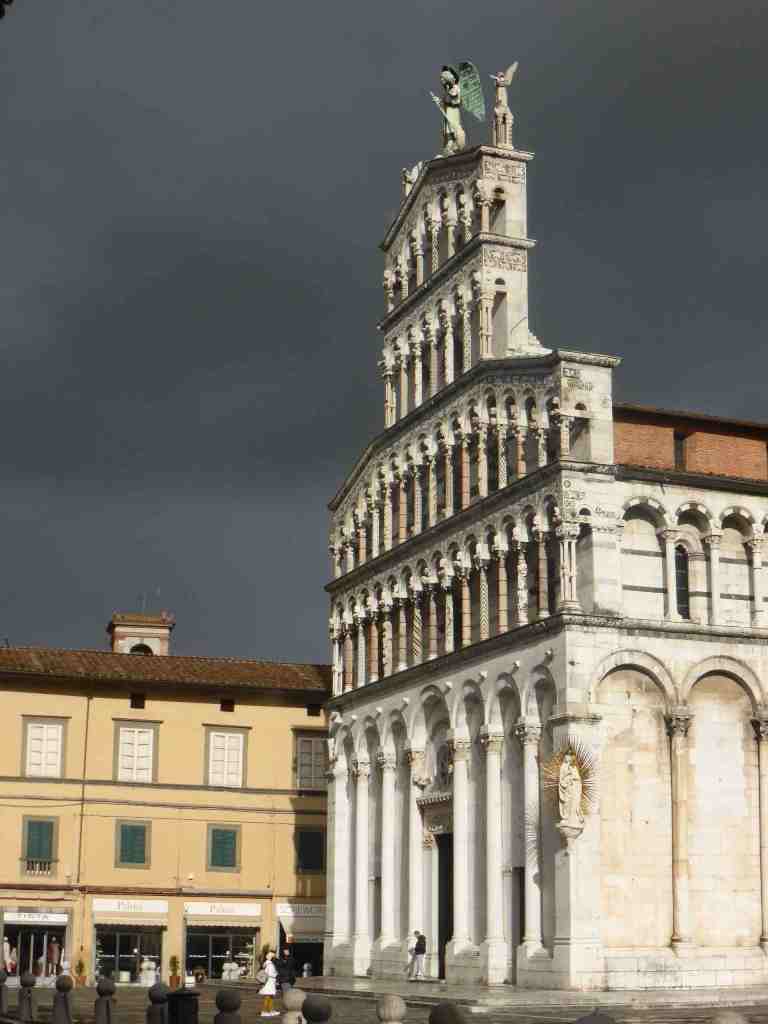
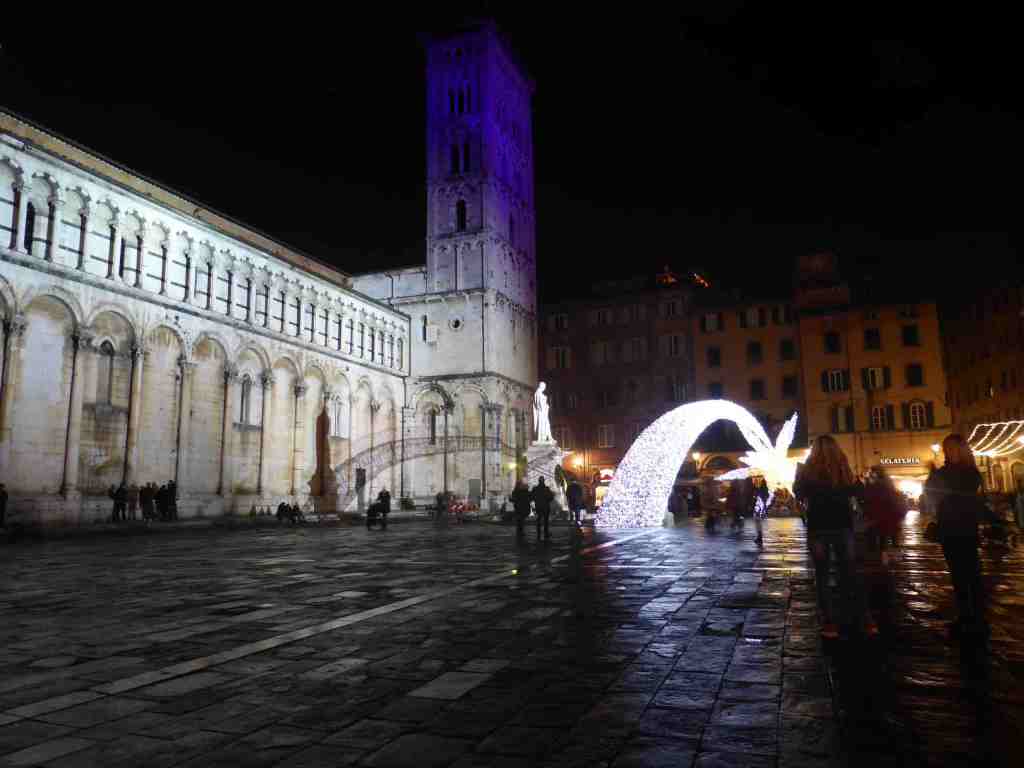
Chiesa di San Michele is very prominent in the centre of town (in fact, in the old Roman Forum) and also has a spectacular frontage with amazing columns and a statue of the archangel himself on high. The Christmas decorations were very prominent too – almost the first I saw when I arrived in the city almost two months ago.
Many other churches – too many to list – also had interesting features. Some places that had features reminiscent of churches are in fact now used for other purposes, such as the small but delightful Oratorio di Angeli Custodi (i.e., Guardian angels) shown below, which is used for recitals, concerts, etc.

Lucca has several small museums and art galleries, most of which I visited at some stage, but there’s not space to describe them here. Suffice it to say that none of them reach the heights of the British Museum or the Uffizi Gallery, but that doesn’t mean they are uninteresting. Lots of local history and cultural and artistic heritage can be explored – especially useful on a rainy or cold day.
Some museums are very local, such as the small Roman house museum about 200 m from my lodgings. The museum came about recently when some plumbing work unearthed remains of a Roman house about two thousand years old, as well as bits of the original Roman walls. So I spent a pleasant hour or so, finding out about the past, and discovering that my lodgings were right on top of the original Roman wall.
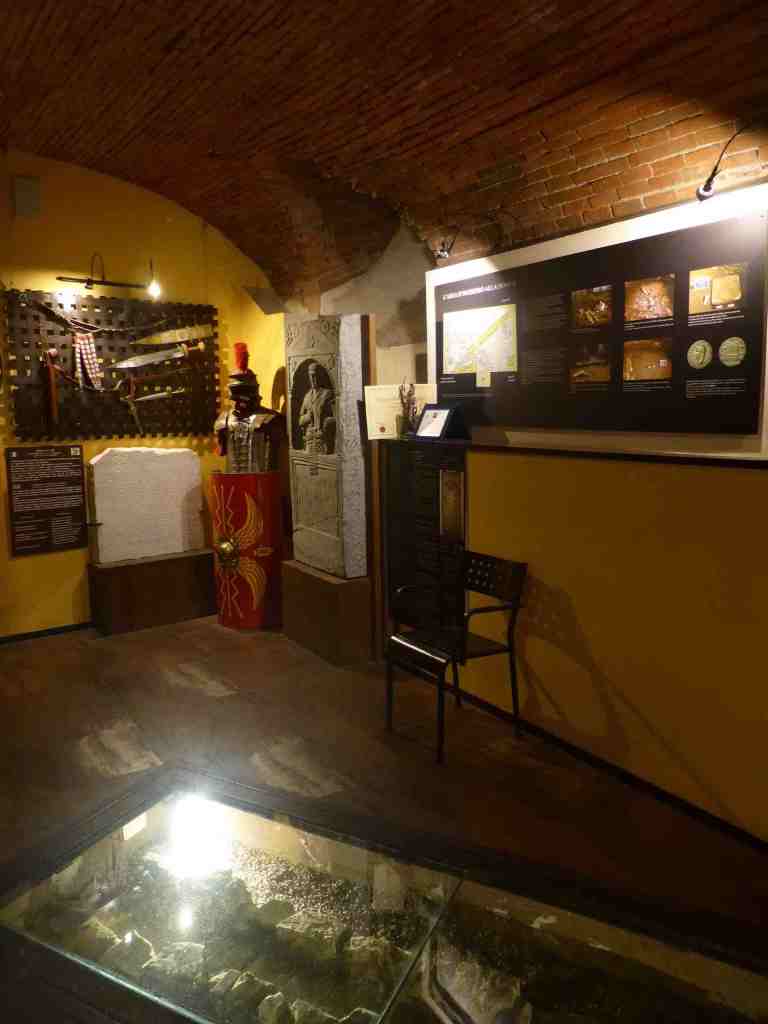


Some bits of the wall are shown in the first picture above, having been painstakingly revealed by the archeologists. I found out that Lucca’s original walls didn’t include the amphitheatre (which was built outside the walls), but this has now been resurrected as a large piazza in the present city (now inside the expanded walls). If you look hard, you can see that the piazza is the floor of the ancient amphitheatre. The semicircular theatre shown in the map nearby was inside the walls however – only about 50 m or so from where I was staying. You can also see on the map the large central Forum, in which Chiesa di San Michele has since been built.
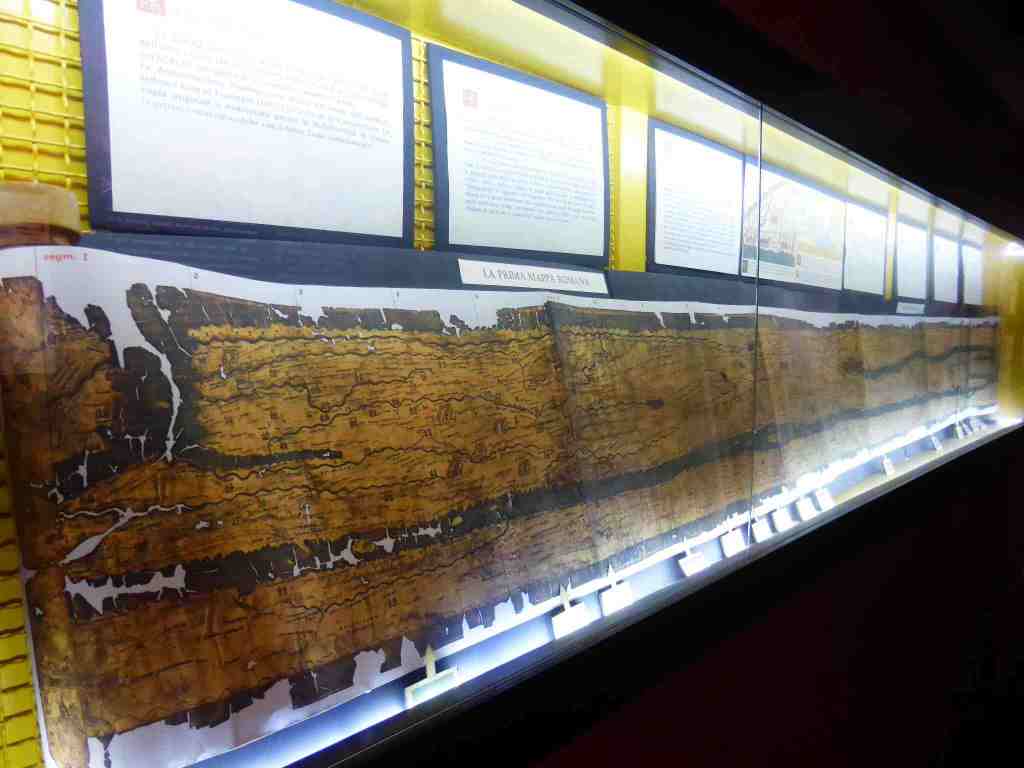
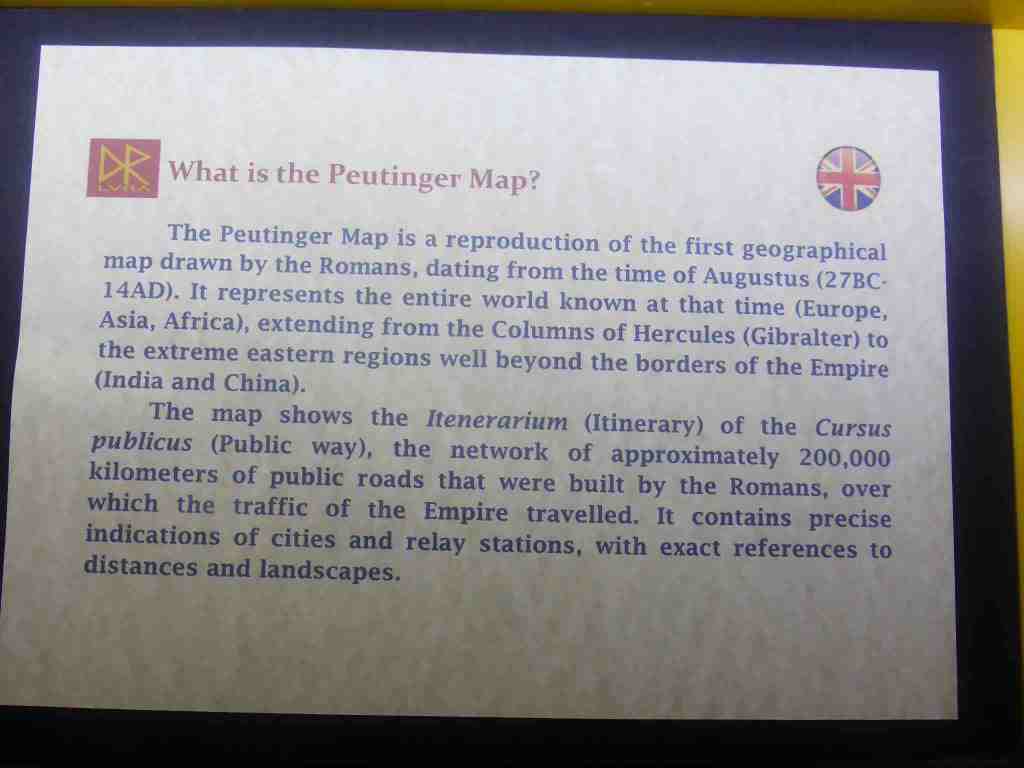
I also found out that Lucca was the site of the first Triumvirate in 56 BC, with Julius Caesar in residence over the winter, not unlike me. Thus it is arguably right at the start of the Roman Empire. The extraordinary Peutinger map shown above in the museum (a copy) was made not long afterwards, and shows the 200 000 km of Roman roads in the Roman empire. Yes, of course, Lucca was on the map … the very first tourist map?
No, it’s not the Roman Forum or the Parthenon, but we’re in a Goldilocks city: interesting, but not overwhelming.
Other elements of Lucca’s rich history were interesting and accessible. The city is justifiably proud that it is the birthplace of the wonderful 19th century opera composer, Giacomo Puccini (La Boheme, Tosca, etc …) Sadly, I just missed the Puccini operas performed before I came and after I left, but I enjoyed visiting the Puccini Museum, his family home in the middle of the city.
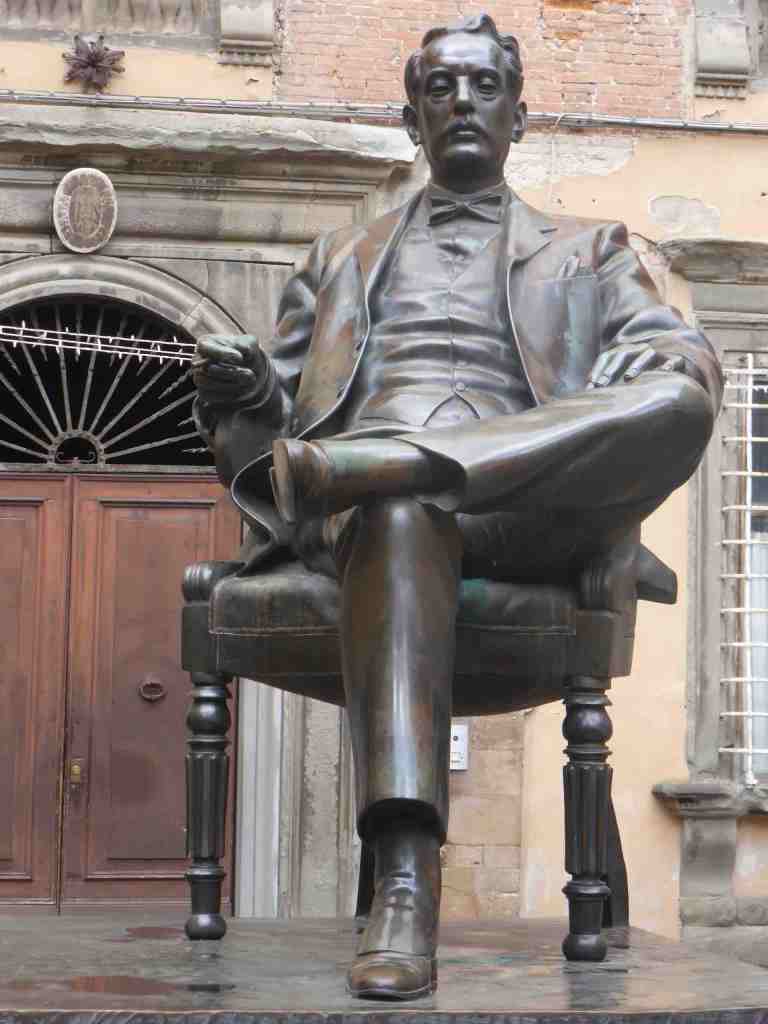

The statue of the composer in the small piazza outside is an easy way to find the museum. Inside, the house has many original artefacts, including for example the piano on which he composed Turandot (which in fact, was unfinished at his death in 1924). But it’s not only the museum that reminds us of Puccini: a nearby cafe is named after the opera and the city’s opera theatre shown below frequently plays his operas, most recently in November 2024, when Tosca was played on the 100th anniversary of his death.

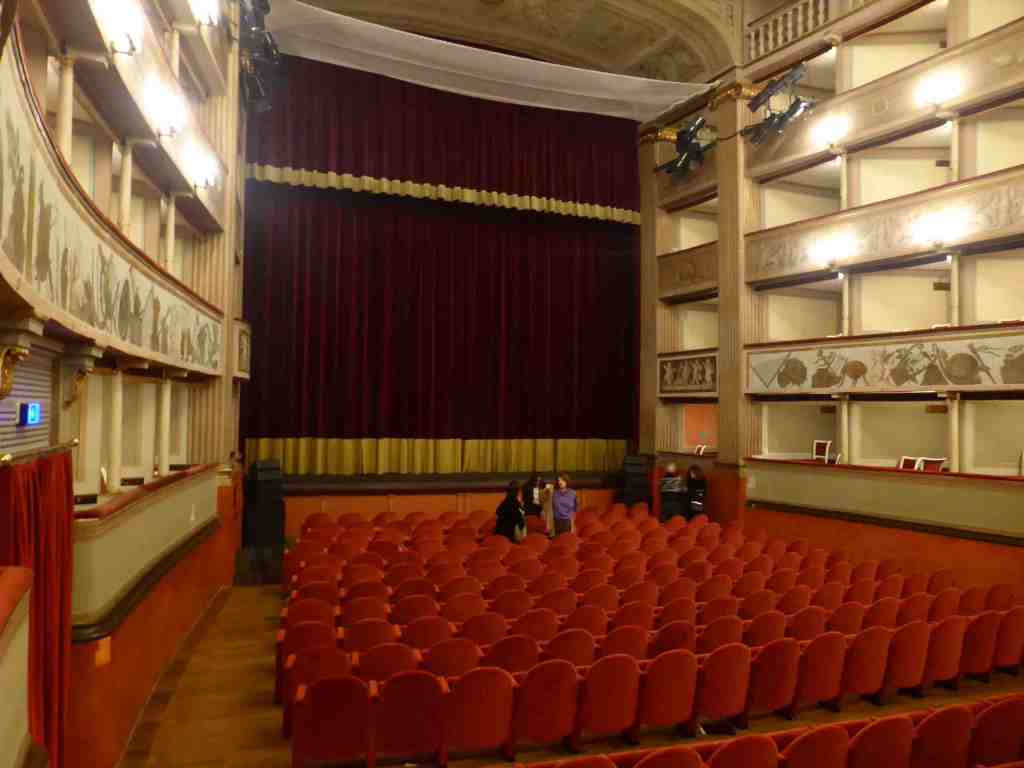
[Even those not familiar with opera will have probably heard the wonderful aria, Nessun Dorma, sung by Luciano Pavarotti at the World Cup in Roma in 1990. The aria is from Turandot.]
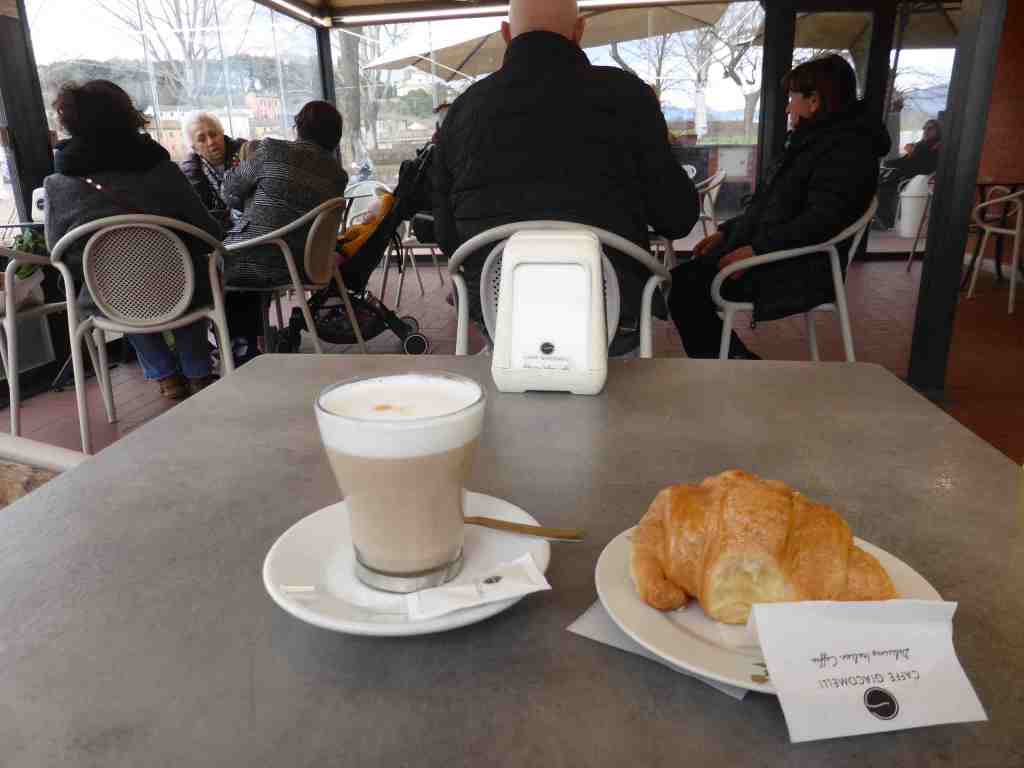
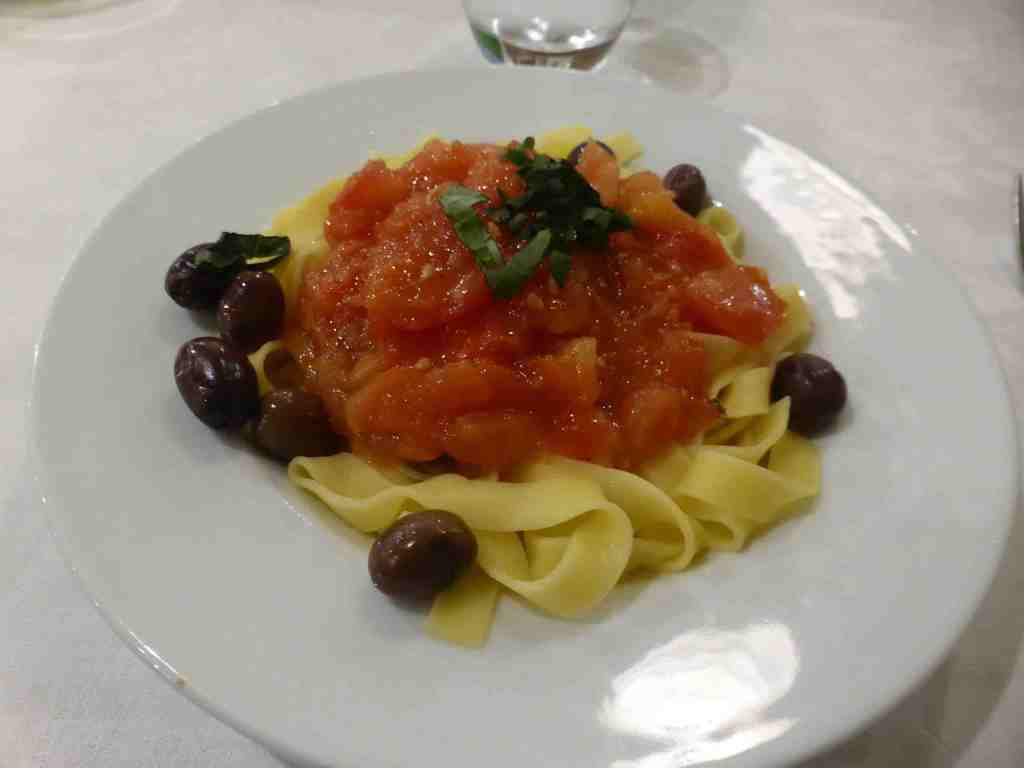
Of course, Lucca is in Italy and Italy’s number one passion is food. So I never went hungry in Lucca. While there were large supermarkets (mostly outside the walls), there were lots of smaller places too, to get fruit and vegetables and bread, pastries, gelato, etc. And of course there are many chances to get a coffee and a snack or a drink or even the extraordinary hot chocolate (really molten chocolate – you could almost stand the spoon up in it!)


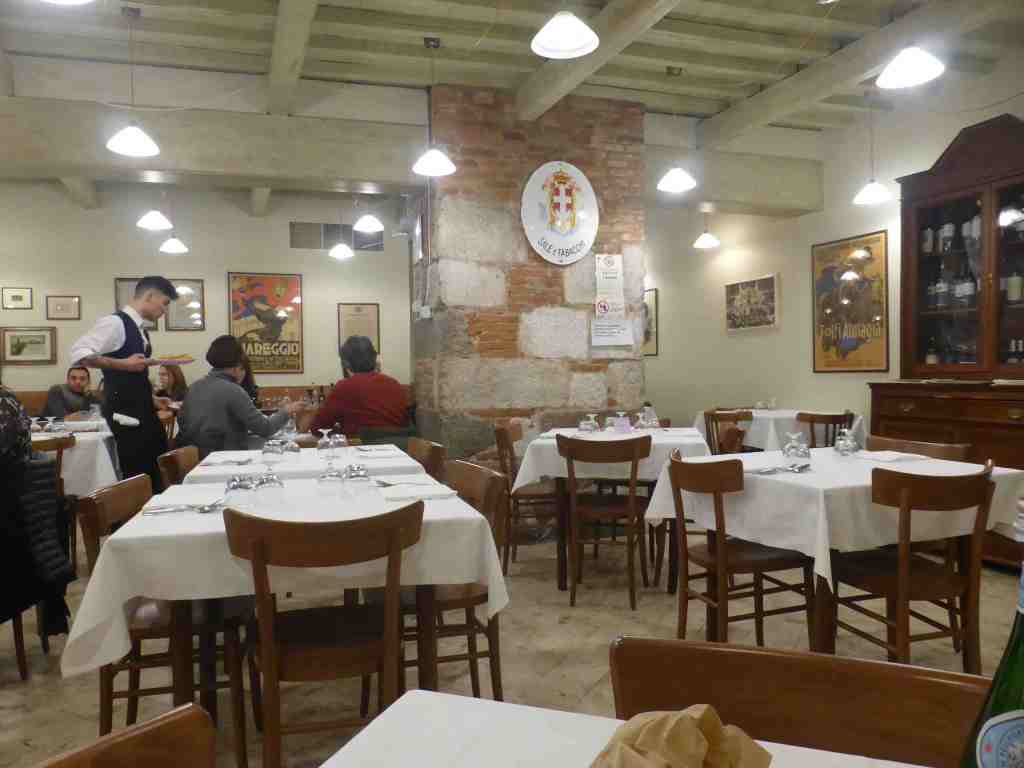
When I went to San Gimignano, a very popular tourist spot in the warmer seasons, I found that most of the restaurants were closed in the winter – from which I concluded that they were for tourists and not for locals. This was mostly not the case in Lucca, although the restaurant photo below suggests that there were few customers (mostly, I think, as I was there too early!). Waiters knew their stuff and were generally helpful. The food, of course, was delicious.

Some alfresco places, such as the one shown above in Piazza Anfiteatro, are probably a bit more tourist-oriented, perhaps feeding the day-trippers, but they also seemed to accommodate locals as well.
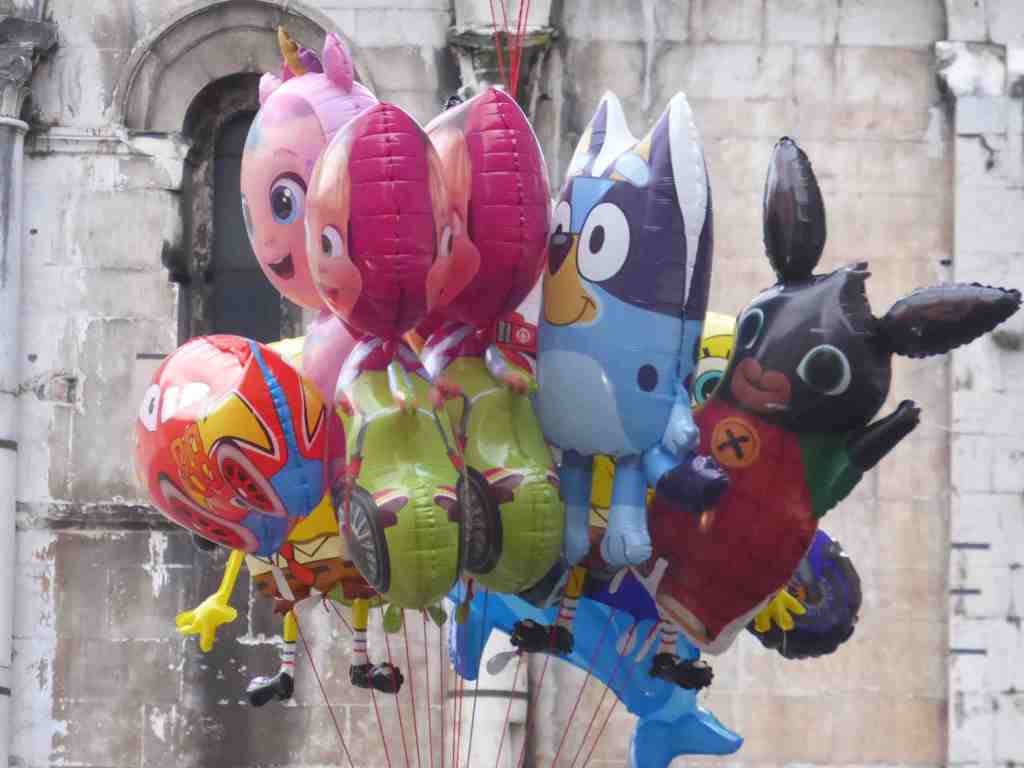
There was almost nothing that reminded me of Australia – it’s interesting how quickly we adjust to being somewhere else. But one day, noticed a (newly) iconic Australian image of Bluey, courtesy of the balloon seller:
While it’s always nice to be back home, I thoroughly enjoyed my stay in Lucca, a Goldilocks city well worth an extended visit.
 Barry's travel blog