Kurashiki is a small city near Okayama, but distinguished as it has an old quarter with traditional houses. I spent a night here and had hoped to visit the old quarter, but it was too late to do so, so I enjoyed a wander around in the morning (before it was choked with (mostly Japanese) tourists.
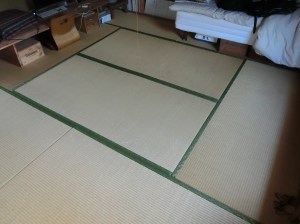
But first, a mathematical note: I have heard of tatami mats before, used as floor coverings in many houses (most houses, I suspect). They are made of a straw-like substance and lined down the longer side. The mathematical interest is that they are always in the ratio of 2:1, being twice as long as they are wide. Rooms are measured in tatami, in fact! The room I stayed in (with my AirBnB family) was huge, being an 8-mat room. Japan often has small rooms, as small as 4-mats, I think; I have certainly stayed before in many small rooms.
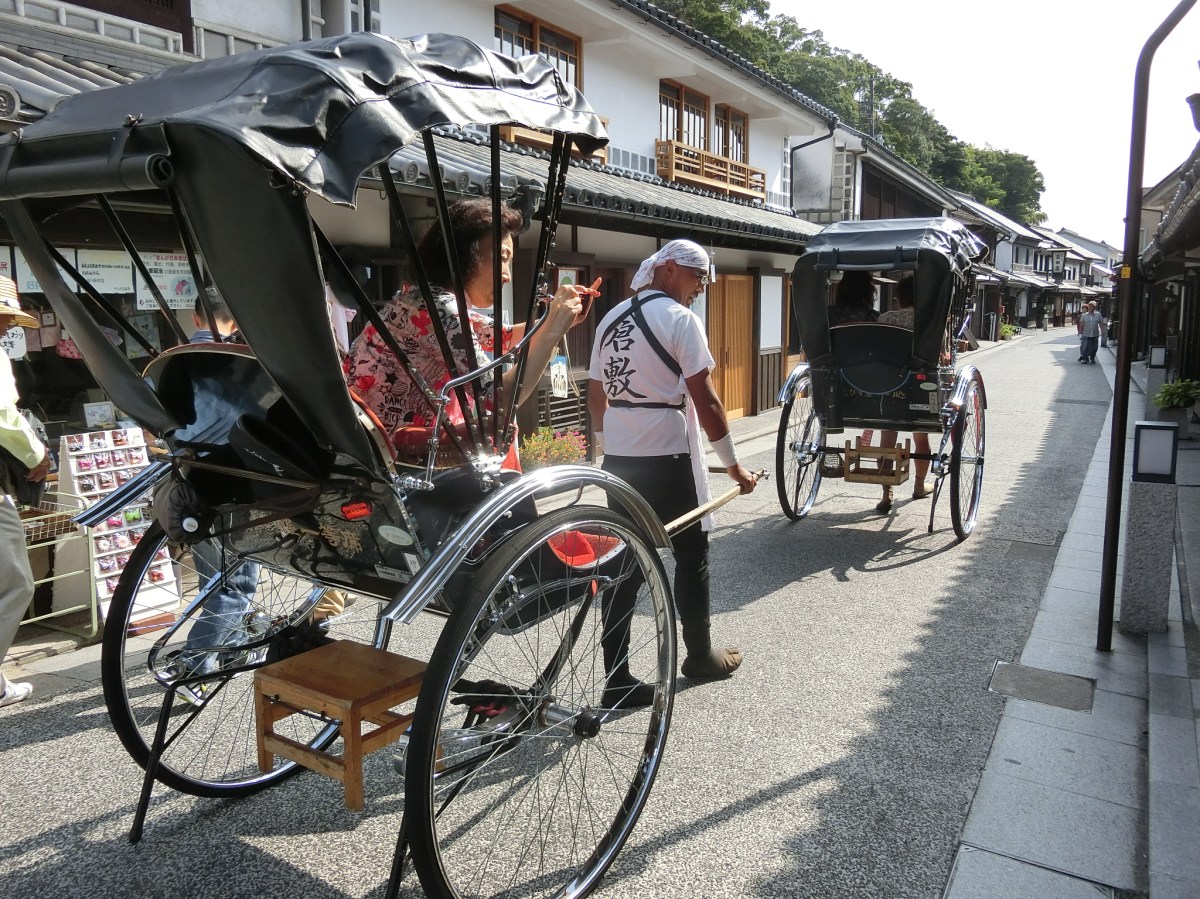
The old quarter of Kurashiki is located close to a canal, which looked really beautiful, with willow trees and lovely clean water. The black and white motifs of many of the buildings, as well as the traditional woodwork and ceramic tiled roofs helped the ambience as well, as these few snaps suggest.


When I was wandering around, preparations were underway for another day of tourist influxes: many Japanese people come here to remind them of days gone by, it seems. I was pleased to be able to escape before it was all overrun with tourists.


I was intrigued to read the guide sheet from the JNTO (Japanese National Tourism Organisation), which publishes an extensive range of really helpful material free online. They had a wonderful sentence regarding a walk along Honmashi-Higashimachi Street, which previously contained many tradesperson’s houses, but these have now been converted to other things: “A walk along these streets will bring you into close contact with the people living there, and inspires a curious feeling of nostalgia for a time you never experienced”. I love it! I didn’t see many people (too early), but understood the JNTO meaning.
 Kurashiki is a beautiful place and well worth visiting. Apart from lovely old buildings in a serene environment (before the tourists invaded), I encountered some unexpected things too, such as these water lilies in Ivy Square. (The square was previously a textile factory, but has changed function now and even has a hotel.) The water lilies were planted directly from some lilies in Monet’s garden at Giverny in France, and were donated by the local O’Hara Museum! [The museum is a world-class museum modelled after the Greek Pantheon, with a very good collection of paintings from famous painters, both Western and otherwise, and probably the main attraction here.]
There are new things in Kurashiki as well, of course. I enjoyed a stroll through a typical Japanese shopping street, with very many small shops in a long (hundreds of metres) undercover walkway. I’ve seen lots of plastic food in the windows in Japan (very helpful for tourists ignorant of Japanese), but the plastic ice creams caught my eye!. I also loved the display of boots in a shoe shop just getting ready for the day. I could have posted many more photos from lots of small, distinctive, often quirky, shops, but restraint is a virtue.


I was also intrigued to see the manhole covers (not sure if that’s what they are …) in Kurashiki, including their own distinctive pattern and the comic book character also. Japanese people seem to really like small cute things – as do many others of course – and the manhole cover is a nice example of this. I’ve never really noticed manhole covers in Australia; maybe I’ve just neglected them or maybe they are just not so interesting?


Wandering around town can sometimes be problematic, but Kurashiki is as good as I’ve seen anywhere as far as information is concerned. There seemed to be many signs (with both English and Japanese), and one of these information boards with a map on almost every corner. That’s really helpful to visitors, and stands out as some places are much less diligent in that respect, especially to foreigners (Thank you, City of Kurashiki!) It reminds me of course at how poorly we in Australia signpost things for Japanese tourists.


I was also pleased to see an escalator to get up to the road crossing to go to the station; maybe I’m getting tired more easily, but I notice myself choosing escalators (and elevators with my luggage) instead of stairs these days! Still, I had walked a fair way and it has been quite hot …
Finally, I loved the greenery and the trees here; I’m beginning to wonder if Japan doesn’t deserve the phrase, The Emerald Isle, as much as Ireland does, as it’s been spectacularly green so far …


Thanks Barry….I particularly loved the first photo with the boats and of course would have been extremely tempted by the ice creams!
LikeLike
Thanks for the tour Barry. They really are keen on “cute” – not sure about plastic food displays but the boots looked as good to lick as the ice cream! Thank goodness it isn’t all “cute” though. The beauty of the gardens and the feeling of peace and tranquility of the “old” ways really comes through in your photos. Lovely,thanks
Peta
🌳🌿🍃🌳
LikeLike
Thanks Peta. The plastic food is very helpful in Japan if you can’t read Japanese characters on the menu, but I was surprised to see so much plastic ice-cream! Yes, the old ways looked tranquil; these days they probably are too, until the daily onslaught of tourists!
LikeLike